
What should you know about a hormonal contraceptive coil?
Short answer
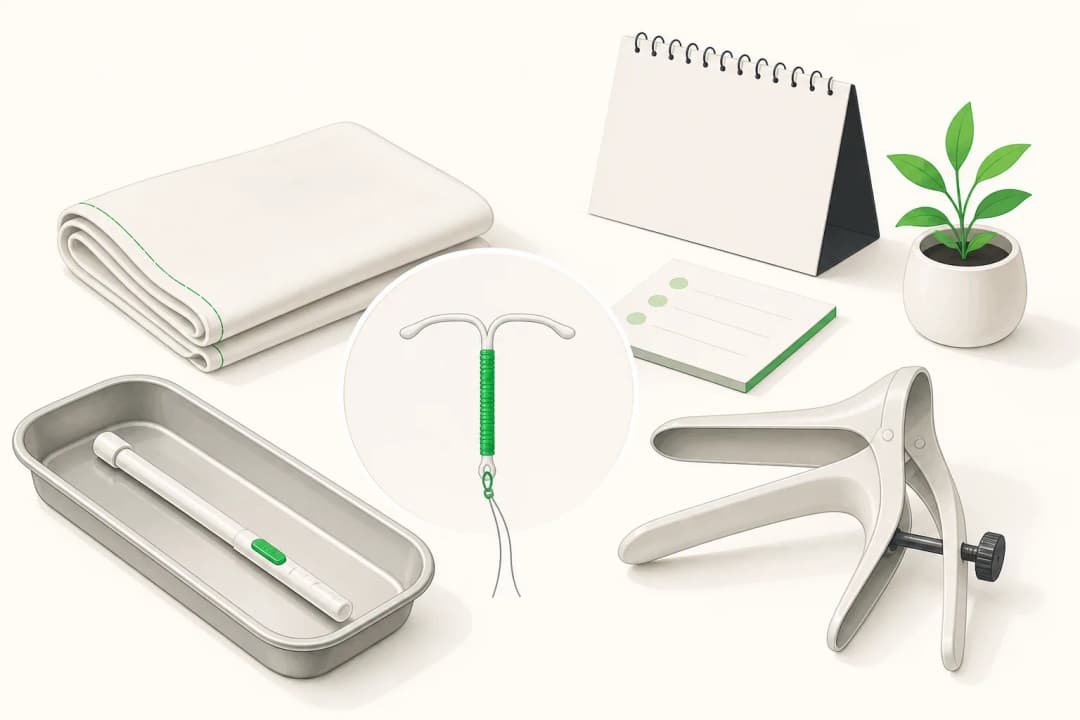
A hormonal contraceptive coil is a small device placed in the womb that releases progestogen to prevent pregnancy and often makes bleeding lighter.
This answers one question. It is not a diagnosis and does not replace an assessment by a licensed doctor.
At a glance
- Hormone
- Progestogen released inside the womb
- Main action
- Thickens cervical mucus and changes the womb lining
- Infection protection
- Use condoms when protection from sexually transmitted infections is needed
What the hormonal coil does
The coil thickens mucus at the cervix, making it harder for sperm to travel, and changes the womb lining. It can also reduce menstrual bleeding and cramps over time. Spotting or irregular bleeding is common after fitting while the body adjusts. Some people continue to have monthly bleeding, while others have very little or none. A hormonal coil does not protect against sexually transmitted infections.
A clinician checks your medical history and the position of the womb before fitting. Cramping during and shortly after insertion can occur. The device can be used for contraception and may also be considered when heavy bleeding is linked with conditions such as uterine fibroids or adenomyosis.
Practical steps
Arrange fitting with a trained clinician and discuss medicines, allergies, pregnancy possibility, bleeding patterns, and any previous pelvic infection. Keep the fitting and replacement date in your calendar. After insertion, learn how to feel for the threads if your clinician recommends checking them, and attend follow-up if offered.
Use condoms when infection protection is needed. If the coil is inserted at a time when pregnancy protection is not immediate, follow the clinician's advice about temporary contraception. Do not pull the threads or try to remove the device yourself.
When to seek care
Seek urgent medical help for severe or worsening lower-abdominal pain, fainting, heavy bleeding, fever, or feeling very unwell after fitting. Contact a clinician promptly if you cannot feel the threads, they feel much longer or shorter, the device is visible, or you think you may be pregnant. Sudden pain with a positive pregnancy test needs prompt assessment.
Questions for your doctor
Ask which coil suits your bleeding and contraception goals, when protection begins, how long it can stay in place, what bleeding changes are expected, and which symptoms should trigger a review. You can also ask about alternatives such as the Hormonal IUD Device and how removal would be arranged.
Find care
General Clinics & Polyclinics in Abu Dhabi
That answer is general. If you want it applied to your own case, these are licensed general clinics & polyclinics listed in Abu Dhabi.
27 Ar Ruwwad St - Shakhbout City - MSH4 - Abu Dhabi - United Arab Emirates
Accepts: Daman, Thiqa, Cigna, MetLife +20 more
Al Ruwais, Al Dhafrah
Accepts: Daman, Thiqa, AXA, Cigna +16 more
Al Bahyah - Al Bahyah Old - Abu Dhabi - United Arab Emirates
Accepts: Daman, Thiqa, Cigna, Allianz Care +18 more
Abu Dhabi
Accepts: Daman, Thiqa, AXA, Cigna +27 more
Ordered by verification status and how complete each clinic's public record is, then alphabetically. This is a directory listing, not a ranking — Zavis does not rate or recommend providers.
A factual listing drawn from the DHA, DOH and MOHAP licence registers. It is not a referral, an endorsement, or advice that any of these providers is right for you.
Questions people ask
Can a hormonal coil stop periods?
Some people have very light bleeding or no bleeding after the adjustment period, while others continue to bleed monthly.
Can the coil be removed?
A trained clinician can remove it; fertility can return after removal, but timing varies between people.
Related
Related reading
Keep reading
Medical disclaimer. This page is general health information, not medical advice, and it cannot diagnose you. Always consult a licensed healthcare provider about your own symptoms and treatment. In an emergency in the UAE, call 998 for an ambulance.