
What should you know about cold hands and feet symptoms?
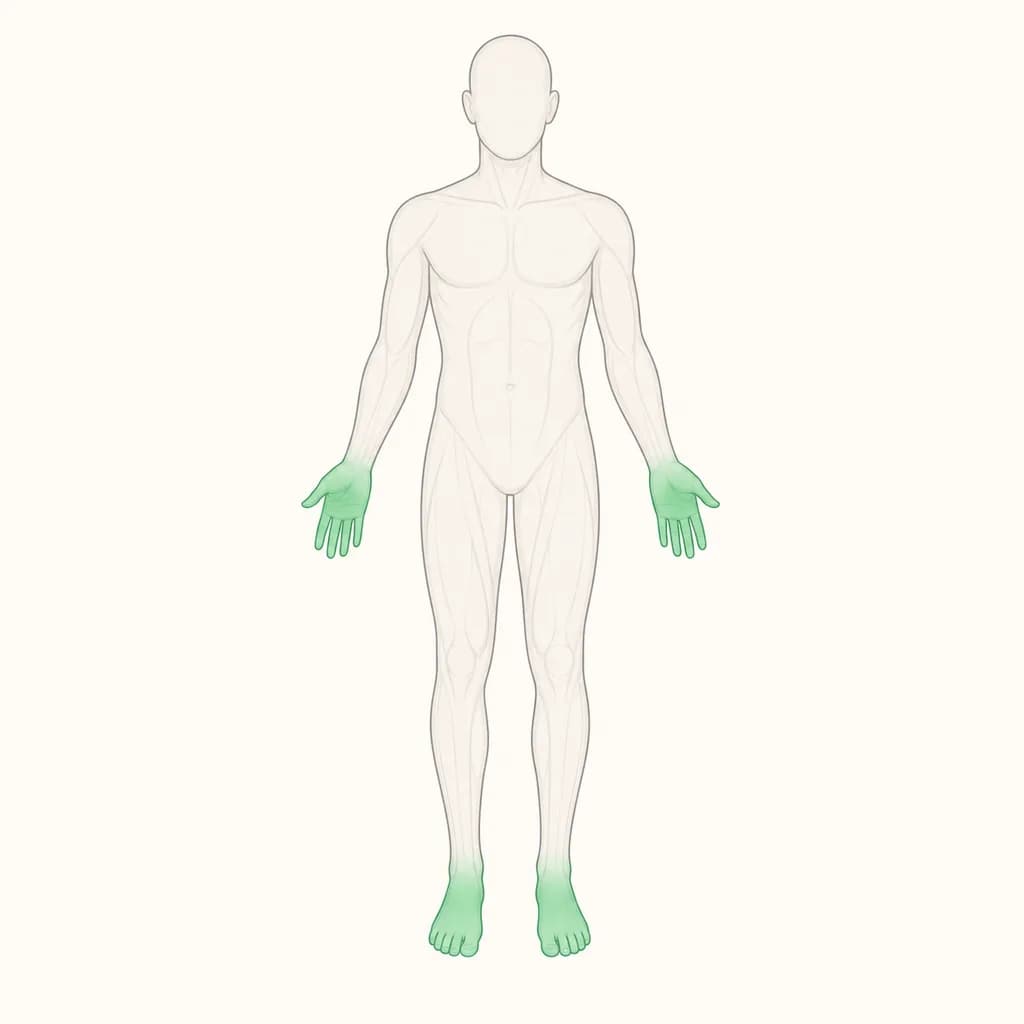
Short answer
Cold hands and feet can be a response to cool surroundings, but persistent, painful, or one-sided symptoms deserve medical assessment.
This answers one question. It is not a diagnosis and does not replace an assessment by a licensed doctor.
At a glance
- Pattern to note
- Both sides or one side, and whether warmth improves it
- Urgent change
- Sudden coldness with severe pain, colour change, numbness, or weakness
- Do not self-treat
- Do not take iron unless a clinician advises it
The short answer
The skin may feel cool because blood vessels narrow in response to cold. If the sensation continues in a warm room, keeps returning without an obvious trigger, or comes with colour change, numbness, weakness, or pain, arrange a clinical review.
What cold hands and feet may mean
A clinician will consider the pattern rather than the temperature of your hands or feet alone. Ask whether both sides are affected, whether symptoms improve with warmth, and whether fingers or toes change colour. Raynaud-type blood-vessel spasm, reduced blood flow in a limb, anaemia, iron deficiency, an underactive thyroid, some medicines, and nerve problems can all be considered. Cold hands and feet are not enough to identify one cause.
Anaemia may occur with tiredness, breathlessness on activity, dizziness, or paler skin. An underactive thyroid can also cause feeling unusually cold, low energy, dry skin, constipation, or changes in weight. These accompanying features do not confirm a diagnosis; examination and, when appropriate, blood tests help narrow the possibilities.
What you can do now
Keep your whole body warm with layers, socks, gloves, and a warm environment. Move your fingers, toes, hands, and feet gently, and avoid smoking because it can narrow blood vessels. Warm cold skin gradually; avoid placing numb hands or feet directly against a very hot surface, where burns may be harder to notice.
Note when episodes occur, how long they last, whether the colour changes, and whether one side is different. Bring a list of medicines and supplements to an appointment. Do not start iron supplementation simply because your hands or feet feel cold; iron is appropriate when a clinician identifies a need and advises how to take it.
When to seek medical care
Seek urgent care if a hand, arm, foot, or leg suddenly becomes cold, pale or blue, severely painful, numb, weak, or difficult to move. Seek prompt assessment for a wound that is not healing, skin that turns black, or severe pain at rest, especially if one limb is affected.
Make a routine appointment if coldness is persistent, repeatedly interrupts daily activities, or occurs with fatigue, dizziness, breathlessness, swelling, tingling, colour changes, or reduced walking tolerance. A clinician may check pulses, skin temperature and colour, sensation, and blood pressure, then decide whether blood tests or circulation assessment are suitable.
Questions for your doctor
Could my symptoms fit a blood, thyroid, circulation, or nerve problem? Do I need blood tests for anaemia or thyroid function? What changes in colour, pain, or sensation should make me seek urgent help? Could any of my medicines be contributing, and should I keep a symptom diary?
Find care
General Clinics & Polyclinics in Abu Dhabi
That answer is general. If you want it applied to your own case, these are licensed general clinics & polyclinics listed in Abu Dhabi.
27 Ar Ruwwad St - Shakhbout City - MSH4 - Abu Dhabi - United Arab Emirates
Accepts: Daman, Thiqa, Cigna, MetLife +20 more
Al Ruwais, Al Dhafrah
Accepts: Daman, Thiqa, AXA, Cigna +16 more
Al Bahyah - Al Bahyah Old - Abu Dhabi - United Arab Emirates
Accepts: Daman, Thiqa, Cigna, Allianz Care +18 more
Abu Dhabi
Accepts: Daman, Thiqa, AXA, Cigna +27 more
Ordered by verification status and how complete each clinic's public record is, then alphabetically. This is a directory listing, not a ranking — Zavis does not rate or recommend providers.
A factual listing drawn from the DHA, DOH and MOHAP licence registers. It is not a referral, an endorsement, or advice that any of these providers is right for you.
Questions people ask
When are cold hands and feet more concerning?
They are more concerning when the change is sudden, affects one limb, or comes with severe pain, pale or blue skin, numbness, weakness, or difficulty moving. Persistent symptoms with fatigue, breathlessness, wounds, or reduced walking tolerance also merit medical review.
What tests might a doctor consider?
The assessment may include checking pulses, skin colour and temperature, sensation, and blood pressure. Depending on your history and examination, a doctor may consider blood tests for anaemia or thyroid problems, or tests that assess blood flow.
Should I take iron for cold hands and feet?
Not without advice. Cold hands and feet have several possible explanations, and iron supplementation is useful when iron deficiency is identified or a clinician recommends it. Unsupervised supplements can be unsuitable and may delay assessment of another cause.
Related
Related reading
Keep reading
Medical disclaimer. This page is general health information, not medical advice, and it cannot diagnose you. Always consult a licensed healthcare provider about your own symptoms and treatment. In an emergency in the UAE, call 998 for an ambulance.