
Cold Hands and Feet When You Are Sick
Short answer
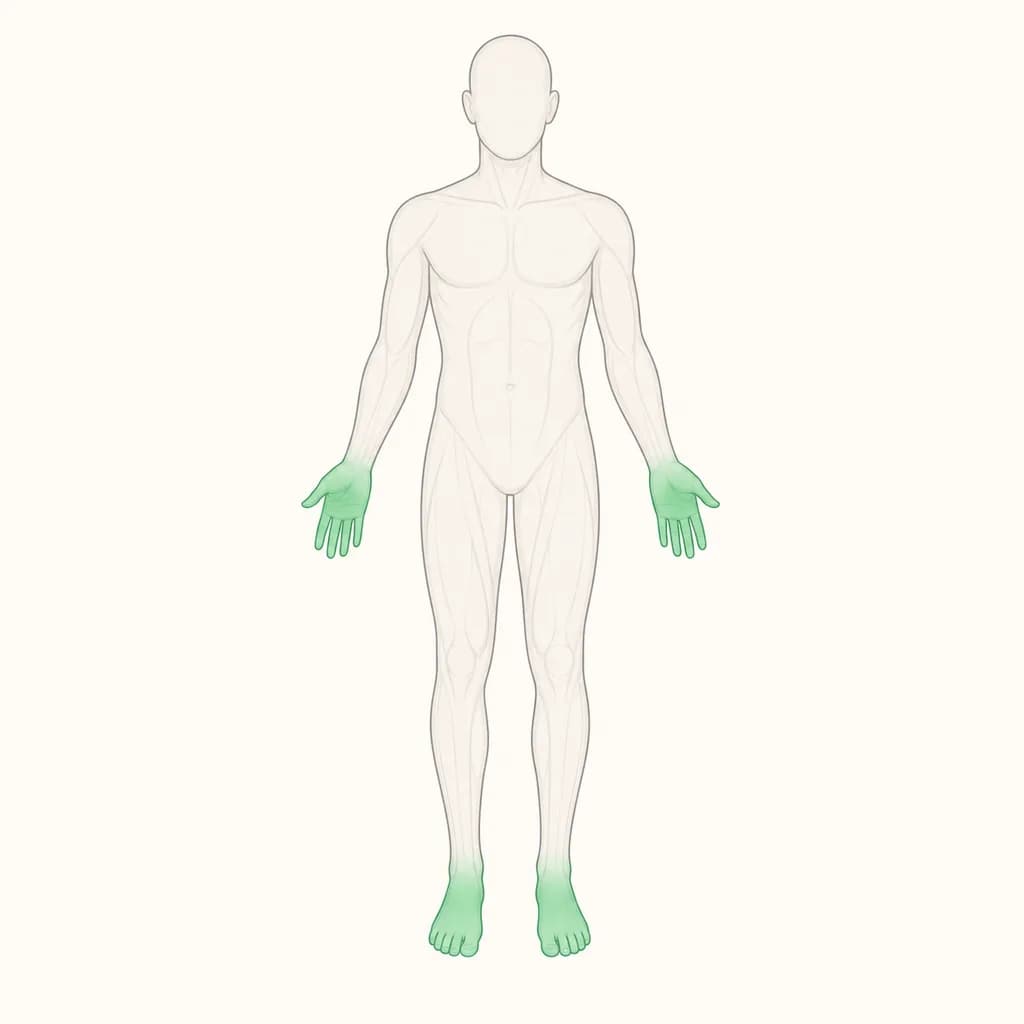
Cold hands and feet can happen when you are sick because the body changes blood flow and temperature control, but severe, sudden, or persistent symptoms need medical assessment.
This answers one question. It is not a diagnosis and does not replace an assessment by a licensed doctor.
At a glance
- Monitor
- Alertness, breathing, colour, urination, and ability to drink
- Comfort measure
- Light layers and gradual warming
- Urgent sign
- Cold extremities with confusion, fainting, or severe breathing difficulty
What may be happening
Fever, chills, reduced food or fluid intake, and staying still can make the hands and feet feel cold. During an illness, the body may keep more blood flow near the central organs, leaving the skin cooler. Dehydration can add dizziness or a fast heartbeat. Cold extremities can also be unrelated to the current illness and may reflect anaemia, hypothyroidism, circulation problems, or a medicine effect.
Check the overall picture rather than the hand temperature alone. Consider your temperature, alertness, breathing, skin colour, fluid intake, urination, and whether both sides warm as you recover.
Care while you recover
Rest, take fluids in small regular amounts if you can drink normally, and use light layers or blankets for comfort. Follow prescribed medicine directions and avoid taking extra products solely to warm the hands or feet. If you have a fluid restriction or a significant medical condition, follow the plan given by your clinician. Recheck the symptom as the illness improves and note any change in colour, sensation, or strength.
Warning signs
Get urgent help if cold hands or feet occur with confusion, unusual drowsiness, fainting, severe breathing difficulty, chest pain, grey or blue skin, or rapidly worsening illness. A single suddenly cold, painful, pale, numb, or weak limb also needs urgent assessment. Contact a clinician if the symptom persists after recovery, keeps returning, or comes with marked fatigue, swelling, or reduced urination.
What to ask
Ask whether your illness, hydration, medicines, or another condition best explains the symptom. Ask how much fluid is suitable for you, which signs require urgent review, and whether tests for anaemia, thyroid function, or circulation are appropriate once the acute illness settles.
Find care
General Clinics & Polyclinics in Abu Dhabi
That answer is general. If you want it applied to your own case, these are licensed general clinics & polyclinics listed in Abu Dhabi.
27 Ar Ruwwad St - Shakhbout City - MSH4 - Abu Dhabi - United Arab Emirates
Accepts: Daman, Thiqa, Cigna, MetLife +20 more
Al Ruwais, Al Dhafrah
Accepts: Daman, Thiqa, AXA, Cigna +16 more
Al Bahyah - Al Bahyah Old - Abu Dhabi - United Arab Emirates
Accepts: Daman, Thiqa, Cigna, Allianz Care +18 more
Abu Dhabi
Accepts: Daman, Thiqa, AXA, Cigna +27 more
Ordered by verification status and how complete each clinic's public record is, then alphabetically. This is a directory listing, not a ranking — Zavis does not rate or recommend providers.
A factual listing drawn from the DHA, DOH and MOHAP licence registers. It is not a referral, an endorsement, or advice that any of these providers is right for you.
Questions people ask
Is it normal to feel cold in the hands and feet with chills?
It can occur during an illness, but the whole pattern matters. Severe or worsening symptoms, abnormal colour, or reduced alertness need urgent help.
What if my hands and feet stay cold after I recover?
Arrange a clinical review, especially if the symptom is recurrent or accompanied by fatigue, pain, numbness, swelling, or colour change.
Related
Related reading
Keep reading
Medical disclaimer. This page is general health information, not medical advice, and it cannot diagnose you. Always consult a licensed healthcare provider about your own symptoms and treatment. In an emergency in the UAE, call 998 for an ambulance.