
Cold Hands and Feet with a High Temperature
Short answer
Cold hands and feet with a high temperature can occur during an illness, but marked or persistent coldness needs medical assessment.
This answers one question. It is not a diagnosis and does not replace an assessment by a licensed doctor.
At a glance
- Common short-term pattern
- Skin blood flow may reduce during chills, making hands and feet feel cold.
- Track
- Temperature, timing of chills, fluid intake, urine output, and skin colour.
- Urgent warning
- Cold extremities with confusion, breathing difficulty, fainting, or blue or mottled skin need urgent help.
What should you know about cold hands and feet high temperature?
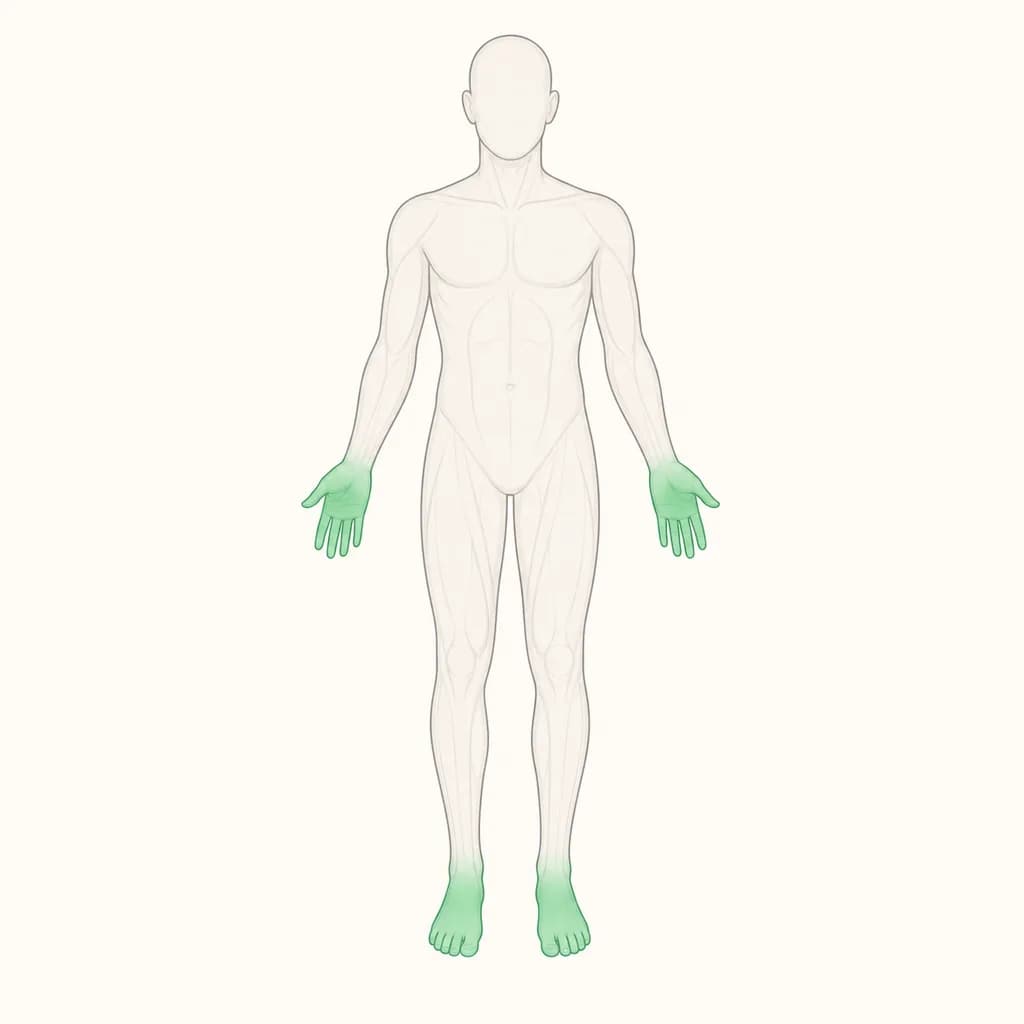
A raised temperature often reflects the body's response to infection or inflammation. During chills, blood vessels in the skin can narrow, directing warmth towards the body's core; the hands and feet may therefore feel cold even while the overall temperature is high. The skin may warm again as the fever pattern changes.
What it may mean
The combination can be temporary when it appears with shivering, fatigue, a sore throat, cough, vomiting, diarrhoea, or another clear illness symptom. Coldness that continues after the high temperature settles, affects one side, or comes with pale, blue, numb, painful, or mottled skin may point to a circulation problem rather than fever alone.
Other conditions can contribute to cold hands and feet between illnesses. Anaemia or iron deficiency can reduce oxygen delivery and cause tiredness, breathlessness, dizziness, or paleness. An underactive thyroid may cause sensitivity to cold, dry skin, constipation, and sluggishness. Reduced blood flow in the limbs can cause pain, colour change, or slow-healing wounds. These possibilities cannot be diagnosed from cold extremities alone.
What you can do now
Rest, drink fluids regularly, and wear light, comfortable layers. Keep the room comfortably cool rather than using heavy blankets to force sweating. Check the temperature with a reliable thermometer and record when the fever, chills, and cold extremities occur. Avoid very hot water or direct heat on numb hands and feet, because reduced sensation makes burns easier to miss.
Use fever medicine only if it is suitable for you and follow the product directions. Do not combine products that contain the same ingredient. A pharmacist or clinician can check the choice and dose when the person is a child, pregnant, older, dehydrated, or taking other medicines. Arrange a routine review if episodes recur, last after the illness, or interfere with normal activity.
When to seek care
Seek urgent medical help if cold hands or feet occur with confusion, unusual drowsiness, trouble breathing, fainting, severe weakness, a seizure, a rapidly spreading rash, or skin that is blue, grey, very pale, or blotchy. Urgent assessment is also needed if the person is difficult to wake, cannot keep fluids down, or is passing very little urine.
Contact a clinician promptly when the temperature is high and the hands or feet remain unusually cold, circulation changes are new, or symptoms are worsening rather than easing. Babies, frail older adults, and people with impaired immunity may need earlier advice because serious illness can develop without a typical pattern.
Questions for your doctor
Ask what might explain the temperature and whether you need an examination of circulation, blood tests for anaemia or thyroid function, or other testing. Mention when the symptoms began, the highest measured temperature, chills or sweating, recent infections or travel, medicines, and any colour change, pain, numbness, breathlessness, dizziness, or bleeding. Ask which warning signs should prompt same-day care and how to manage fever safely at home.
Find care
General Clinics & Polyclinics in Abu Dhabi
That answer is general. If you want it applied to your own case, these are licensed general clinics & polyclinics listed in Abu Dhabi.
27 Ar Ruwwad St - Shakhbout City - MSH4 - Abu Dhabi - United Arab Emirates
Accepts: Daman, Thiqa, Cigna, MetLife +20 more
Al Ruwais, Al Dhafrah
Accepts: Daman, Thiqa, AXA, Cigna +16 more
Al Bahyah - Al Bahyah Old - Abu Dhabi - United Arab Emirates
Accepts: Daman, Thiqa, Cigna, Allianz Care +18 more
Abu Dhabi
Accepts: Daman, Thiqa, AXA, Cigna +27 more
Ordered by verification status and how complete each clinic's public record is, then alphabetically. This is a directory listing, not a ranking — Zavis does not rate or recommend providers.
A factual listing drawn from the DHA, DOH and MOHAP licence registers. It is not a referral, an endorsement, or advice that any of these providers is right for you.
Questions people ask
Can a fever make hands and feet feel cold?
Yes. Chills can narrow blood vessels near the skin, so the hands and feet feel cold while the body's internal temperature is raised. Persistent or severe coldness needs assessment.
When should cold hands and feet with a high temperature be treated as urgent?
Seek urgent help for confusion, difficult breathing, fainting, severe weakness, a seizure, blue or grey skin, a rapidly spreading rash, or difficulty waking the person.
What conditions can cause cold hands and feet between fevers?
Anaemia, iron deficiency, an underactive thyroid, and reduced circulation can all contribute. A clinician can use the symptom pattern and examination to decide whether testing is needed.
Related
Related reading
Keep reading
Medical disclaimer. This page is general health information, not medical advice, and it cannot diagnose you. Always consult a licensed healthcare provider about your own symptoms and treatment. In an emergency in the UAE, call 998 for an ambulance.