
Cold feet and hands in winter
Updated
Short answer
In winter, cold feet and hands are often a normal response to lower temperatures, but persistent or uneven coldness needs assessment.
This answers one question. It is not a diagnosis and does not replace an assessment by a licensed doctor.
At a glance
- Winter effect
- Cold air narrows skin blood vessels.
- Protective habit
- Keep skin dry and warm it gradually.
Why winter makes them feel cold
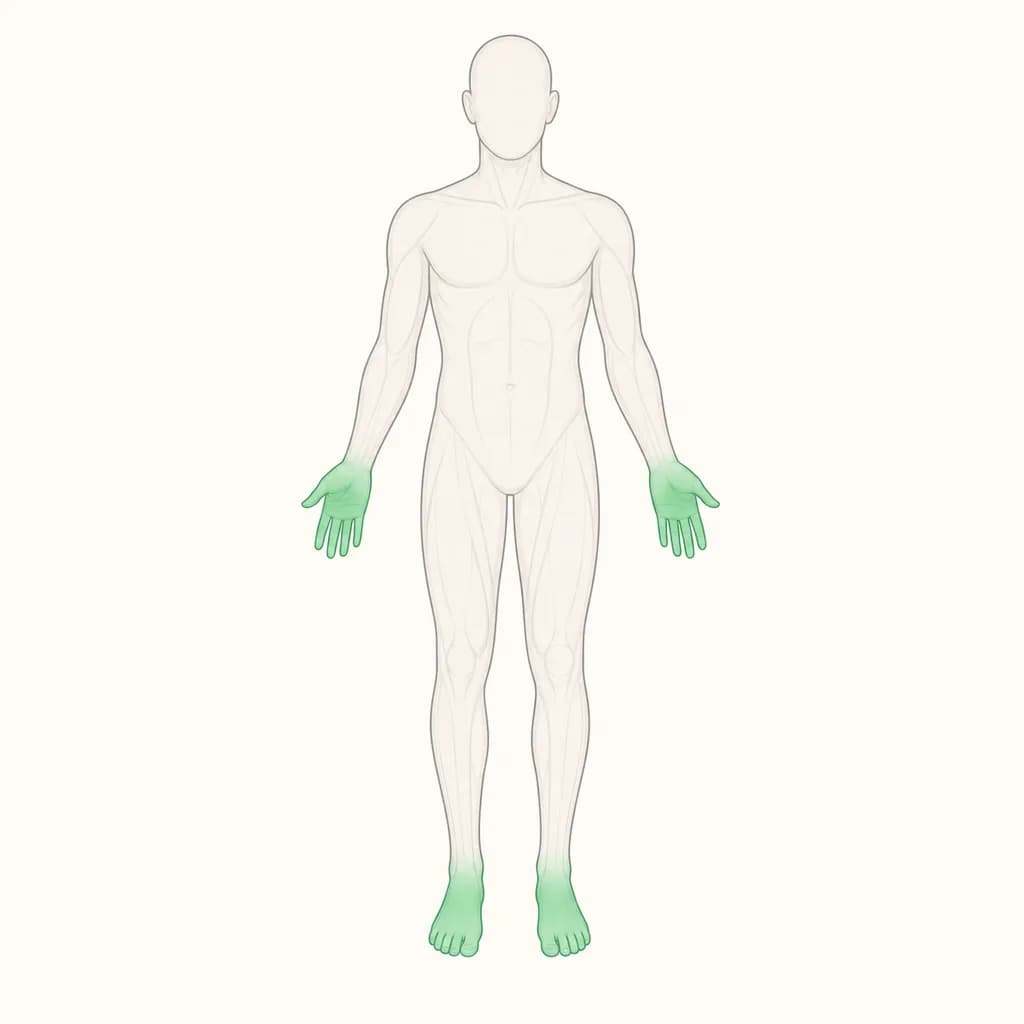
When the surrounding air is cold, small vessels near the skin narrow and send more warm blood toward the body's core. Hands, feet, and the nose therefore lose heat quickly. Damp socks, tight shoes, inactivity, and sitting still can make the sensation stronger. If your hands and feet remain cold after you are warm, or if they become painful, numb, unusually pale, blue, or mottled, another explanation may be present. Anaemia, iron deficiency, an underactive thyroid, and peripheral arterial disease can all need separate evaluation.
Practical winter measures
Use loose, dry layers, warm socks, insulated footwear, and gloves that do not restrict movement. Change damp clothing promptly and move your fingers, ankles, and toes regularly. Warm gradually rather than using very hot water, heaters, or heated pads on numb skin. Keep a brief symptom diary: note temperature exposure, recovery after warming, colour changes, pain, and whether both sides are similar. If the pattern continues indoors or interferes with walking or daily tasks, book a routine appointment.
When to seek care
Contact a clinician when symptoms persist beyond cold exposure, recur frequently, or come with tiredness, breathlessness, leg pain on walking, numbness, sores, or colour changes. Get urgent help if one hand or foot suddenly becomes cold, pale or blue, severely painful, weak, or numb. Prompt care is also needed for skin injury that does not start healing.
Questions for your doctor
Do my symptoms look like a temperature response or a circulation problem? Should I have blood tests for anaemia or thyroid function? How can I protect numb skin in winter? Which warning signs should make me seek urgent help?
Find care
General Clinics & Polyclinics in Dubai
That answer is general. If you want it applied to your own case, these are licensed general clinics & polyclinics listed in Dubai.
The Court Residence, 39B Street, Jumeirah 1, Dubai
Accepts: Tabby, Tamara
Elite Business Bay Residence - Shop 03 & 04, 34 Marasi Dr - Business Bay - Dubai - United Arab Emirates
Accepts: Tabby
Airport View Building, Al Garhoud, Dubai
Accepts: Daman, Thiqa, AXA, Cigna +25 more
IBIS Building, 5th Floor, Unit 5003, Deira, Dubai
Accepts: AXA, Cigna, MetLife, Allianz Care +18 more
Ordered by verification status and how complete each clinic's public record is, then alphabetically. This is a directory listing, not a ranking — Zavis does not rate or recommend providers.
A factual listing drawn from the UAE health regulators' public licence registers. It is not a referral, an endorsement, or advice that any of these providers is right for you.
Questions people ask
Why are my feet colder than the rest of me?
Feet have a large skin surface and can lose heat quickly, especially in damp footwear or when you are inactive.
When is winter coldness not routine?
Persistent, one-sided, painful, numb, or colour-changing symptoms should be medically assessed.
Related
Related reading
Keep reading
Medical disclaimer. This page is general health information, not medical advice, and it cannot diagnose you. Always consult a licensed healthcare provider about your own symptoms and treatment. In an emergency in the UAE, call 998 for an ambulance.