
What should you know about cold and hot urticaria?
Short answer
Cold and hot urticaria are forms of hives in which temperature exposure can trigger itchy welts, swelling, or a wider allergic-type reaction.
This answers one question. It is not a diagnosis and does not replace an assessment by a licensed doctor.
At a glance
- Common trigger clues
- Cold exposure, heat, sweating, exertion, or sudden temperature change.
- Emergency sign
- Breathing difficulty or swelling of the tongue or throat.
What temperature-triggered hives look like
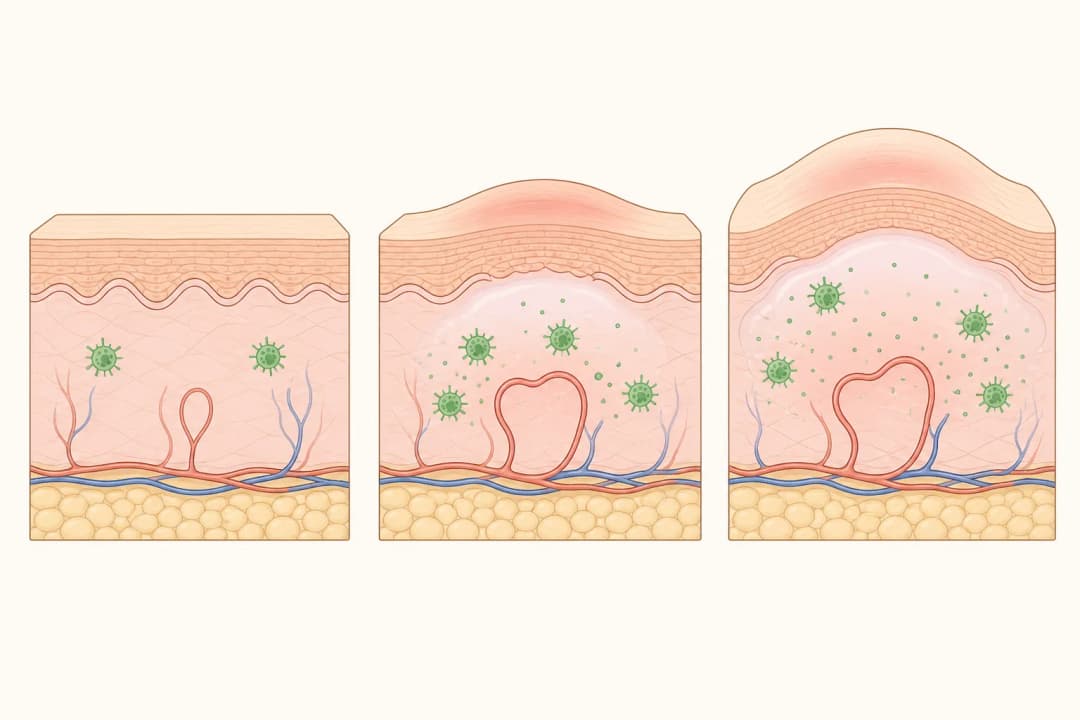
Cold urticaria may appear after cold air, water, objects, or a rapid change in temperature. Heat-related hives may follow warmth, exercise, sweating, hot showers, or emotional stress. Welts can be raised and itchy, and individual marks often change or fade while new ones appear. Swelling around the lips, eyelids, hands, or throat is called angioedema and needs particular attention.
The trigger is not always obvious. A clinician may ask what touched the skin, how quickly the reaction began, whether symptoms followed swimming or exertion, and whether medicines or infections were present.
Reducing reactions
Keep a record of temperature, activity, timing, and symptoms. Use gradual temperature changes, protective clothing in cold conditions, lukewarm bathing, and rest when warmth or exertion brings on welts. Avoid deliberately testing a strong cold or heat reaction, particularly in water. A clinician may recommend a non-drowsy antihistamine plan and explain whether further treatment is appropriate; do not change doses without advice.
When to seek urgent help
Call emergency services immediately for trouble breathing, throat or tongue swelling, faintness, confusion, chest tightness, or rapidly spreading symptoms. Cold-water immersion can trigger a severe whole-body reaction in susceptible people. Seek prompt medical advice for repeated episodes, facial swelling, or hives that interfere with sleep or daily activities.
Questions for your doctor
Ask which trigger pattern fits your symptoms, whether an antihistamine plan is suitable, how to handle swimming or exercise, and what emergency signs your household should recognise.
Find care
General Clinics & Polyclinics in Abu Dhabi
That answer is general. If you want it applied to your own case, these are licensed general clinics & polyclinics listed in Abu Dhabi.
27 Ar Ruwwad St - Shakhbout City - MSH4 - Abu Dhabi - United Arab Emirates
Accepts: Daman, Thiqa, Cigna, MetLife +20 more
Al Ruwais, Al Dhafrah
Accepts: Daman, Thiqa, AXA, Cigna +16 more
Al Bahyah - Al Bahyah Old - Abu Dhabi - United Arab Emirates
Accepts: Daman, Thiqa, Cigna, Allianz Care +18 more
Abu Dhabi
Accepts: Daman, Thiqa, AXA, Cigna +27 more
Ordered by verification status and how complete each clinic's public record is, then alphabetically. This is a directory listing, not a ranking — Zavis does not rate or recommend providers.
A factual listing drawn from the DHA, DOH and MOHAP licence registers. It is not a referral, an endorsement, or advice that any of these providers is right for you.
Questions people ask
Can cold urticaria make swimming risky?
Yes. A large area of cold exposure can provoke a widespread reaction, so discuss water activities with a clinician before swimming.
Are hot showers helpful for hives?
Hot water can aggravate heat-triggered symptoms. Lukewarm water is usually gentler while the cause is being assessed.
Related
Related reading
Keep reading
Medical disclaimer. This page is general health information, not medical advice, and it cannot diagnose you. Always consult a licensed healthcare provider about your own symptoms and treatment. In an emergency in the UAE, call 998 for an ambulance.