
Coil contraception without hormones
Short answer
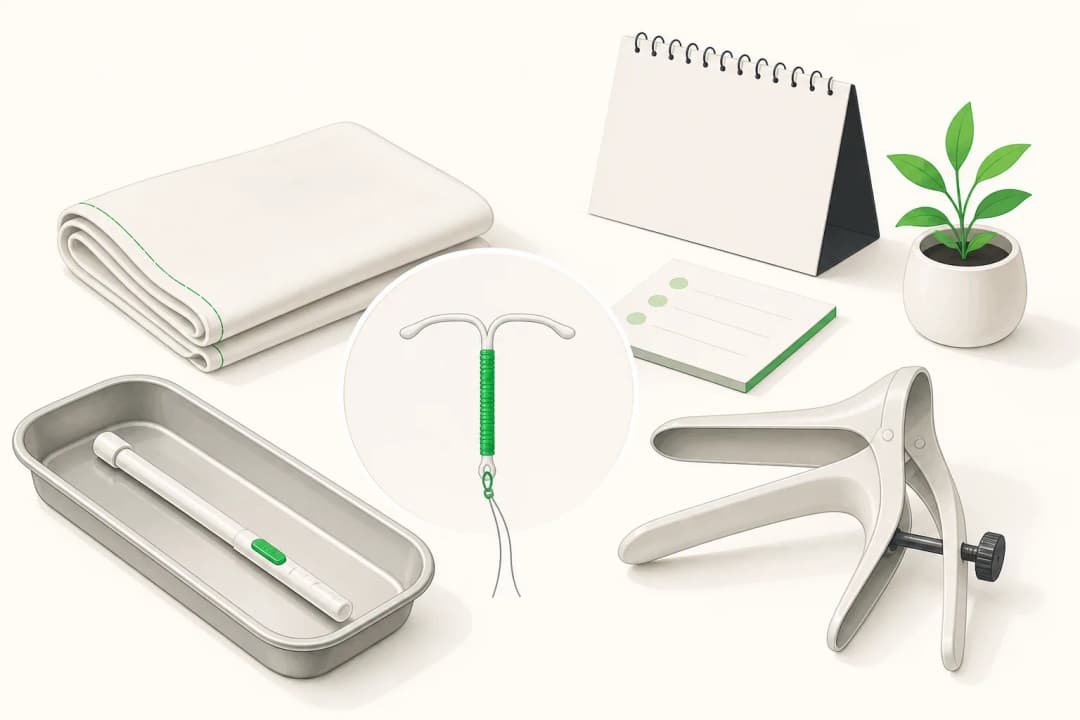
The copper intrauterine device is the non-hormonal coil: it prevents pregnancy without releasing progestogen, but it may make periods heavier or more painful.
This answers one question. It is not a diagnosis and does not replace an assessment by a licensed doctor.
At a glance
- Non-hormonal option
- Copper intrauterine device
- Placement
- Inside the uterus by a trained clinician
- Period change
- Bleeding or cramps may become heavier
The short answer
A trained clinician places it inside the uterus. It provides ongoing contraception and can be removed when pregnancy is wanted or when another method is preferred.
Copper and hormonal coils are different
A copper coil releases copper, which interferes with sperm and fertilisation. It does not suppress ovulation in the way some hormonal contraceptives can, and it contains no oestrogen or progestogen.
A hormonal coil releases progestogen mainly within the uterus and often makes bleeding lighter. That difference matters if you already have heavy or painful periods, anaemia, adenomyosis, endometriosis, or fibroids.
Preparing for fitting and aftercare
Before fitting, discuss your bleeding pattern, pelvic pain, pregnancies, infections, medicines, and any possibility of pregnancy. Ask what pain relief is available and when the device begins protecting against pregnancy.
Cramping and spotting can occur after insertion. Follow the clinic's instructions for checking the threads and arrange a review if you cannot feel them, they feel different, or you can feel the hard part of the device. Use alternative contraception until its position is checked.
Warning signs after insertion
Get prompt medical assessment for worsening lower abdominal pain, fever, unpleasant-smelling discharge, very heavy bleeding, pain during sex, or concern that the coil has moved. These symptoms need evaluation rather than waiting for a routine check.
Take a pregnancy test and seek urgent clinical advice if pregnancy is possible with a coil in place, particularly with one-sided pain, shoulder-tip pain, dizziness, or fainting. A coil does not protect against sexually transmitted infections.
Questions before choosing a coil
Ask how your current periods might change, whether pelvic symptoms need investigation first, which coil size suits your uterus, and how removal is arranged. If avoiding hormones is your priority, confirm that the proposed device is copper rather than hormone-releasing.
Find care
General Clinics & Polyclinics in Abu Dhabi
That answer is general. If you want it applied to your own case, these are licensed general clinics & polyclinics listed in Abu Dhabi.
27 Ar Ruwwad St - Shakhbout City - MSH4 - Abu Dhabi - United Arab Emirates
Accepts: Daman, Thiqa, Cigna, MetLife +20 more
Al Ruwais, Al Dhafrah
Accepts: Daman, Thiqa, AXA, Cigna +16 more
Al Bahyah - Al Bahyah Old - Abu Dhabi - United Arab Emirates
Accepts: Daman, Thiqa, Cigna, Allianz Care +18 more
Abu Dhabi
Accepts: Daman, Thiqa, AXA, Cigna +27 more
Ordered by verification status and how complete each clinic's public record is, then alphabetically. This is a directory listing, not a ranking — Zavis does not rate or recommend providers.
A factual listing drawn from the DHA, DOH and MOHAP licence registers. It is not a referral, an endorsement, or advice that any of these providers is right for you.
Questions people ask
Is every contraceptive coil hormone-free?
No. Copper coils contain no hormones, while hormonal coils release progestogen within the uterus. Check the exact device with your clinician.
Can the copper coil affect my natural cycle?
It does not contain hormones that suppress the cycle, but it can change menstrual bleeding and cramping, especially after insertion.
Does a copper coil protect against sexually transmitted infections?
No. Barrier protection such as condoms is still needed to reduce exposure to sexually transmitted infections.
Related
Related reading
Keep reading
Medical disclaimer. This page is general health information, not medical advice, and it cannot diagnose you. Always consult a licensed healthcare provider about your own symptoms and treatment. In an emergency in the UAE, call 998 for an ambulance.