
Cloudy pee and kidney stones: what to know
Short answer
Cloudy pee can occur with kidney stones when crystals, blood, or inflammation enter the urinary tract, especially alongside colicky pain.
This answers one question. It is not a diagnosis and does not replace an assessment by a licensed doctor.
At a glance
- Urine changes
- Cloudiness may reflect crystals, blood, or cells
- Common pain area
- Flank, back, abdomen, or groin
- Urgent combination
- Fever plus pain or reduced urine
Why stones may change urine
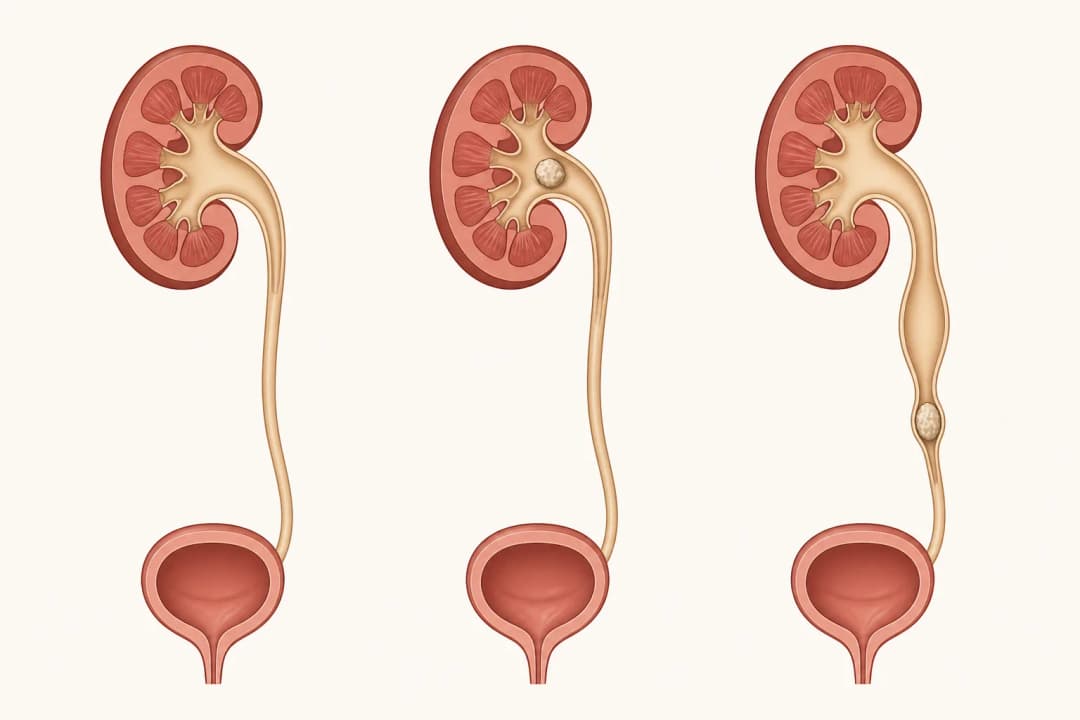
A kidney stone can scrape or obstruct part of the urinary tract. This may add blood, cells, or mineral particles to urine and make it look cloudy. Stones often cause intense pain in the flank or back that may move toward the abdomen or groin, though symptoms vary. Painful urination, nausea, or blood can occur when a stone is nearer the bladder. Dehydration can make urine more concentrated and may support crystal formation. Cloudy urine does not prove that a stone is present, because infection can look similar.
What to do next
Arrange a GP consultation if cloudiness continues, especially with pain, blood, or difficulty passing urine. A clinician may test urine for blood and infection and decide whether imaging such as an abdominal ultrasound is useful. Drink normally if you can and follow any fluid guidance you have already received. Do not delay assessment by trying to diagnose the stone from urine appearance alone.
When to seek urgent care
Seek urgent care for severe or worsening flank pain, fever or chills, repeated vomiting, inability to pass urine, faintness, or feeling very unwell. A blocked urinary tract combined with infection can become serious. Prompt assessment is also needed for heavy blood loss or pain that cannot be controlled with advice from a clinician.
Questions for your doctor
Ask whether your symptoms fit a stone, whether urine testing or an abdominal ultrasound is appropriate, and how to manage fluids and pain safely. Ask what change would mean you should return urgently.
Find care
General Clinics & Polyclinics in Abu Dhabi
That answer is general. If you want it applied to your own case, these are licensed general clinics & polyclinics listed in Abu Dhabi.
27 Ar Ruwwad St - Shakhbout City - MSH4 - Abu Dhabi - United Arab Emirates
Accepts: Daman, Thiqa, Cigna, MetLife +20 more
Al Ruwais, Al Dhafrah
Accepts: Daman, Thiqa, AXA, Cigna +16 more
Al Bahyah - Al Bahyah Old - Abu Dhabi - United Arab Emirates
Accepts: Daman, Thiqa, Cigna, Allianz Care +18 more
Abu Dhabi
Accepts: Daman, Thiqa, AXA, Cigna +27 more
Ordered by verification status and how complete each clinic's public record is, then alphabetically. This is a directory listing, not a ranking — Zavis does not rate or recommend providers.
A factual listing drawn from the DHA, DOH and MOHAP licence registers. It is not a referral, an endorsement, or advice that any of these providers is right for you.
Questions people ask
Does cloudy urine mean I have kidney stones?
No. Stones can cause cloudy urine, but infection, dehydration, and other conditions can do so as well.
Can a kidney stone make it hard to urinate?
A stone near the bladder or urethra can interfere with flow; inability to pass urine needs urgent care.
Related
Related reading
Keep reading
Medical disclaimer. This page is general health information, not medical advice, and it cannot diagnose you. Always consult a licensed healthcare provider about your own symptoms and treatment. In an emergency in the UAE, call 998 for an ambulance.