
Classic seminoma: what the diagnosis means
Short answer
Classic seminoma is a type of testicular germ cell cancer that is diagnosed from tissue after removal of the affected testicle.
This answers one question. It is not a diagnosis and does not replace an assessment by a licensed doctor.
At a glance
- Origin
- A germ cell tumour that usually begins in the testis.
- Initial treatment
- The affected testicle is generally removed through the groin for diagnosis and treatment.
- Assessment
- Pathology, tumour-marker trends, and imaging determine stage and next steps.
The short answer
Ultrasound usually identifies a solid mass inside the testis. Blood tumour markers and scans help with staging, while the pathology report confirms whether the tumour is pure seminoma and records features that guide follow-up.
How the pathology and markers fit together
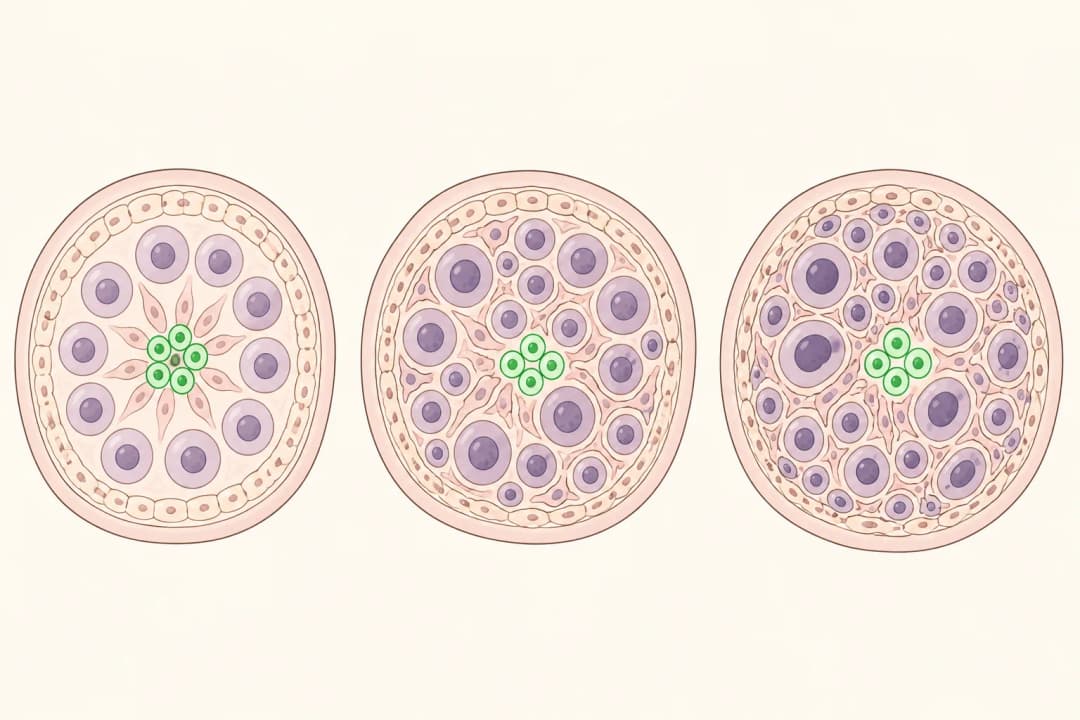
Under the microscope, classic seminoma is typically made of fairly uniform germ cells separated by fibrous bands containing immune cells. Immunohistochemistry can support germ cell differentiation and distinguish seminoma from non-seminomatous tumours. The report also addresses tumour size, extension into nearby structures, blood-vessel or lymphatic invasion, and the spermatic-cord margin.
Alpha-fetoprotein should not be raised by pure seminoma. If it is elevated, the team investigates for a non-seminomatous component even when the sampled tissue resembles seminoma. Beta-human chorionic gonadotropin can rise in seminoma, and lactate dehydrogenase may contribute to the overall assessment. Marker trends are interpreted with imaging rather than in isolation.
Treatment and fertility planning
The usual first treatment for a suspicious testicular tumour is removal of the testicle through an incision in the groin. A biopsy through the scrotum is generally avoided because it can disrupt normal drainage pathways. After surgery, choices depend on stage and may include structured surveillance or additional treatment. Chemotherapy is used for some stages or if disease returns; surgery may have selected roles for residual or recurrent disease. Before treatment, discuss sperm banking, testosterone, fertility goals, and whether a testicular prosthesis is wanted.
When symptoms need medical care
Seminoma commonly presents as a testicular lump, enlargement, firmness, or a feeling of heaviness without tenderness. Any new testicular change should be examined promptly, even without pain. Sudden severe testicular pain, rapid swelling, nausea, or a high-riding testicle can signal torsion, which is an emergency because blood flow may be interrupted. During treatment, urgent contact with the oncology team is appropriate for fever, breathing difficulty, uncontrolled vomiting, or marked weakness.
Points to discuss with your team
Ask whether the pathology showed pure seminoma, whether it extended beyond the testis, and what the tumour markers did after surgery. Request a clear explanation of the stage, the benefits and burdens of surveillance versus further treatment, the scan and marker schedule, fertility preservation, testosterone monitoring, and whom to contact between appointments.
Questions people ask
Why is the testicle usually removed instead of biopsied through the scrotum?
Groin surgery provides the tissue diagnosis and treats the primary tumour while avoiding disruption of scrotal lymphatic drainage.
Can someone function normally with one testicle?
The remaining healthy testicle can often provide enough testosterone and sperm, although baseline fertility and treatment effects vary. Testing and sperm banking can be discussed before further therapy.
Does every seminoma require chemotherapy after surgery?
No. Some people can use active surveillance after surgery, while stage, marker results, imaging, and individual circumstances determine whether further treatment is advised.
Related
Related reading
Keep reading
Cancer care in the UAE
Hospitals & Medical Centers in Abu Dhabi
Most UAE cancer care is delivered inside hospital services rather than by standalone oncology clinics, so these are licensed hospitals & medical centers listed in Abu Dhabi. Confirm the specific cancer service exists before you travel, and know that asking for a second opinion is routine.
Ahalia Hospital Musaffah Building - Musaffah - Musaffah Industrial - Abu Dhabi - United Arab Emirates
Accepts: Daman, Thiqa, AXA, Cigna +26 more
Al Ruwais Industrial City - Abu Dhabi - United Arab Emirates
Accepts: Daman, Thiqa, AXA, Cigna +30 more
Abu Dhabi, Abu Dhabi
Accepts: Daman, Thiqa, AXA, Cigna +30 more
Second opinions are routine in cancer care and asking for one does not affect your treatment. How to arrange a second opinion in the UAE.
Ordered by verification status and how complete each clinic's public record is, then alphabetically. This is a directory listing, not a ranking — Zavis does not rate or recommend providers.
A factual listing drawn from the DHA, DOH and MOHAP licence registers. It is not a referral, an endorsement, or advice that any of these providers is right for you.
Medical disclaimer. This page is general health information, not medical advice, and it cannot diagnose you. Always consult a licensed healthcare provider about your own symptoms and treatment. In an emergency in the UAE, call 998 for an ambulance.