
What should you know about clammy cold hands and feet?
Short answer
Clammy cold hands and feet can result from cold exposure, sweating, stress, or reduced blood flow, but persistent or new symptoms deserve medical assessment.
This answers one question. It is not a diagnosis and does not replace an assessment by a licensed doctor.
At a glance
- Short-lived episodes
- May follow cold exposure, stress or sweating.
- Book an appointment
- Persistent, recurrent or one-sided symptoms need assessment.
- Urgent warning
- Sudden coldness with severe pain or blue colour needs urgent care.
The short answer
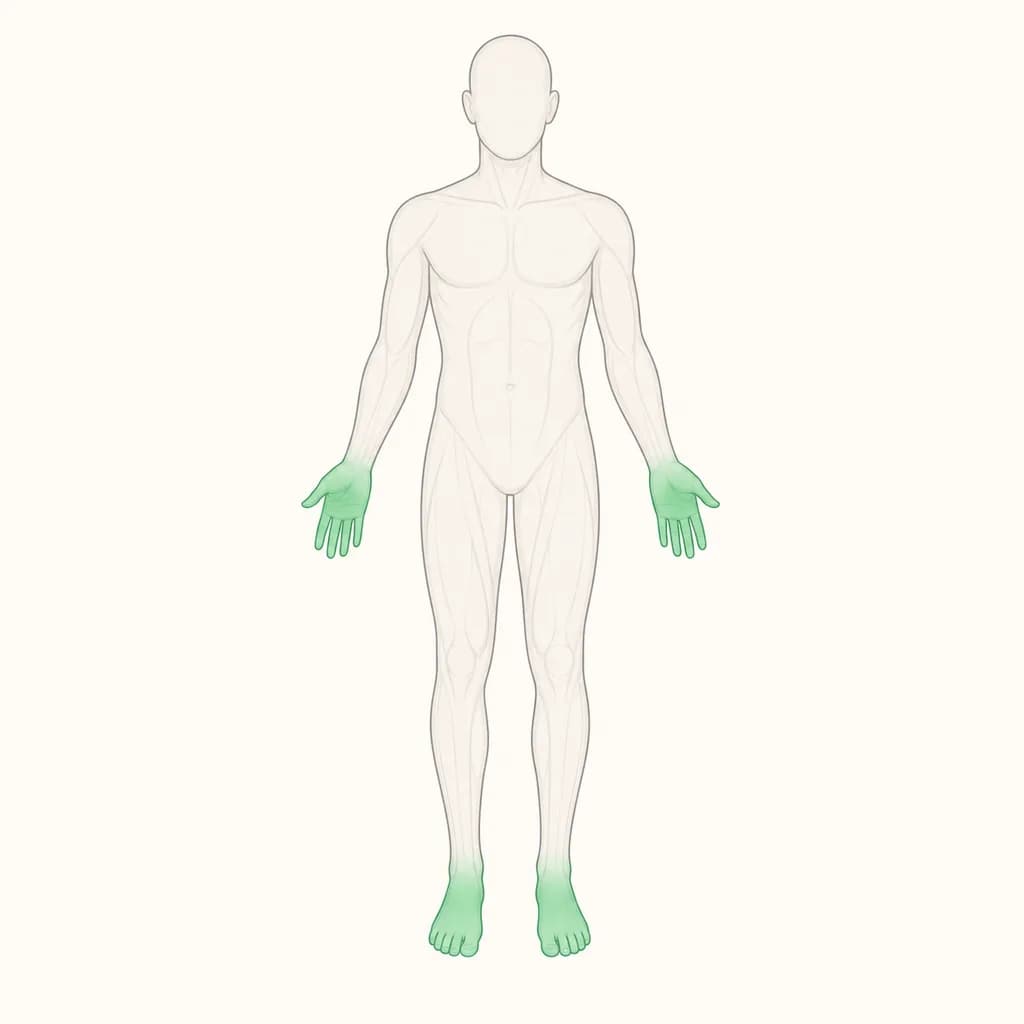
Clammy cold hands and feet can result from cold exposure, sweating, stress, or reduced blood flow, but persistent or new symptoms deserve medical assessment. Clammy skin means the hands or feet feel moist or sweaty, while coldness can reflect narrowed surface blood vessels. The two sensations can occur together during anxiety, illness or a cool environment, and they do not identify one diagnosis by themselves.
What clammy cold hands and feet can mean
Temporary episodes may settle after warming up, drying the skin and resting. Stress can activate the body's alert response, causing sweating and directing blood away from the skin. Some health conditions can also present with cold extremities. People with anaemia or iron deficiency anaemia may notice cold hands and feet alongside tiredness, paler skin, breathlessness or dizziness. Hypothyroidism can present with cold sensitivity, low energy, dry skin or constipation. Peripheral arterial disease can present with a cool foot, leg discomfort when walking, slow-healing sores or skin colour change. These patterns are clues for a clinician, not a way to diagnose yourself.
What you can do now
Move to a warm place and use gloves, socks or loose layers. Warm gradually; avoid placing numb skin directly against very hot water, heaters or heating pads. Dry sweaty hands and feet, change damp socks and keep footwear comfortable. Gentle movement can help circulation, provided it does not cause pain. Note when episodes occur, how long they last, whether both sides are affected, and any triggers such as cold, stress or exercise. Arrange a routine appointment if the symptom keeps returning, lasts despite warming, or comes with fatigue, pain, numbness, colour change or wounds. Do not start iron supplementation without advice, because treatment depends on the cause and excess iron can be harmful.
When to seek care
Seek urgent medical help if a hand or foot suddenly becomes very cold, pale, blue or markedly painful, especially when the change affects one side. Urgent assessment is also needed for new weakness, loss of feeling, confusion, fainting, severe breathlessness or chest pain. Contact a clinician promptly for a sore that is not healing, blackened skin, worsening pain at rest, or repeated episodes with dizziness or unusual sweating. If symptoms are mild but ongoing, a clinician may examine pulses, skin temperature and sensation and may check blood tests for anaemia, iron deficiency or thyroid problems.
Questions for your doctor
You could ask: What might explain the clamminess and coldness together? Do I need blood tests for anaemia, iron deficiency or thyroid function? Could medicines, smoking or another circulation problem contribute? What changes in colour, pain, numbness or skin condition should prompt urgent help? Bring a list of medicines and a brief record of triggers, timing and associated symptoms.
Find care
General Clinics & Polyclinics in Abu Dhabi
That answer is general. If you want it applied to your own case, these are licensed general clinics & polyclinics listed in Abu Dhabi.
27 Ar Ruwwad St - Shakhbout City - MSH4 - Abu Dhabi - United Arab Emirates
Accepts: Daman, Thiqa, Cigna, MetLife +20 more
Al Ruwais, Al Dhafrah
Accepts: Daman, Thiqa, AXA, Cigna +16 more
Al Bahyah - Al Bahyah Old - Abu Dhabi - United Arab Emirates
Accepts: Daman, Thiqa, Cigna, Allianz Care +18 more
Abu Dhabi
Accepts: Daman, Thiqa, AXA, Cigna +27 more
Ordered by verification status and how complete each clinic's public record is, then alphabetically. This is a directory listing, not a ranking — Zavis does not rate or recommend providers.
A factual listing drawn from the DHA, DOH and MOHAP licence registers. It is not a referral, an endorsement, or advice that any of these providers is right for you.
Questions people ask
Can anxiety cause clammy cold hands and feet?
Yes. The body's alert response can increase sweating and narrow blood vessels in the skin, making hands and feet feel damp and cold. Recurrent episodes should still be discussed with a clinician, especially if other symptoms occur.
When should I be worried about cold clammy feet?
Seek urgent help for sudden one-sided coldness, severe pain, blue or pale colour, loss of feeling, weakness or a wound that is worsening. Persistent milder symptoms also merit a routine medical review.
Should I take iron for cold hands and feet?
Not without medical advice. Iron deficiency anaemia can present with cold hands and feet, but testing helps establish whether iron is needed and identifies the underlying cause.
Related
Related reading
Keep reading
Medical disclaimer. This page is general health information, not medical advice, and it cannot diagnose you. Always consult a licensed healthcare provider about your own symptoms and treatment. In an emergency in the UAE, call 998 for an ambulance.