
What should you know about chemo and kidney stones?
Short answer
Kidney stones during chemotherapy can cause severe urinary pain, while dehydration or treatment effects may increase the need for prompt medical assessment.
This answers one question. It is not a diagnosis and does not replace an assessment by a licensed doctor.
At a glance
- Possible symptoms
- Flank pain, urinary pain, nausea, or reduced urine
- Key concern
- Infection or blockage during treatment
- Possible assessment
- Urine tests, blood tests, or abdominal ultrasound
The short answer
Kidney stones during chemotherapy can cause severe urinary pain, while dehydration or treatment effects may increase the need for prompt medical assessment. A cancer treatment team should know about new flank or abdominal pain, blood in urine, painful urination, or difficulty passing urine because infection or blockage may need urgent care.
How the problems can overlap
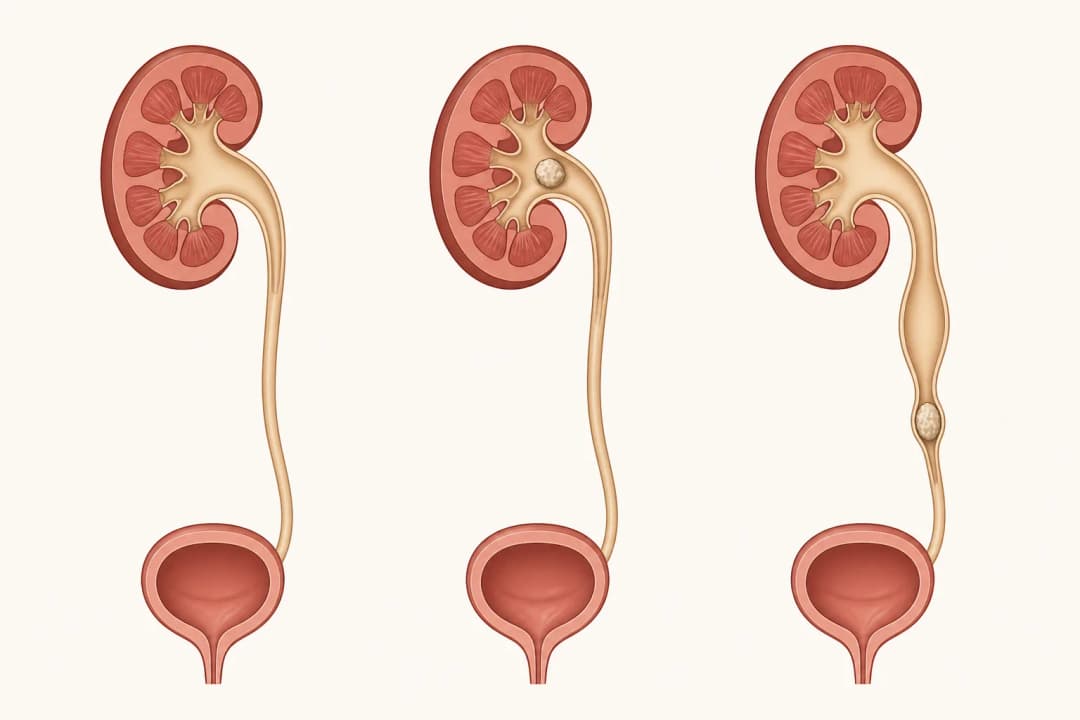
A stone is a solid deposit that can move from the kidney into the ureter and obstruct urine flow. This may cause waves of flank or abdominal pain, nausea, blood in urine, or painful urination. Chemotherapy can also affect appetite, fluid intake, bowel function, or kidney handling of medicines, making it harder to interpret a new symptom without assessment.
Dehydration can concentrate urine and worsen weakness, but pain and reduced urine should not be dismissed as a treatment side effect. Fever or chills alongside urinary symptoms may signal infection behind an obstruction.
What to do during treatment
Tell your oncology team promptly about new pain, urinary changes, vomiting, or difficulty keeping fluids down. Drink according to the fluid plan given by your clinicians; some people have restrictions because of kidney, heart, or cancer-related problems. Do not start a stone remedy or pain medicine without checking for interactions with chemotherapy and other prescriptions.
Assessment may include a physical examination, urine and blood tests, and imaging such as an abdominal ultrasound. Keep a record of when pain began, where it travels, urine output, temperature, and medicines taken.
When to seek urgent care
Seek urgent medical help for fever or chills, severe or worsening flank pain, repeated vomiting, confusion, faintness, very little urine, or inability to pass urine. During chemotherapy, a possible infection or obstruction deserves prompt contact with the treatment team, even if symptoms began mildly.
Questions for your doctor
Ask whether your chemotherapy affects kidney function or fluid needs, which pain medicines are safe, and whether urine or imaging tests are needed. Clarify who to call after hours and which symptoms mean you should attend emergency care rather than wait for the next treatment visit.
Find care
General Clinics & Polyclinics in Abu Dhabi
That answer is general. If you want it applied to your own case, these are licensed general clinics & polyclinics listed in Abu Dhabi.
27 Ar Ruwwad St - Shakhbout City - MSH4 - Abu Dhabi - United Arab Emirates
Accepts: Daman, Thiqa, Cigna, MetLife +20 more
Al Ruwais, Al Dhafrah
Accepts: Daman, Thiqa, AXA, Cigna +16 more
Al Bahyah - Al Bahyah Old - Abu Dhabi - United Arab Emirates
Accepts: Daman, Thiqa, Cigna, Allianz Care +18 more
Abu Dhabi
Accepts: Daman, Thiqa, AXA, Cigna +27 more
Ordered by verification status and how complete each clinic's public record is, then alphabetically. This is a directory listing, not a ranking — Zavis does not rate or recommend providers.
A factual listing drawn from the DHA, DOH and MOHAP licence registers. It is not a referral, an endorsement, or advice that any of these providers is right for you.
Questions people ask
Can chemotherapy cause kidney stones?
Some treatment-related changes can affect hydration or kidney function, but new stone-like symptoms need individual assessment rather than an assumption about the cause.
Can I increase fluids on my own?
Ask your oncology team first because the safe fluid amount depends on kidney, heart, and treatment factors.
Related
Related reading
Keep reading
Medical disclaimer. This page is general health information, not medical advice, and it cannot diagnose you. Always consult a licensed healthcare provider about your own symptoms and treatment. In an emergency in the UAE, call 998 for an ambulance.