
Cervical stitch during pregnancy: what to know
Short answer
A cervical stitch supports a cervix at risk of opening too early and may help reduce late pregnancy loss or early birth.
This answers one question. It is not a diagnosis and does not replace an assessment by a licensed doctor.
At a glance
- Other name
- Cervical cerclage
- Purpose
- Helps support a cervix that may open too early
- Common route
- Placed through the vagina under anaesthesia
- Follow-up
- Includes a plan for monitoring, removal, and birth
The short answer
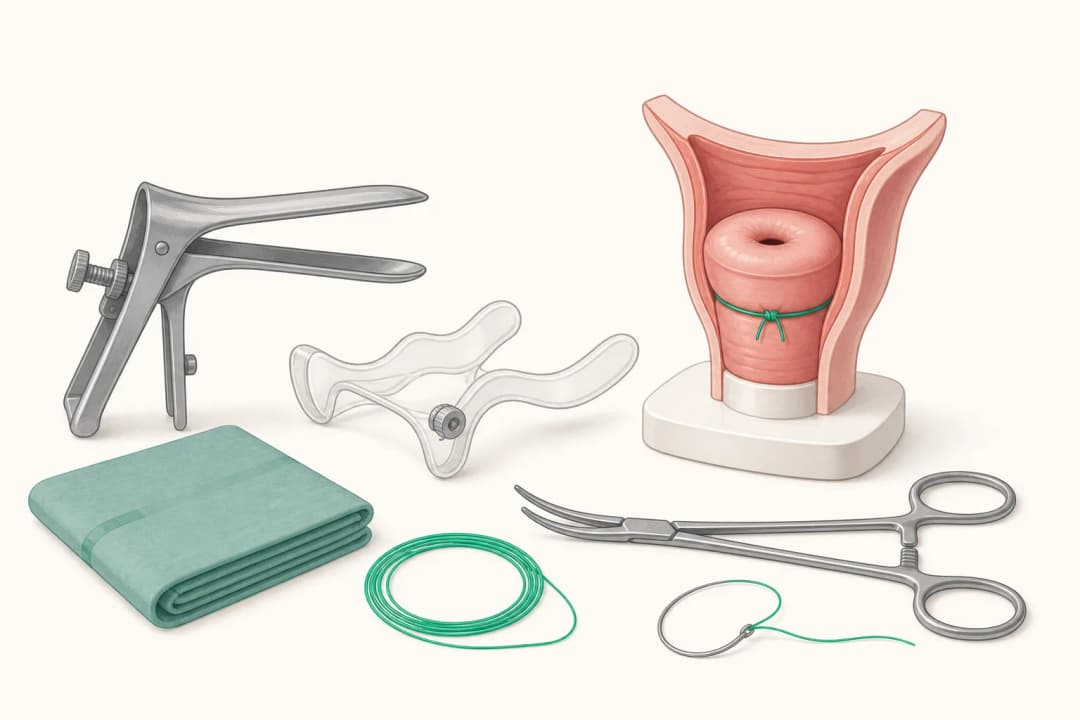
Also called cervical cerclage, the treatment places strong suture material around the cervix to help it remain closed. Whether it is suitable depends on pregnancy history, ultrasound findings, examination findings, symptoms, and the obstetric team's assessment.
Why and how a cervical stitch is used
The cervix normally stays closed during pregnancy and then softens and opens for birth. A stitch may be discussed when previous pregnancy outcomes or a shortening cervix suggest that it could open too soon. A planned stitch is commonly placed through the vagina under anaesthesia. In selected circumstances, an abdominal approach or an urgent stitch after the cervix has started opening may be considered.
Cerclage cannot prevent every early birth, and it is not appropriate in every situation. Active labour, significant bleeding, infection, or broken waters can change whether placement is advisable. Your obstetrician should explain the expected benefit in your case, procedural risks, anaesthesia, and other options such as cervical monitoring or progesterone when relevant.
Preparing for placement and recovery
Before the procedure, follow instructions about eating, drinking, and regular medicines. Tell the team about allergies, discharge, bleeding, contractions, or possible fluid leakage. Ask whether you need someone to take you home and what activity, work, exercise, and sex guidance applies afterward.
Mild cramping or light spotting can occur after a vaginal stitch, but the maternity unit should give you clear discharge instructions. Attend planned scans and reviews, and know the removal plan. A vaginal stitch is generally removed before labour or earlier if labour begins or the waters break; an abdominal stitch follows a different birth plan and is not managed in the same way.
Symptoms that need immediate advice
Contact maternity triage immediately for regular contractions or tightening, increasing pelvic pressure, vaginal bleeding, a gush or ongoing trickle of fluid, fever, chills, foul-smelling or unusual discharge, or worsening abdominal or back pain. Also call if fetal movement is reduced once you normally feel a regular movement pattern. Do not wait for a routine appointment, because the team may need to check for labour, infection, or ruptured membranes.
Questions to clarify your care plan
Ask what finding led to the recommendation, which type of stitch is proposed, and what the alternatives mean for you. Confirm how the procedure will be performed, which symptoms should prompt a call, whether follow-up scans are planned, when removal is expected, and how the stitch affects the timing or method of birth.
Find care
General Clinics & Polyclinics in Abu Dhabi
That answer is general. If you want it applied to your own case, these are licensed general clinics & polyclinics listed in Abu Dhabi.
27 Ar Ruwwad St - Shakhbout City - MSH4 - Abu Dhabi - United Arab Emirates
Accepts: Daman, Thiqa, Cigna, MetLife +20 more
Al Ruwais, Al Dhafrah
Accepts: Daman, Thiqa, AXA, Cigna +16 more
Al Bahyah - Al Bahyah Old - Abu Dhabi - United Arab Emirates
Accepts: Daman, Thiqa, Cigna, Allianz Care +18 more
Abu Dhabi
Accepts: Daman, Thiqa, AXA, Cigna +27 more
Ordered by verification status and how complete each clinic's public record is, then alphabetically. This is a directory listing, not a ranking — Zavis does not rate or recommend providers.
A factual listing drawn from the DHA, DOH and MOHAP licence registers. It is not a referral, an endorsement, or advice that any of these providers is right for you.
Questions people ask
Does having a cervical stitch guarantee that pregnancy will continue to term?
No. A stitch may reduce the chance of late pregnancy loss or early birth for some people, but it cannot prevent every cause. Your obstetrician can explain why it is being considered and what other monitoring or treatment may be needed.
Is a cervical stitch painful?
Anaesthesia is used for placement, so the team will discuss how discomfort is controlled during the procedure. Cramping or spotting may occur afterward; severe or worsening pain needs prompt maternity advice.
What happens if labour starts while the stitch is still in place?
Contact maternity triage straight away if you develop contractions, tightening, pressure, bleeding, or fluid leakage. A vaginal stitch may need urgent assessment and removal to avoid injury as the cervix opens.
Related
Related reading
Keep reading
Medical disclaimer. This page is general health information, not medical advice, and it cannot diagnose you. Always consult a licensed healthcare provider about your own symptoms and treatment. In an emergency in the UAE, call 998 for an ambulance.