
How the McDonald cerclage technique works
Short answer
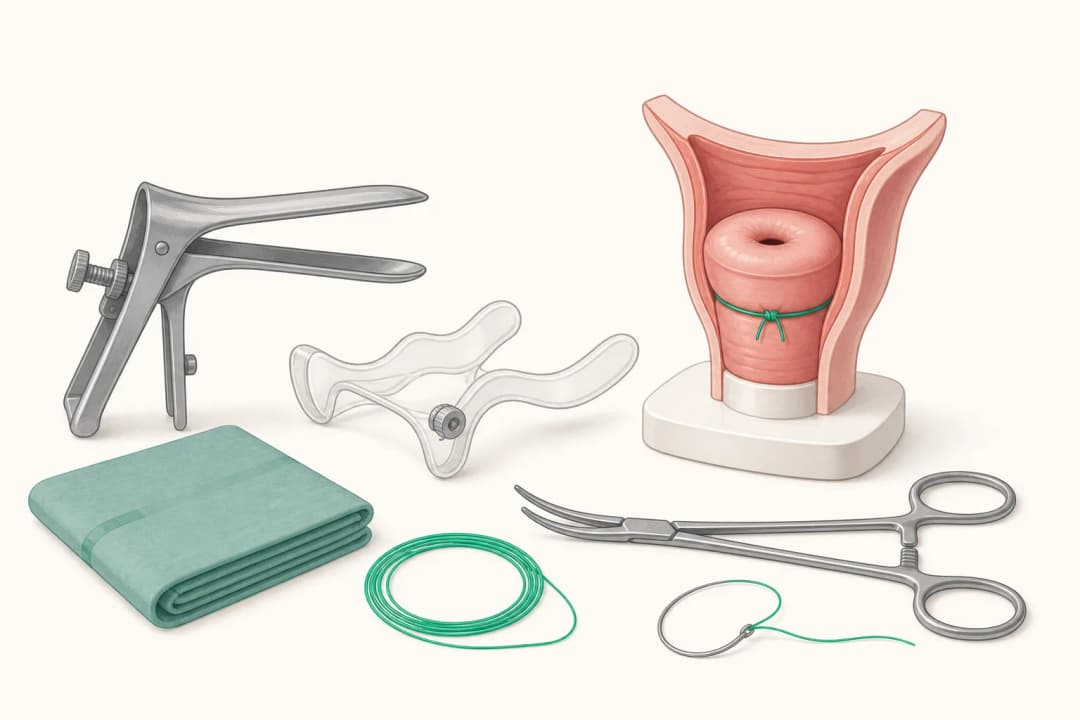
In the McDonald technique, a clinician places a strong suture around the cervix through the vagina and tightens it to provide mechanical support during pregnancy.
This answers one question. It is not a diagnosis and does not replace an assessment by a licensed doctor.
At a glance
- Access route
- Through the vagina
- Incision
- An abdominal incision is not normally part of this technique
- Support
- A tightened suture helps the cervix remain closed
What happens during the procedure
Anaesthesia is used, and the cervix is viewed with instruments passed through the vagina. The clinician places the suture around the outer part of the cervix while taking care to avoid the bladder, membranes and nearby tissue. Drawing the ends together narrows the cervical opening, and a knot holds the support in place. No abdominal incision is normally required for this technique.
The exact suture position, knot location and medicines used can vary with anatomy and clinical circumstances. The team checks for bleeding, contractions, membrane concerns and signs of infection before and after placement.
Getting ready and recovering
Follow your hospital's instructions on eating, drinking and regular medicines before anaesthesia. Arrange transport home if discharge is planned, and make sure you know how to reach maternity triage. Mild cramping and limited spotting can follow the procedure; use only pain relief approved by your pregnancy care team.
Avoid deciding your own bed-rest schedule. Instead, obtain written guidance about lifting, exercise, work, sex and travel, because advice depends on why the stitch was placed and whether symptoms continue. Attend the planned review and retain the removal plan in your maternity notes.
When recovery is not following the expected course
Urgent assessment is needed for contractions that become regular, bleeding that is heavy or increasing, fluid leaking from the vagina, fever, chills, unpleasant-smelling discharge or intense pelvic or abdominal pain. Report reduced fetal movement according to the instructions for your stage of pregnancy. These symptoms matter because labour, membrane rupture or infection may require a change in the stitch plan.
Details worth confirming
Ask where the knot will sit, what anaesthetic choices are available, how long observation is expected and which symptoms are normal immediately afterwards. Find out who will remove the suture, where removal will happen and whether your planned route of birth changes that arrangement.
Find care
General Clinics & Polyclinics in Abu Dhabi
That answer is general. If you want it applied to your own case, these are licensed general clinics & polyclinics listed in Abu Dhabi.
27 Ar Ruwwad St - Shakhbout City - MSH4 - Abu Dhabi - United Arab Emirates
Accepts: Daman, Thiqa, Cigna, MetLife +20 more
Al Ruwais, Al Dhafrah
Accepts: Daman, Thiqa, AXA, Cigna +16 more
Al Bahyah - Al Bahyah Old - Abu Dhabi - United Arab Emirates
Accepts: Daman, Thiqa, Cigna, Allianz Care +18 more
Abu Dhabi
Accepts: Daman, Thiqa, AXA, Cigna +27 more
Ordered by verification status and how complete each clinic's public record is, then alphabetically. This is a directory listing, not a ranking — Zavis does not rate or recommend providers.
A factual listing drawn from the DHA, DOH and MOHAP licence registers. It is not a referral, an endorsement, or advice that any of these providers is right for you.
Questions people ask
Does the McDonald technique require abdominal surgery?
It is normally performed through the vagina without an abdominal incision. An abdominal cerclage is a different approach used in selected circumstances.
Is the McDonald stitch removed using another major operation?
Removal is commonly a vaginal procedure and is generally simpler than placement. Anaesthesia needs and location depend on the knot, access and your clinical situation.
Related
Related reading
Keep reading
Medical disclaimer. This page is general health information, not medical advice, and it cannot diagnose you. Always consult a licensed healthcare provider about your own symptoms and treatment. In an emergency in the UAE, call 998 for an ambulance.