
Cervical cerclage for twins: what to know
Short answer
A twin pregnancy alone does not automatically call for cervical cerclage; the decision depends on cervical changes, pregnancy history, symptoms and specialist assessment.
This answers one question. It is not a diagnosis and does not replace an assessment by a licensed doctor.
At a glance
- Purpose
- To support a cervix at risk of opening too early
- Decision basis
- Cervical findings, pregnancy history, symptoms and specialist judgement
- Urgent signs
- Bleeding, fluid leakage, contractions, fever or severe pain
Why the decision differs with twins
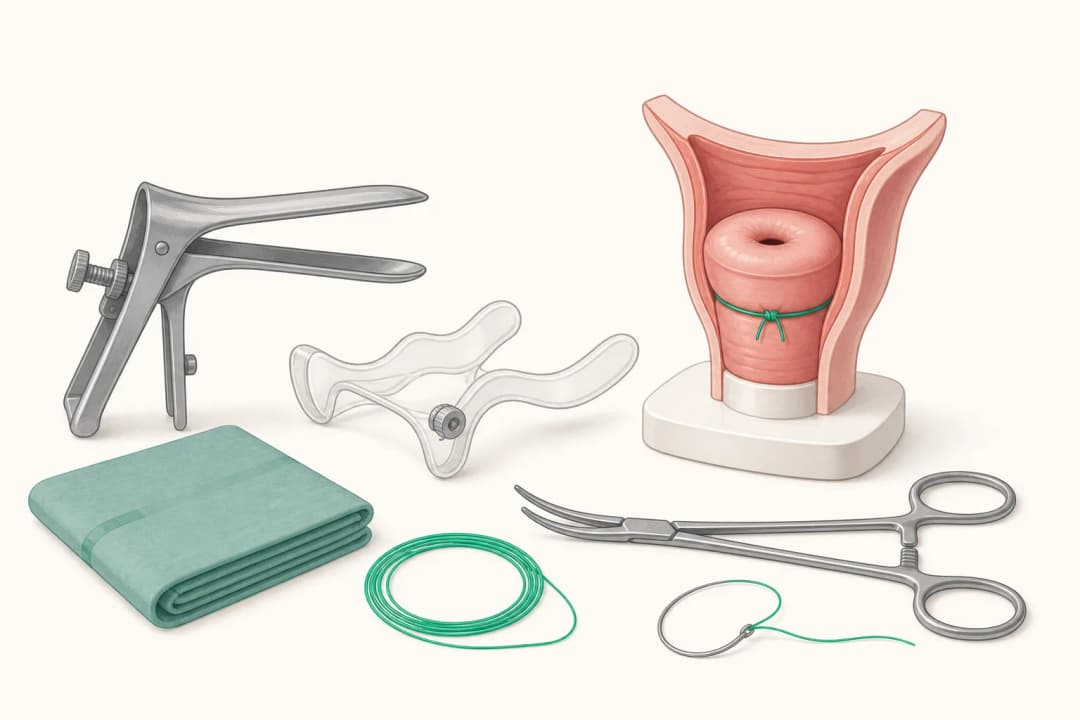
Cerclage places a strong suture around the cervix to help it remain closed. Twin pregnancies already place greater pressure on the cervix, but a stitch is not routinely suitable simply because two babies are present. A maternity specialist considers whether the cervix is shortening or opening, whether the membranes are exposed, and whether a previous pregnancy suggests cervical weakness.
The possible benefit must be weighed against procedure-related concerns such as bleeding, infection, contractions or rupture of the membranes. Active labour, significant infection or ruptured membranes may make placement inappropriate.
How to prepare for a specialist review
Bring details of earlier pregnancies, including any late miscarriage, early birth or previous cervical procedure. Your team may assess cervical length by ultrasound and check for contractions, bleeding, fluid leakage or infection before recommending a plan. If cerclage is offered, ask about anaesthesia, observation afterwards, activity guidance and the expected timing and method of stitch removal.
Keep every planned maternity appointment because cervical change can occur without obvious discomfort. Follow the care team's instructions about medicines, sex, exercise and travel rather than imposing restrictions on yourself.
Symptoms that need prompt attention
Contact your maternity unit urgently for vaginal bleeding, a gush or persistent trickle of fluid, regular tightening, worsening pelvic pressure, fever, chills, foul-smelling discharge or severe abdominal pain. After a stitch, new contractions or fluid leakage also need prompt assessment because they can signal labour, membrane rupture or infection.
Questions for your maternity specialist
Ask what specific finding supports cerclage in your twin pregnancy, what alternatives are reasonable, how your cervix will be monitored, and which symptoms should take you directly to maternity triage. Clarify whether the planned birth approach affects removal of the stitch.
Find care
General Clinics & Polyclinics in Abu Dhabi
That answer is general. If you want it applied to your own case, these are licensed general clinics & polyclinics listed in Abu Dhabi.
27 Ar Ruwwad St - Shakhbout City - MSH4 - Abu Dhabi - United Arab Emirates
Accepts: Daman, Thiqa, Cigna, MetLife +20 more
Al Ruwais, Al Dhafrah
Accepts: Daman, Thiqa, AXA, Cigna +16 more
Al Bahyah - Al Bahyah Old - Abu Dhabi - United Arab Emirates
Accepts: Daman, Thiqa, Cigna, Allianz Care +18 more
Abu Dhabi
Accepts: Daman, Thiqa, AXA, Cigna +27 more
Ordered by verification status and how complete each clinic's public record is, then alphabetically. This is a directory listing, not a ranking — Zavis does not rate or recommend providers.
A factual listing drawn from the DHA, DOH and MOHAP licence registers. It is not a referral, an endorsement, or advice that any of these providers is right for you.
Questions people ask
Is cerclage routinely recommended for every twin pregnancy?
Carrying twins by itself is not enough to determine that a stitch will help. The recommendation is individualised after reviewing cervical findings, pregnancy history and current symptoms.
Can cervical length be checked after a cerclage?
Your maternity team decides what follow-up is useful. Monitoring may include clinical review or ultrasound, while symptoms such as bleeding, contractions or fluid loss require assessment regardless of a previous measurement.
Related
Related reading
Keep reading
Medical disclaimer. This page is general health information, not medical advice, and it cannot diagnose you. Always consult a licensed healthcare provider about your own symptoms and treatment. In an emergency in the UAE, call 998 for an ambulance.