
What should you know about ceramic bearing materials?
Short answer
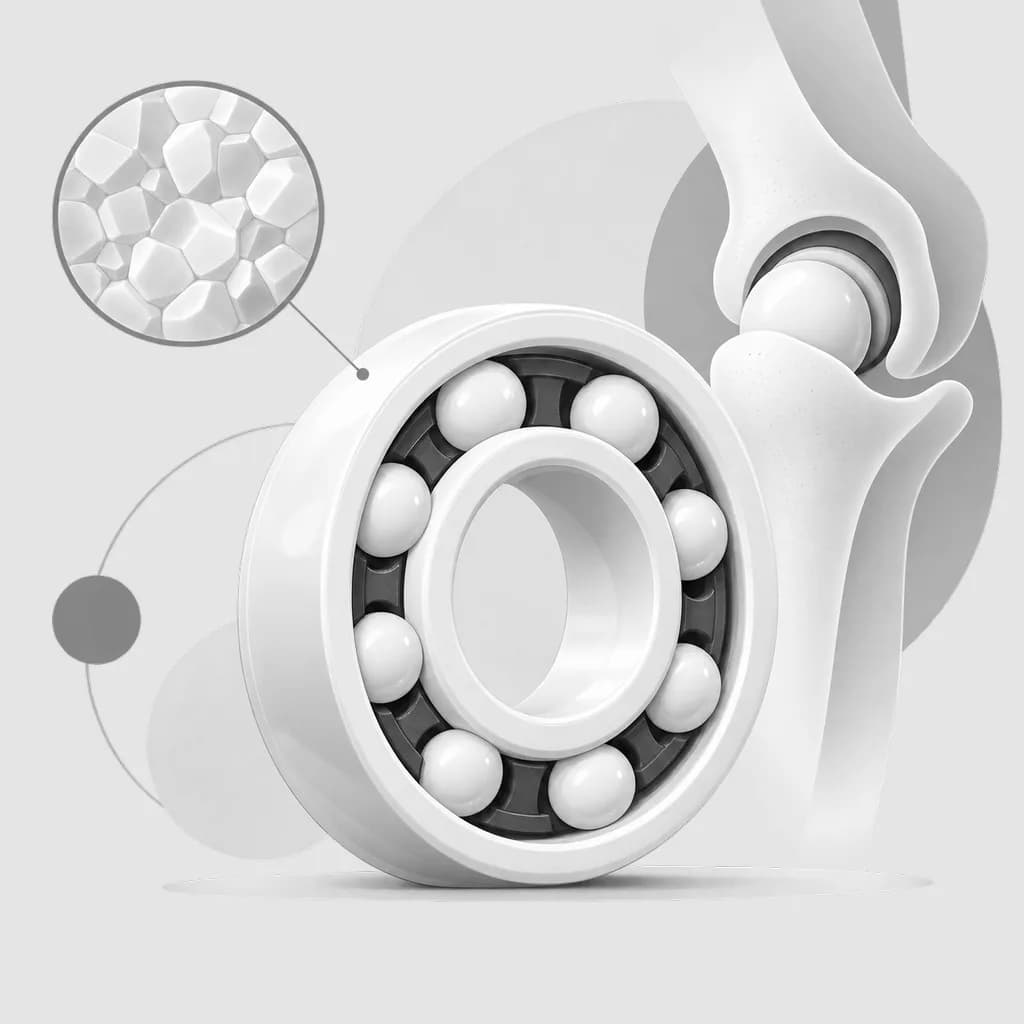
Ceramic bearing materials form one or both moving surfaces of some hip replacements and must be chosen as part of a compatible implant system.
This answers one question. It is not a diagnosis and does not replace an assessment by a licensed doctor.
At a glance
- Location
- The ball, socket liner, or both bearing surfaces
- Possible pairings
- Ceramic-on-ceramic or ceramic-on-polymer
- Choice depends on
- The entire implant system and the planned operation
Direct answer
Common arrangements place a ceramic head against a ceramic liner or against a polymer liner. Material is only one part of the decision; component design, size, connections, positioning, and the patient's clinical needs also matter.
Where ceramic sits in the joint
During hip replacement, a ball attached to the femoral stem moves inside a liner held by the socket shell. Ceramic can provide the ball surface and, in some systems, the liner surface. Other parts of the implant may use metal or polymer because they perform different mechanical jobs.
Ceramic is hard and smooth, which makes it useful as a bearing surface, but it requires accurate component matching and handling. The choice between ceramic-on-ceramic and ceramic-on-polymer depends on the implant system and the circumstances of the operation.
Preparing for an informed choice
Ask your surgeon to name both bearing surfaces rather than describing the hip as simply ceramic. Confirm that the head, liner, shell, and stem connections are intended to work together and ask why the proposed combination fits your anatomy and planned procedure.
After surgery, retain the implant card or operative documentation. Follow movement, wound-care, and weight-bearing instructions based on the procedure; the bearing material does not by itself set the rehabilitation timetable.
Changes that deserve medical review
Report a new painful squeak, click, grind, or clunk, especially when it comes with reduced movement, instability, or trouble bearing weight. Promptly contact the care team for wound leakage, fever, spreading redness, or worsening swelling. Sudden severe hip pain with deformity or inability to stand needs urgent care.
Details to discuss with the surgeon
Ask what materials make up the head and liner, what alternatives are suitable, and whether previous implants or unusual anatomy affect the choice. Clarify which symptoms after surgery are expected, which noises should be reported, and where the exact component information will be documented.
Find care
General Clinics & Polyclinics in Abu Dhabi
That answer is general. If you want it applied to your own case, these are licensed general clinics & polyclinics listed in Abu Dhabi.
27 Ar Ruwwad St - Shakhbout City - MSH4 - Abu Dhabi - United Arab Emirates
Accepts: Daman, Thiqa, Cigna, MetLife +20 more
Al Ruwais, Al Dhafrah
Accepts: Daman, Thiqa, AXA, Cigna +16 more
Al Bahyah - Al Bahyah Old - Abu Dhabi - United Arab Emirates
Accepts: Daman, Thiqa, Cigna, Allianz Care +18 more
Abu Dhabi
Accepts: Daman, Thiqa, AXA, Cigna +27 more
Ordered by verification status and how complete each clinic's public record is, then alphabetically. This is a directory listing, not a ranking — Zavis does not rate or recommend providers.
A factual listing drawn from the DHA, DOH and MOHAP licence registers. It is not a referral, an endorsement, or advice that any of these providers is right for you.
Questions people ask
Is a ceramic hip replacement made entirely from ceramic?
No. Ceramic usually describes a bearing surface. The stem, shell, liner backing, or other components can be made from different materials.
Are ceramic-on-ceramic and ceramic-on-polymer the same?
No. Both can use a ceramic head, but the socket-side bearing surface is ceramic in one combination and polymer in the other.
Does ceramic determine how soon I can walk?
Not on its own. Weight-bearing advice reflects the operation, fixation, bone condition, soft tissues, and your surgeon's rehabilitation plan.
Related
Related reading
Keep reading
Medical disclaimer. This page is general health information, not medical advice, and it cannot diagnose you. Always consult a licensed healthcare provider about your own symptoms and treatment. In an emergency in the UAE, call 998 for an ambulance.