
What causes central precocious puberty?
Short answer
Central precocious puberty occurs when the brain activates its normal puberty hormone pathway earlier than expected.
This answers one question. It is not a diagnosis and does not replace an assessment by a licensed doctor.
At a glance
- Source of the signal
- The hypothalamus and pituitary activate the body's usual puberty pathway.
- Possible cause
- The cause may be idiopathic, structural, acquired, or inherited.
- Key distinction
- Peripheral early puberty does not begin with central brain signalling.
The short answer
Sometimes no underlying cause is found; this is called idiopathic central precocious puberty. In other children, early activation is associated with a brain or nervous-system condition, a previous injury or treatment affecting the brain, or an inherited change that influences puberty timing.
Where the early hormone signal begins
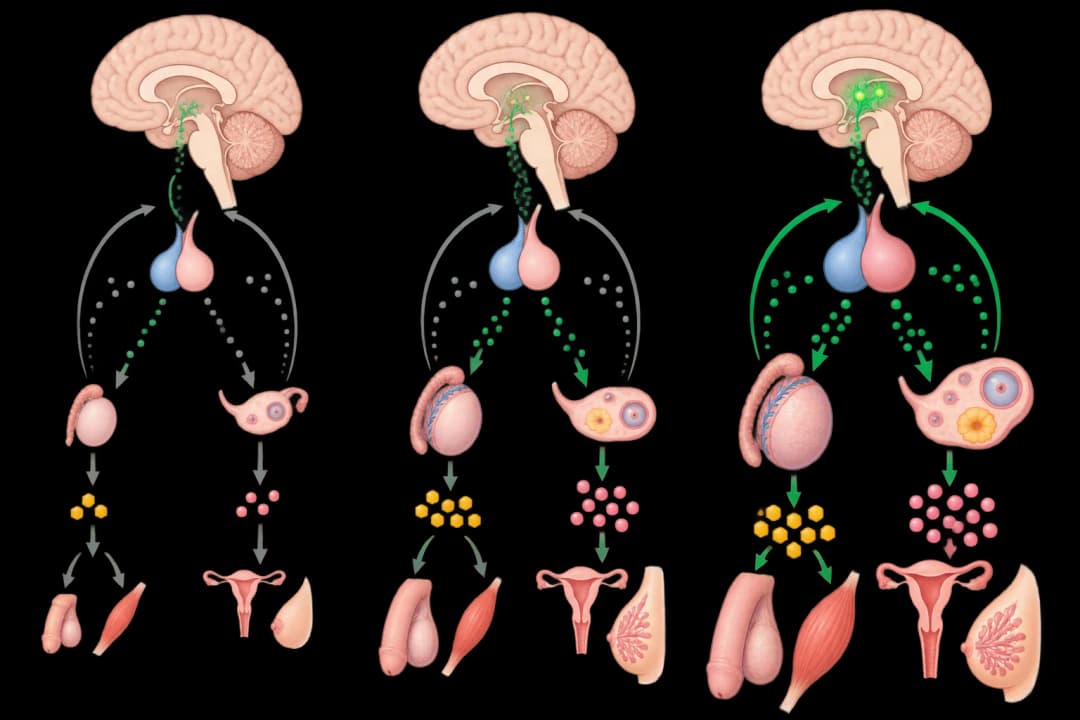
The hypothalamus releases a signal called gonadotropin-releasing hormone. This directs the pituitary gland to release hormones that stimulate the ovaries or testes, producing a coordinated pubertal pattern. Because the signal starts in the brain, the condition is described as central or gonadotropin-dependent.
Recognised triggers include abnormalities present from birth, a mass near hormone-control areas, inflammation or infection involving the brain, significant head injury, and previous brain surgery or radiation treatment. Certain inherited gene changes can allow the puberty pathway to start early. A cause is not identifiable in many cases, particularly when the examination and imaging are otherwise reassuring.
This differs from peripheral precocious puberty, in which sex hormones arise independently from the ovaries, testes, adrenal glands, medicines, or another source. The distinction matters because investigation and treatment follow different paths.
How clinicians look for a cause
Start with a paediatric appointment if early pubertal changes are progressing. The clinician will map the sequence and pace of breast or genital development, body hair, skin changes, menstrual bleeding, and growth. Family puberty history, neurological symptoms, previous brain illness or treatment, and possible contact with hormone products help guide the investigation.
Testing commonly assesses bone maturity and hormone levels; some children need repeat or stimulated hormone testing to confirm that the central pathway is active. Brain imaging may be advised when age, sex, rapid progression, neurological findings, or laboratory results raise concern for an underlying cause. Management then targets any identified condition and may include medicine to pause continued pubertal signalling.
Signs that need faster evaluation
Contact a clinician promptly when pubertal development is very early, changes advance over a short period, menstrual bleeding occurs in a young child, or growth suddenly accelerates. These patterns deserve assessment even when the child otherwise feels well.
Obtain urgent medical care if early puberty accompanies a new severe headache, repeated vomiting, vision disturbance, seizure, fainting, weakness, problems with balance, unusual thirst, or a striking personality or behaviour change. Urgency comes from these warning features, which can indicate pressure on or disruption of brain and hormone-control structures.
What to clarify with the care team
Consider asking which findings confirm a central cause, whether the pattern could be a non-progressive variation, and what each blood or bone-age test contributes. Ask what factors determine the need for brain imaging, whether family history suggests genetic assessment, how growth will be tracked, and which new symptoms should trigger an earlier return.
Find care
General Clinics & Polyclinics in Abu Dhabi
That answer is general. If you want it applied to your own case, these are licensed general clinics & polyclinics listed in Abu Dhabi.
27 Ar Ruwwad St - Shakhbout City - MSH4 - Abu Dhabi - United Arab Emirates
Accepts: Daman, Thiqa, Cigna, MetLife +20 more
Al Ruwais, Al Dhafrah
Accepts: Daman, Thiqa, AXA, Cigna +16 more
Al Bahyah - Al Bahyah Old - Abu Dhabi - United Arab Emirates
Accepts: Daman, Thiqa, Cigna, Allianz Care +18 more
Abu Dhabi
Accepts: Daman, Thiqa, AXA, Cigna +27 more
Ordered by verification status and how complete each clinic's public record is, then alphabetically. This is a directory listing, not a ranking — Zavis does not rate or recommend providers.
A factual listing drawn from the DHA, DOH and MOHAP licence registers. It is not a referral, an endorsement, or advice that any of these providers is right for you.
Questions people ask
Can central precocious puberty run in families?
Yes. Some inherited changes affect the biological brake on puberty timing. A specialist may consider genetic evaluation when relatives had similarly early development or the clinical pattern suggests it.
Why might a clinician order brain imaging?
Imaging can examine the hypothalamus, pituitary region, and nearby structures for a developmental difference, mass, inflammation, or previous injury that could activate puberty signalling.
Can the cause remain unknown after testing?
Yes. When central activation is confirmed but assessment finds no underlying condition, clinicians use the term idiopathic central precocious puberty.
Keep reading
Medical disclaimer. This page is general health information, not medical advice, and it cannot diagnose you. Always consult a licensed healthcare provider about your own symptoms and treatment. In an emergency in the UAE, call 998 for an ambulance.