
CCCA Treatment: What to Know
Short answer
CCCA treatment is tailored to disease activity and focuses on reducing inflammation before more follicles are damaged.
This answers one question. It is not a diagnosis and does not replace an assessment by a licensed doctor.
At a glance
- Main goal
- Preserve non-scarred follicles
- Possible approaches
- Topical, injected, or oral medicines
- Monitoring
- Repeat scalp assessments
How a treatment plan is chosen
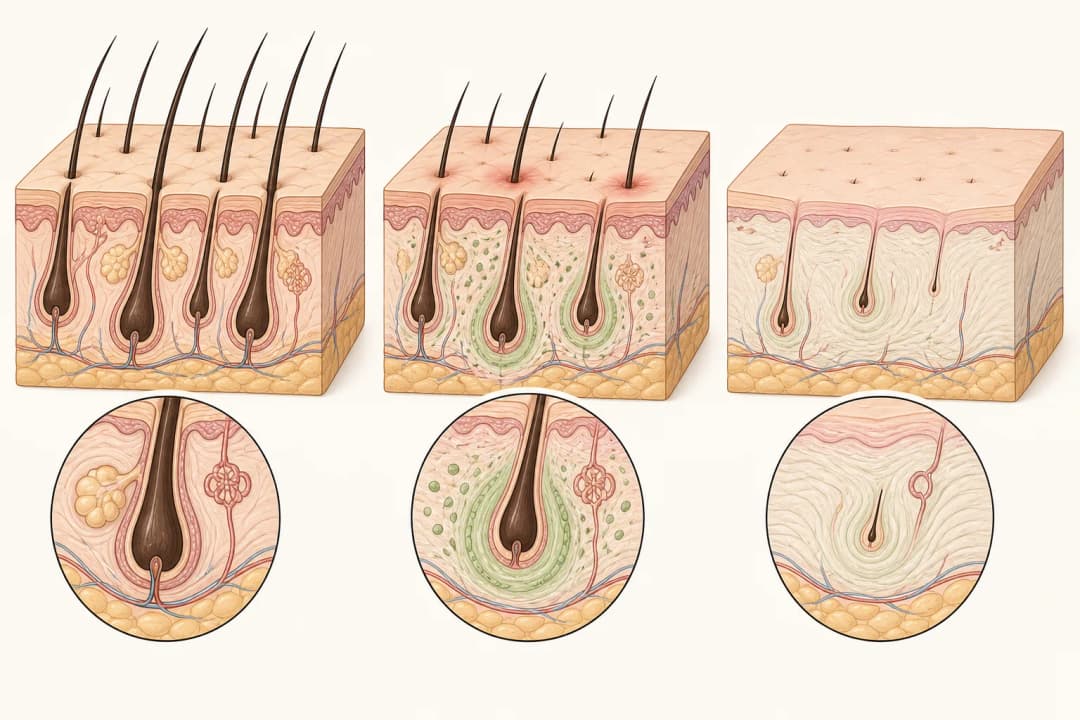
CCCA is a follicle-centred inflammatory disorder that can lead to scarring hair loss around the crown. The dermatologist first confirms the pattern and checks whether inflammation is still active. Examination may include magnified scalp inspection and a biopsy, particularly when another diagnosis could produce similar thinning.
Treatment cannot reliably restore a follicle that has already been replaced by scar tissue. Its central aim is to preserve follicles that still function and to reduce symptoms. Plans are adjusted according to examination findings, response, and unwanted effects.
Treatment and daily protection
Prescription care may include a topical anti-inflammatory, injections into selected scalp sites, or an oral anti-inflammatory medicine. A clinician may also address infection-like features when present. Take medicines as prescribed and attend follow-up so activity can be compared over time.
Protect the scalp by choosing loose styles, reducing heat and chemical processing, and stopping any routine that causes pain or burning. Do not apply household remedies or borrow medicines. Hair restoration is a separate discussion after inflammation has remained controlled.
When to seek care
Request prompt review if thinning continues quickly, scalp pain increases, or you develop pustules, drainage, crusting, swelling, or strong redness. Fever with scalp changes needs urgent medical advice. These findings can change the treatment needed and should not wait for a routine appointment.
Questions for your doctor
Ask how active the inflammation appears, whether a biopsy is needed, what treatment will be tried first, and how response will be measured. Discuss side effects, styling precautions, review timing, and options for areas where scarring is already established.
Find care
General Clinics & Polyclinics in Abu Dhabi
That answer is general. If you want it applied to your own case, these are licensed general clinics & polyclinics listed in Abu Dhabi.
27 Ar Ruwwad St - Shakhbout City - MSH4 - Abu Dhabi - United Arab Emirates
Accepts: Daman, Thiqa, Cigna, MetLife +20 more
Al Ruwais, Al Dhafrah
Accepts: Daman, Thiqa, AXA, Cigna +16 more
Al Bahyah - Al Bahyah Old - Abu Dhabi - United Arab Emirates
Accepts: Daman, Thiqa, Cigna, Allianz Care +18 more
Abu Dhabi
Accepts: Daman, Thiqa, AXA, Cigna +27 more
Ordered by verification status and how complete each clinic's public record is, then alphabetically. This is a directory listing, not a ranking — Zavis does not rate or recommend providers.
A factual listing drawn from the DHA, DOH and MOHAP licence registers. It is not a referral, an endorsement, or advice that any of these providers is right for you.
Questions people ask
Does treatment restore scarred hair follicles?
Treatment is mainly intended to stop or quiet active inflammation. Scarred follicles may not produce hair again, so early review is useful.
Can I continue chemical hair treatments?
Ask your dermatologist. Avoid any process that causes burning, tenderness, or irritation, and consider gentler alternatives while inflammation is active.
Related
Related reading
Keep reading
Medical disclaimer. This page is general health information, not medical advice, and it cannot diagnose you. Always consult a licensed healthcare provider about your own symptoms and treatment. In an emergency in the UAE, call 998 for an ambulance.