
Causes of hypertrichosis
Short answer
Hypertrichosis can be inherited, linked with medicines or caused by an underlying health condition.
This answers one question. It is not a diagnosis and does not replace an assessment by a licensed doctor.
At a glance
- Pattern
- Generalised or limited to one body area
- Possible timing
- Present from birth or acquired later
- Assessment
- History and examination guide testing
What hypertrichosis can mean
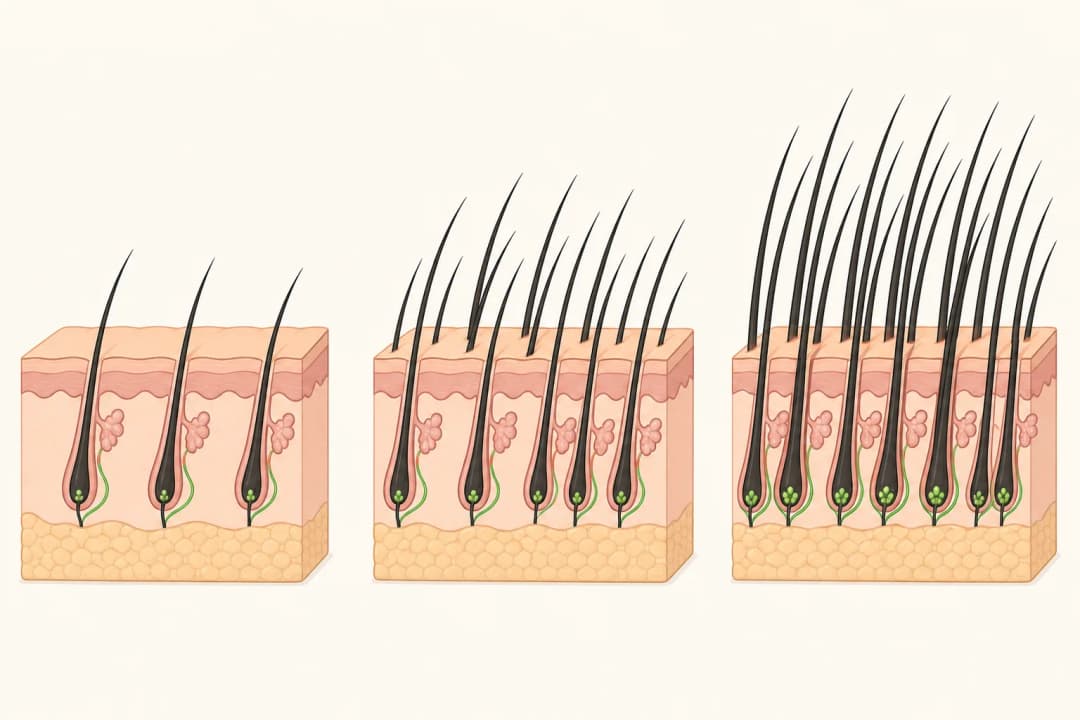
The extra hair may be fine or coarse and can appear across the body or in a defined area. Some people have it from birth or notice a gradual family pattern. New or rapidly changing growth can follow a medicine, hormonal change, skin disorder or another medical problem. A clinician considers when it began, where it appears, its texture, other symptoms and your medication history. This is different from hirsutism, in which women develop a male-pattern distribution of coarse hair.
What to do next
Make a note of the areas involved, when the change started and any recent medicines or supplements. Do not stop a prescribed medicine without advice. Examination may be enough; targeted tests are chosen when the pattern suggests a hormonal or systemic cause. Hair removal can address unwanted growth after the cause and skin condition have been considered. Options include [Electrolysis Hair Removal](/treatments/laser-and-energy/electrolysis-hair-removal/) and [Laser Hair Removal](/treatments/laser-and-energy/laser-hair-removal/).
When to seek care
Arrange a medical review for sudden, widespread or rapidly increasing hair growth, especially with new acne, voice deepening, irregular periods, weight change, unusual fatigue or other new symptoms. Seek prompt care for a painful, inflamed or infected treatment area.
Questions for your doctor
Could my medication or a health condition be contributing? Does the distribution suggest hypertrichosis or hirsutism? Would any examination or blood test help? Which hair-removal method fits my hair colour, skin type and treatment goals?
Find care
General Clinics & Polyclinics in Abu Dhabi
That answer is general. If you want it applied to your own case, these are licensed general clinics & polyclinics listed in Abu Dhabi.
27 Ar Ruwwad St - Shakhbout City - MSH4 - Abu Dhabi - United Arab Emirates
Accepts: Daman, Thiqa, Cigna, MetLife +20 more
Al Ruwais, Al Dhafrah
Accepts: Daman, Thiqa, AXA, Cigna +16 more
Al Bahyah - Al Bahyah Old - Abu Dhabi - United Arab Emirates
Accepts: Daman, Thiqa, Cigna, Allianz Care +18 more
Abu Dhabi
Accepts: Daman, Thiqa, AXA, Cigna +27 more
Ordered by verification status and how complete each clinic's public record is, then alphabetically. This is a directory listing, not a ranking — Zavis does not rate or recommend providers.
A factual listing drawn from the DHA, DOH and MOHAP licence registers. It is not a referral, an endorsement, or advice that any of these providers is right for you.
Questions people ask
Is hypertrichosis always inherited?
No. It can also develop after medicines, skin changes or an underlying health condition.
Can unwanted hair be removed?
Yes, a clinician can discuss methods such as electrolysis or laser hair removal after assessment.
Related
Related reading
Keep reading
Medical disclaimer. This page is general health information, not medical advice, and it cannot diagnose you. Always consult a licensed healthcare provider about your own symptoms and treatment. In an emergency in the UAE, call 998 for an ambulance.