
What should you know about carboxytherapy at home?
Short answer
Carboxytherapy at home is not a suitable do-it-yourself procedure because injection depth, gas handling, sterility, and treatment decisions require trained clinical supervision.
This answers one question. It is not a diagnosis and does not replace an assessment by a licensed doctor.
At a glance
- At-home use
- Avoid self-injection and improvised equipment
- Before treatment
- Discuss your goal, medicines, allergies, and skin condition
- Urgent warning
- Breathing difficulty or vision change needs emergency care
What home carboxytherapy involves
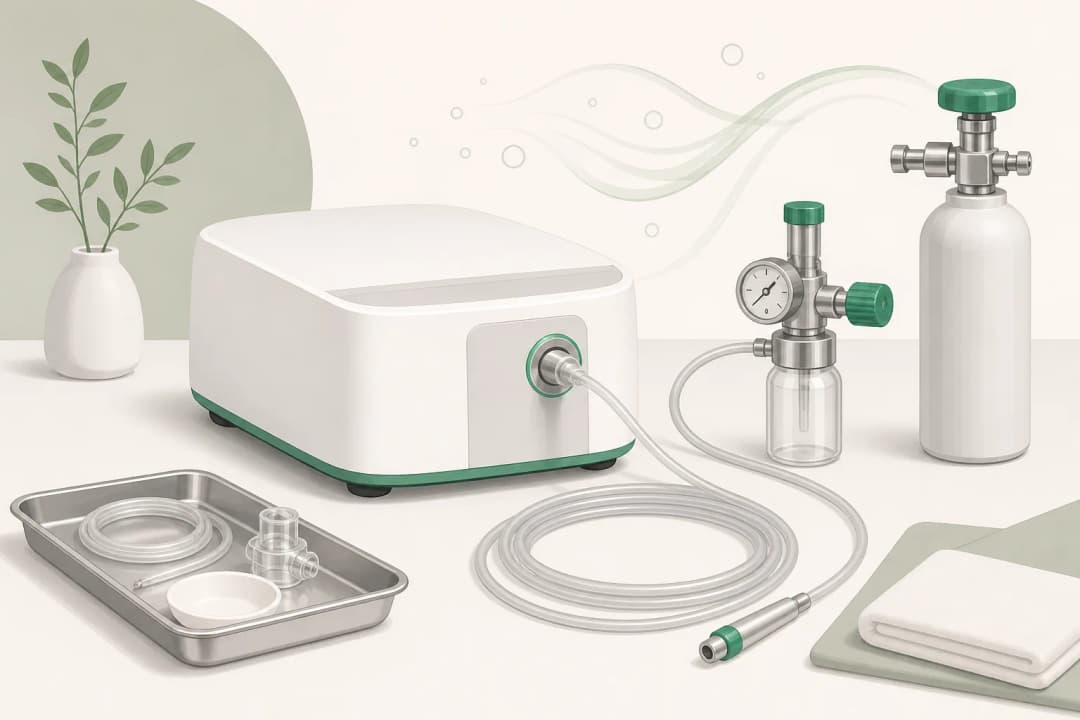
Carboxytherapy, also called carbon dioxide therapy, places carbon dioxide into selected tissue through a needle or a device designed for clinical use. The intended response can vary by area and goal, such as the appearance of skin texture or under-eye concerns. A home user may not be able to confirm the gas source, equipment calibration, injection depth, or sterility. Incorrect placement can cause bleeding, swelling, infection, skin injury, or an unexpected cosmetic result.
Safer next steps
Do not inject carbon dioxide into your skin or use improvised tubing, cartridges, or needles. Arrange an assessment with a qualified medical professional who can check your skin, medical history, medicines, allergies, and treatment goal. Ask which device and gas source will be used, how the area will be cleaned, what aftercare is expected, and whether another option fits better. Avoid treatment over broken, infected, or actively inflamed skin.
When to seek medical care
After any attempted procedure, seek prompt medical advice for worsening pain, spreading redness, increasing warmth, pus, fever, marked swelling, persistent bleeding, skin colour change, or numbness. Sudden breathing difficulty, fainting, chest pain, or vision changes needs emergency care. Do not wait for a cosmetic symptom to settle if it is progressing quickly.
Questions for your doctor
Ask: Is carboxytherapy appropriate for my specific concern? What will you place, where will it be placed, and how will you monitor the treatment? Which effects are expected soon afterwards, and which changes should prompt a call? What alternatives could address the same concern?
Find care
General Clinics & Polyclinics in Abu Dhabi
That answer is general. If you want it applied to your own case, these are licensed general clinics & polyclinics listed in Abu Dhabi.
27 Ar Ruwwad St - Shakhbout City - MSH4 - Abu Dhabi - United Arab Emirates
Accepts: Daman, Thiqa, Cigna, MetLife +20 more
Al Ruwais, Al Dhafrah
Accepts: Daman, Thiqa, AXA, Cigna +16 more
Al Bahyah - Al Bahyah Old - Abu Dhabi - United Arab Emirates
Accepts: Daman, Thiqa, Cigna, Allianz Care +18 more
Abu Dhabi
Accepts: Daman, Thiqa, AXA, Cigna +27 more
Ordered by verification status and how complete each clinic's public record is, then alphabetically. This is a directory listing, not a ranking — Zavis does not rate or recommend providers.
A factual listing drawn from the DHA, DOH and MOHAP licence registers. It is not a referral, an endorsement, or advice that any of these providers is right for you.
Questions people ask
Can I buy a carboxytherapy kit for home use?
A product being available for purchase does not establish that self-treatment is appropriate. Injection, sterility, and dosing decisions should be handled by a qualified clinician.
Is swelling after carboxytherapy expected?
Temporary swelling can occur after an injection-based procedure, but worsening swelling, severe pain, fever, or spreading redness should be assessed promptly.
Related
Related reading
Keep reading
Medical disclaimer. This page is general health information, not medical advice, and it cannot diagnose you. Always consult a licensed healthcare provider about your own symptoms and treatment. In an emergency in the UAE, call 998 for an ambulance.