
Carboxy Therapy: What Should You Know?
Short answer
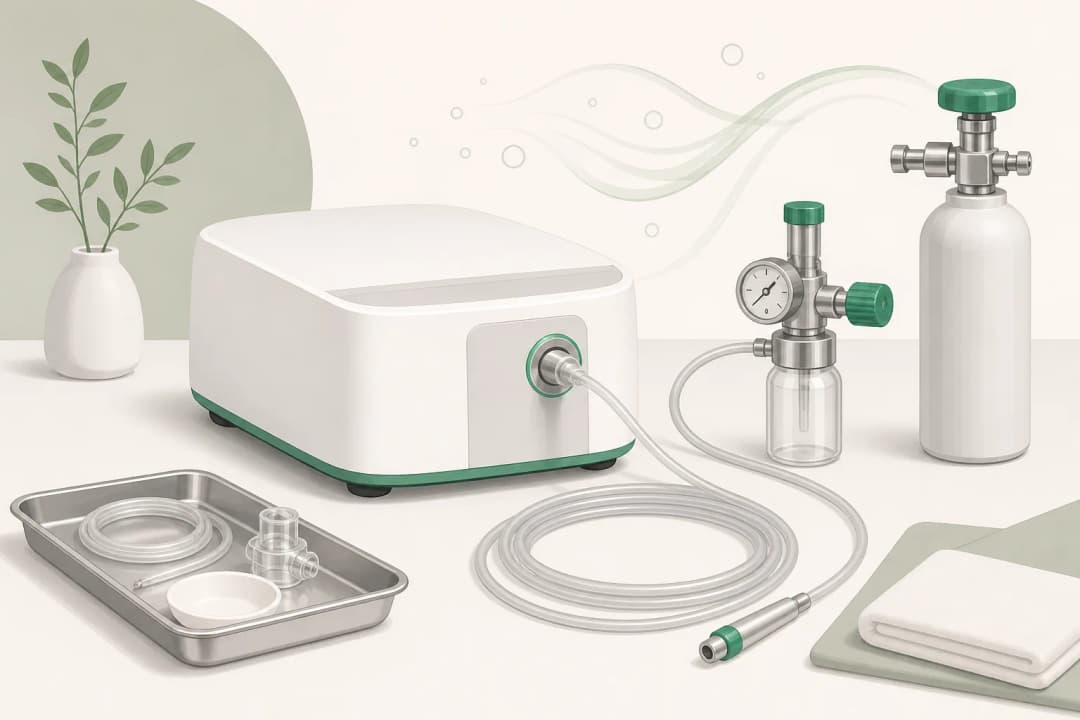
Carboxytherapy is a clinician-delivered treatment that places controlled carbon dioxide into selected tissue to influence local blood flow and skin appearance.
This answers one question. It is not a diagnosis and does not replace an assessment by a licensed doctor.
At a glance
- Method
- Controlled carbon dioxide delivered through a fine needle
- Common sensations
- Brief pressure, warmth, tightness, or stinging
- Consultation focus
- Your goal, skin condition, medicines, and healing history
How the treatment works
During carboxytherapy, a trained clinician uses a fine needle and regulated medical gas. The gas spreads through the treated area and may briefly create pressure, warmth, or a sensation of fullness. The body then absorbs it. Clinics may use the procedure for concerns such as the appearance of stretch marks, uneven texture, or selected local skin changes, but the expected benefit depends on the concern and the treatment plan.
It is a cosmetic procedure, not a replacement for diagnosing a new rash, lump, ulcer, or unexplained change. A consultation should cover your goals, skin history, medicines, allergies, and conditions that could affect healing.
Preparing and recovering
Arrive with clean skin and disclose pregnancy, breastfeeding, active infection, circulation problems, bleeding concerns, and medicines or supplements that affect clotting. Do not schedule treatment over broken or inflamed skin. Afterward, follow the clinic’s instructions, avoid friction and unapproved products, and protect treated skin from strong sun. Ask when exercise, swimming, shaving, or makeup can resume for your treatment area.
When to seek care
Ask the clinic for advice if pain, redness, swelling, warmth, or bruising is increasing or not settling as expected. Seek urgent medical help for breathing difficulty, widespread swelling, faintness, severe pain, or signs of a serious allergic reaction. A persistent wound or discharge also needs prompt review.
Questions for your doctor
Ask what the procedure is intended to change, why it suits your concern, what alternatives exist, how recovery will be managed, and who will perform it. Request a clear plan for follow-up and for handling an unexpected skin reaction.
Find care
General Clinics & Polyclinics in Abu Dhabi
That answer is general. If you want it applied to your own case, these are licensed general clinics & polyclinics listed in Abu Dhabi.
27 Ar Ruwwad St - Shakhbout City - MSH4 - Abu Dhabi - United Arab Emirates
Accepts: Daman, Thiqa, Cigna, MetLife +20 more
Al Ruwais, Al Dhafrah
Accepts: Daman, Thiqa, AXA, Cigna +16 more
Al Bahyah - Al Bahyah Old - Abu Dhabi - United Arab Emirates
Accepts: Daman, Thiqa, Cigna, Allianz Care +18 more
Abu Dhabi
Accepts: Daman, Thiqa, AXA, Cigna +27 more
Ordered by verification status and how complete each clinic's public record is, then alphabetically. This is a directory listing, not a ranking — Zavis does not rate or recommend providers.
A factual listing drawn from the DHA, DOH and MOHAP licence registers. It is not a referral, an endorsement, or advice that any of these providers is right for you.
Questions people ask
Is carboxytherapy suitable for everyone?
No. Suitability depends on the treatment area, your health history, medicines, skin condition, and healing risks.
What should I expect after a session?
Short-lived redness, swelling, tenderness, or bruising can occur; follow the provider’s specific aftercare advice.
Related
Related reading
Keep reading
Medical disclaimer. This page is general health information, not medical advice, and it cannot diagnose you. Always consult a licensed healthcare provider about your own symptoms and treatment. In an emergency in the UAE, call 998 for an ambulance.