
Bleeding in molar pregnancy
Short answer
Vaginal bleeding can occur with a molar pregnancy and needs prompt assessment by a maternity or gynaecology team.
This answers one question. It is not a diagnosis and does not replace an assessment by a licensed doctor.
At a glance
- Key assessment
- Symptoms, ultrasound findings and hCG blood tests are considered together.
- After treatment
- Regular hCG monitoring checks that molar tissue is no longer active.
- Emergency signs
- Heavy bleeding, severe pain, fainting or breathing difficulty need immediate care.
The short answer
Bleeding may be light, heavy, intermittent, red or brown. Its appearance alone cannot confirm the cause or show how much treatment is needed.
What the bleeding may mean
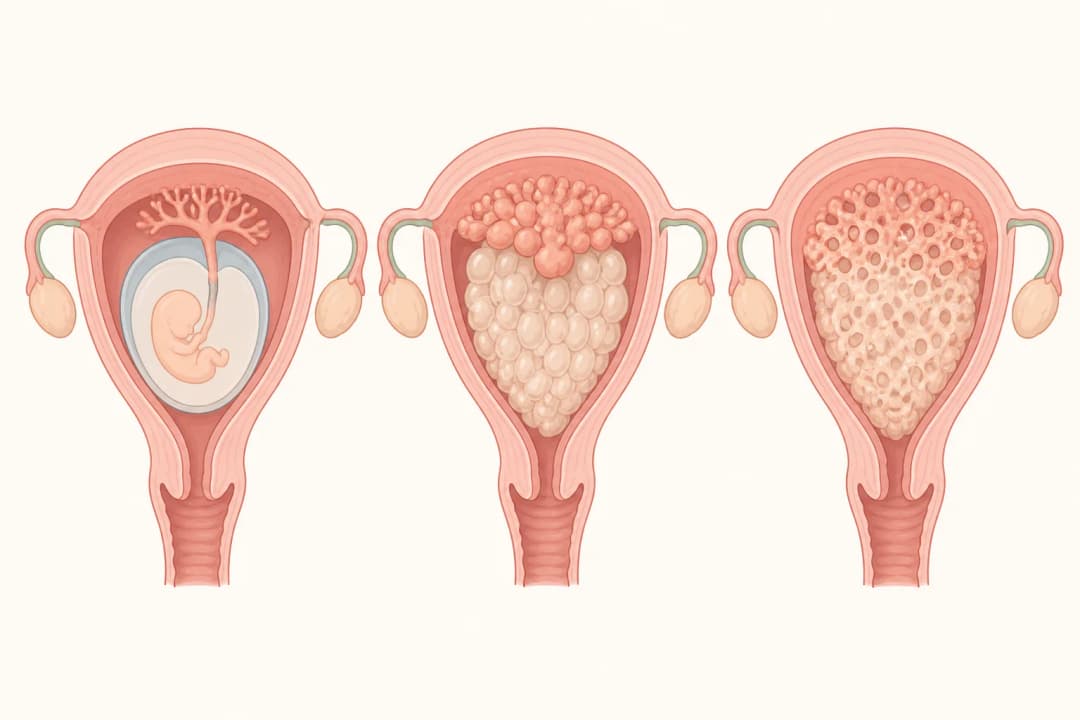
A molar pregnancy develops when tissue that would normally contribute to the placenta grows abnormally after conception. Abnormal vaginal bleeding is one possible presentation, although some molar pregnancies are first identified on an ultrasound scan or after pregnancy tissue is examined.
Bleeding during pregnancy also has other possible causes, so clinicians use your symptoms together with an ultrasound scan, examination when appropriate, and blood tests for the pregnancy hormone hCG. A diagnosis is not made from bleeding alone.
What to do now
Contact your maternity unit, early-pregnancy service, obstetrician or gynaecologist promptly about any bleeding. Note when it began, the colour, whether it is increasing, whether clots or tissue are present, and whether you have pain, dizziness, nausea or weakness. Use a sanitary pad rather than a tampon so you can monitor the bleeding.
If a molar pregnancy has already been treated, report new or increasing bleeding to the team overseeing your follow-up. Keep scheduled hCG blood or urine tests because the trend helps show whether molar tissue remains. Further treatment, including chemotherapy, is considered only when follow-up results and specialist assessment indicate it is needed.
When to seek urgent care
Go to the nearest emergency department or call local emergency services if bleeding is heavy or rapidly increasing, or if it occurs with severe abdominal pain, shoulder pain, fainting, marked dizziness, confusion, breathing difficulty, chest pain or severe weakness. Do not drive yourself if you feel faint or unwell.
Even light spotting should be discussed promptly during pregnancy or after treatment for a molar pregnancy. The urgency comes from the bleeding and accompanying symptoms, not from assuming that the symptom identifies a particular diagnosis.
Questions for your care team
Ask what is causing the bleeding, which changes should send you to emergency care, how your hCG results are changing, and when the next test is due. You can also ask whom to contact outside clinic hours, whether any medicines or activities need adjusting, and what the next step would be if hCG stops falling.
Questions people ask
Does bleeding confirm a molar pregnancy?
No. A molar pregnancy can present with abnormal vaginal bleeding, but bleeding has several possible causes. Clinicians assess symptoms, ultrasound findings, hCG levels and, when available, pregnancy tissue before confirming the diagnosis.
Why is hCG checked after treatment?
Molar tissue produces hCG. Repeated blood or urine tests show how the level changes after treatment and help the specialist team identify tissue that remains active and may require further care.
Can bleeding happen after the molar tissue is removed?
Some vaginal bleeding can occur after uterine treatment, but new, heavier or persistent bleeding should be reported to the treating team. Heavy bleeding or bleeding with faintness, severe pain or breathing difficulty requires emergency assessment.
Related
Related reading
Keep reading
Cancer care in the UAE
Hospitals & Medical Centers in Abu Dhabi
Most UAE cancer care is delivered inside hospital services rather than by standalone oncology clinics, so these are licensed hospitals & medical centers listed in Abu Dhabi. Confirm the specific cancer service exists before you travel, and know that asking for a second opinion is routine.
Ahalia Hospital Musaffah Building - Musaffah - Musaffah Industrial - Abu Dhabi - United Arab Emirates
Accepts: Daman, Thiqa, AXA, Cigna +26 more
Al Ruwais Industrial City - Abu Dhabi - United Arab Emirates
Accepts: Daman, Thiqa, AXA, Cigna +30 more
Abu Dhabi, Abu Dhabi
Accepts: Daman, Thiqa, AXA, Cigna +30 more
Second opinions are routine in cancer care and asking for one does not affect your treatment. How to arrange a second opinion in the UAE.
Ordered by verification status and how complete each clinic's public record is, then alphabetically. This is a directory listing, not a ranking — Zavis does not rate or recommend providers.
A factual listing drawn from the DHA, DOH and MOHAP licence registers. It is not a referral, an endorsement, or advice that any of these providers is right for you.
Medical disclaimer. This page is general health information, not medical advice, and it cannot diagnose you. Always consult a licensed healthcare provider about your own symptoms and treatment. In an emergency in the UAE, call 998 for an ambulance.