
What does benign prostatic hyperplasia mean in men?
Short answer
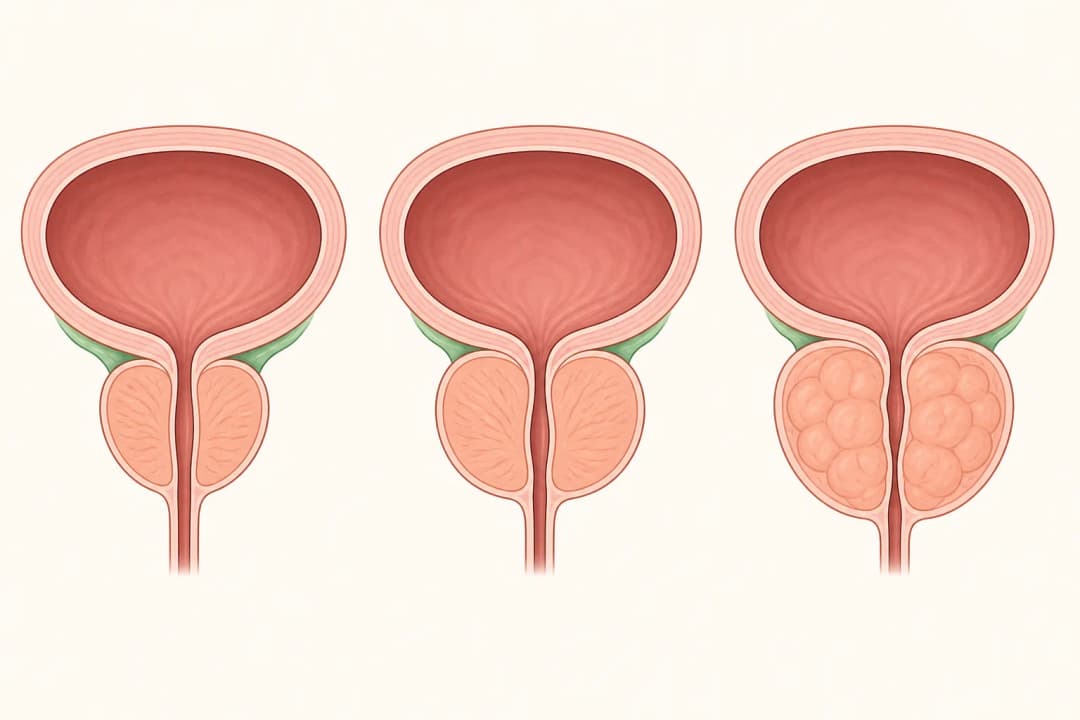
Benign prostatic hyperplasia means the prostate has enlarged in a non-cancerous way and may narrow the urinary passage.
This answers one question. It is not a diagnosis and does not replace an assessment by a licensed doctor.
At a glance
- Meaning
- Non-cancerous enlargement of the prostate
- Common effects
- Weak stream, urgency, frequent urination, or night waking
- Assessment
- Symptoms, examination, and selected tests
How it can affect men
The prostate sits below the bladder and surrounds part of the urethra. As it enlarges, urine may flow more slowly or stop and start. Men may notice difficulty starting, a weak stream, dribbling, a need to pass urine often, or waking at night. Symptoms vary, and prostate size does not always match symptom severity.
BPH is different from prostate cancer, although urinary symptoms should still be assessed because other bladder, prostate, or medication-related problems can cause similar changes.
Practical next steps
Arrange a medical review if urinary changes interfere with sleep, work, travel, or intimacy. A clinician may ask about the pattern, examine you, review medicines, and assess urine or blood tests. Keep a short record of drinks, daytime visits, night waking, urgency, and leakage.
Treatment may involve monitoring, changes to evening fluids or bladder irritants, prescribed medicine, or a procedure when symptoms or complications warrant it. Do not stop prescribed medicines without advice.
When symptoms need urgent attention
Seek urgent care if you cannot pass urine, have severe lower abdominal pain, see blood in the urine, develop fever with painful urination, or feel acutely unwell. Sudden inability to empty the bladder can require prompt drainage and assessment.
Useful questions
Ask what may be causing your symptoms, whether your medicines could contribute, how your bladder emptying will be checked, and which treatment fits your priorities. Ask what change should trigger an earlier review.
Find care
General Clinics & Polyclinics in Abu Dhabi
That answer is general. If you want it applied to your own case, these are licensed general clinics & polyclinics listed in Abu Dhabi.
27 Ar Ruwwad St - Shakhbout City - MSH4 - Abu Dhabi - United Arab Emirates
Accepts: Daman, Thiqa, Cigna, MetLife +20 more
Al Ruwais, Al Dhafrah
Accepts: Daman, Thiqa, AXA, Cigna +16 more
Al Bahyah - Al Bahyah Old - Abu Dhabi - United Arab Emirates
Accepts: Daman, Thiqa, Cigna, Allianz Care +18 more
Abu Dhabi
Accepts: Daman, Thiqa, AXA, Cigna +27 more
Ordered by verification status and how complete each clinic's public record is, then alphabetically. This is a directory listing, not a ranking — Zavis does not rate or recommend providers.
A factual listing drawn from the DHA, DOH and MOHAP licence registers. It is not a referral, an endorsement, or advice that any of these providers is right for you.
Questions people ask
Does BPH mean prostate cancer?
No. BPH is non-cancerous, but similar urinary symptoms still deserve a proper assessment.
Does every enlarged prostate need treatment?
No. Mild symptoms may be monitored, while troublesome symptoms or complications may need treatment.
Related
Related reading
Keep reading
Medical disclaimer. This page is general health information, not medical advice, and it cannot diagnose you. Always consult a licensed healthcare provider about your own symptoms and treatment. In an emergency in the UAE, call 998 for an ambulance.