
When cradle cap looks severe
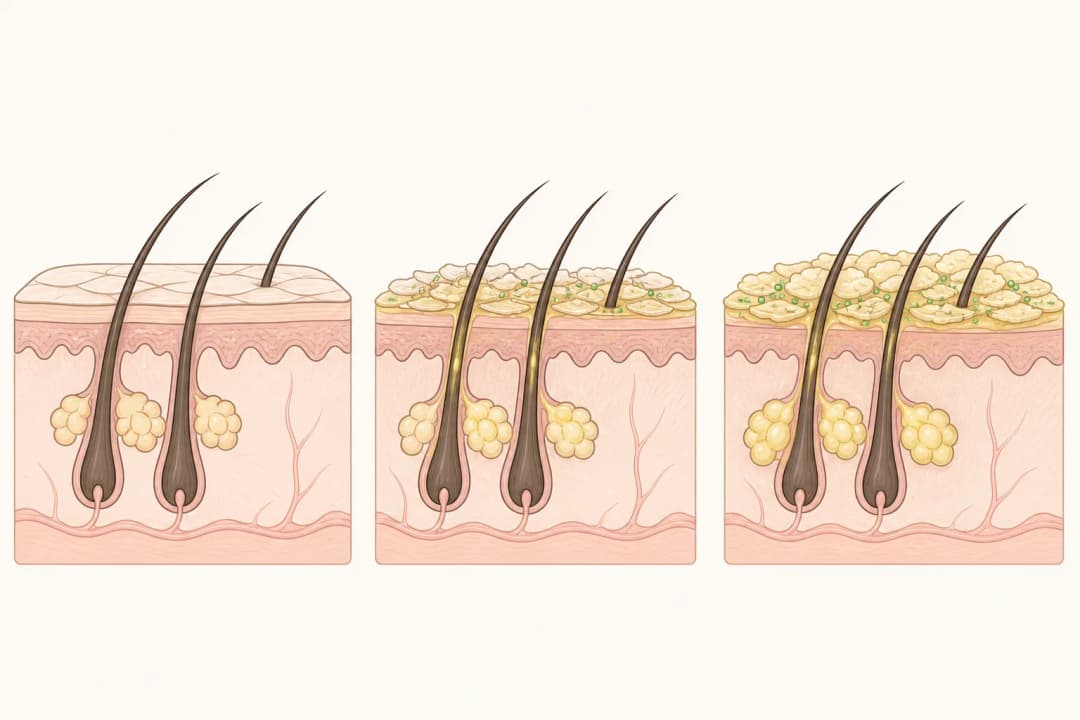
Short answer
Severe-looking cradle cap often causes thick, greasy scalp scales, but soreness, oozing, spreading rash, or an unwell baby warrants medical review.
This answers one question. It is not a diagnosis and does not replace an assessment by a licensed doctor.
At a glance
- Typical scale
- White or yellow crust can adhere firmly to the scalp.
- Skin protection
- Loosen scale gently; do not pull off attached crusts.
- Review trigger
- Oozing, pain, spreading redness, or illness needs medical attention.
A clear answer
The scale can look dramatic without causing harm. Scratching, forceful scraping, or peeling attached crusts can break delicate skin and create an entry point for infection.
How to interpret the appearance
Cradle cap, also called infantile seborrheic dermatitis, commonly presents with adherent white or yellow scale on the scalp. It may extend around the eyebrows, behind the ears, or into skin folds. Red, very itchy, cracked, or weeping skin can point to irritation, eczema, infection, or another rash alongside the scale.
A clinician may need to look at the distribution and the skin beneath the crust. Photographs taken before washing can help show how quickly it returned or spread.
Gentle care at home
Wash the scalp gently with a mild baby shampoo and loosen only scale that lifts easily with a soft brush. If an emollient is recommended, use it as directed and wash it away so residue does not build up. Keep fingernails short if the baby rubs the area.
Do not use adult dandruff products, essential oils, or medicated creams on an infant unless a healthcare professional has selected the product and explained how to apply it. Treatment differs when yeast-associated inflammation or infection is suspected.
When your baby needs care
Arrange a medical review if the skin is raw, painful, swollen, bleeding, oozing, foul-smelling, or covered with pus-filled spots. Seek prompt advice when redness spreads, fever develops, feeding changes, the baby seems unusually sleepy or irritable, or the rash is widespread. Persistent scale despite gentle care also deserves assessment rather than repeated picking.
Useful appointment questions
Ask whether the rash is typical cradle cap or overlaps with eczema or infection. Check which shampoo, emollient, antifungal, or anti-inflammatory product is suitable for your baby's age, exactly where it should be used, and what change should prompt a follow-up.
Find care
General Clinics & Polyclinics in Abu Dhabi
That answer is general. If you want it applied to your own case, these are licensed general clinics & polyclinics listed in Abu Dhabi.
27 Ar Ruwwad St - Shakhbout City - MSH4 - Abu Dhabi - United Arab Emirates
Accepts: Daman, Thiqa, Cigna, MetLife +20 more
Al Ruwais, Al Dhafrah
Accepts: Daman, Thiqa, AXA, Cigna +16 more
Al Bahyah - Al Bahyah Old - Abu Dhabi - United Arab Emirates
Accepts: Daman, Thiqa, Cigna, Allianz Care +18 more
Abu Dhabi
Accepts: Daman, Thiqa, AXA, Cigna +27 more
Ordered by verification status and how complete each clinic's public record is, then alphabetically. This is a directory listing, not a ranking — Zavis does not rate or recommend providers.
A factual listing drawn from the DHA, DOH and MOHAP licence registers. It is not a referral, an endorsement, or advice that any of these providers is right for you.
Questions people ask
Does thick cradle cap hurt a baby?
Thick scale itself may not be painful, but raw, cracked, swollen, or weeping skin suggests inflammation or infection and should be assessed.
Should I put oil on cradle cap overnight?
Long contact can irritate some babies or leave residue. Use only a baby-safe emollient for the duration advised, then wash it away gently.
Related
Related reading
Keep reading
Medical disclaimer. This page is general health information, not medical advice, and it cannot diagnose you. Always consult a licensed healthcare provider about your own symptoms and treatment. In an emergency in the UAE, call 998 for an ambulance.