
Allergic nappy rash
Short answer
Allergic nappy rash is a contact reaction to an ingredient touching the skin, but irritation is more common.
This answers one question. It is not a diagnosis and does not replace an assessment by a licensed doctor.
At a glance
- Frequent cause
- Moisture and friction irritate the skin
- Allergy clue
- Rash matching contact with a particular product
- Basic protection
- Gentle cleaning, drying and barrier care
The short answer
Possible triggers include fragrance, preservatives, dyes, adhesives or ingredients in wipes and creams. The priority is gentle cleansing, frequent nappy changes, barrier protection and removal of the suspected product.
Distinguishing allergy, irritation and infection
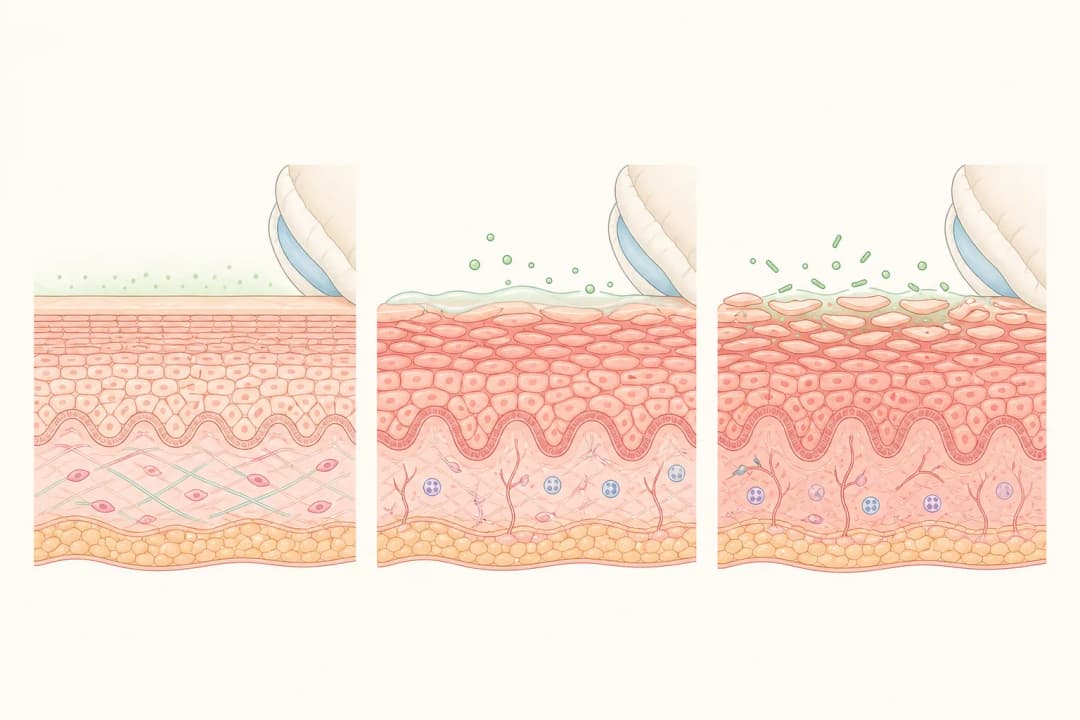
Irritant nappy dermatitis results from prolonged moisture, urine, stool and friction and often affects the exposed rounded surfaces. Allergic contact dermatitis can extend to areas matching a wipe, cream, elastic or nappy component and may persist despite routine barrier care. It can look red, darker, swollen, dry or blistered and may cause marked itching.
Thrush often involves the creases and may produce small spots beyond the main patch. Bacterial infection can cause weeping, crusting, blisters or increasing tenderness. Appearance overlaps, so a clinician should assess a stubborn or unusual eruption rather than treating every nappy rash as allergy.
Protect the nappy area
Change wet or soiled nappies promptly, rinse with lukewarm water or use fragrance-free alcohol-free wipes, and pat dry. Allow nappy-free time when practical, use an absorbent well-fitting nappy and apply a simple fragrance-free barrier product. Avoid soap, bubble bath, antiseptic and talcum powder on inflamed skin.
Pause recently introduced wipes, creams or nappy brands one at a time so the pattern is easier to interpret. Do not apply adult steroid, antibiotic or antifungal products to a baby without professional guidance. Antifungal treatment helps fungal infection, not allergic dermatitis.
When your baby needs assessment
Seek advice if the rash is worsening, spreading outside the nappy area, not settling with careful skin protection, or repeatedly follows the same product. Prompt assessment is appropriate for fever, significant pain, poor feeding, unusual sleepiness, pus, open sores, blisters, rapidly spreading redness or a baby who seems generally unwell.
Get urgent help for breathing difficulty or swelling of the face, lips or tongue. A local nappy rash alone does not explain those severe allergy symptoms.
Details worth bringing to the visit
Tell the clinician when each nappy, wipe or cream was introduced and show dated photographs if the rash changes. Ask whether the pattern suggests irritation, allergy, thrush or bacterial infection, and request clear instructions on which barrier or medicine to use and where.
Find care
General Clinics & Polyclinics in Abu Dhabi
That answer is general. If you want it applied to your own case, these are licensed general clinics & polyclinics listed in Abu Dhabi.
27 Ar Ruwwad St - Shakhbout City - MSH4 - Abu Dhabi - United Arab Emirates
Accepts: Daman, Thiqa, Cigna, MetLife +20 more
Al Ruwais, Al Dhafrah
Accepts: Daman, Thiqa, AXA, Cigna +16 more
Al Bahyah - Al Bahyah Old - Abu Dhabi - United Arab Emirates
Accepts: Daman, Thiqa, Cigna, Allianz Care +18 more
Abu Dhabi
Accepts: Daman, Thiqa, AXA, Cigna +27 more
Ordered by verification status and how complete each clinic's public record is, then alphabetically. This is a directory listing, not a ranking — Zavis does not rate or recommend providers.
A factual listing drawn from the DHA, DOH and MOHAP licence registers. It is not a referral, an endorsement, or advice that any of these providers is right for you.
Questions people ask
Can baby wipes cause allergic nappy rash?
An ingredient such as fragrance or a preservative can trigger contact allergy in a sensitised baby. Fragrance-free products with fewer ingredients may be easier to tolerate.
Does every spot around the main rash mean thrush?
No. Spots have several causes, although thrush can form smaller lesions beyond the main area and often affects skin folds. An examination can distinguish them.
Should I change everything at once?
Remove a strongly suspected new product first and keep care simple. Changing many products together can make the trigger harder to identify.
Related
Related reading
Keep reading
Medical disclaimer. This page is general health information, not medical advice, and it cannot diagnose you. Always consult a licensed healthcare provider about your own symptoms and treatment. In an emergency in the UAE, call 998 for an ambulance.