
What to expect after cervical cerclage
Short answer
After cervical cerclage, mild cramping or spotting may occur, while contractions, fluid leakage, heavy bleeding, or fever require prompt maternity assessment.
This answers one question. It is not a diagnosis and does not replace an assessment by a licensed doctor.
At a glance
- Purpose
- The stitch supports a cervix at risk of opening too early.
- Monitoring
- Keep all planned obstetric follow-up visits.
- Urgent symptoms
- Contractions, fluid leakage, heavy bleeding, or fever need assessment.
The short answer
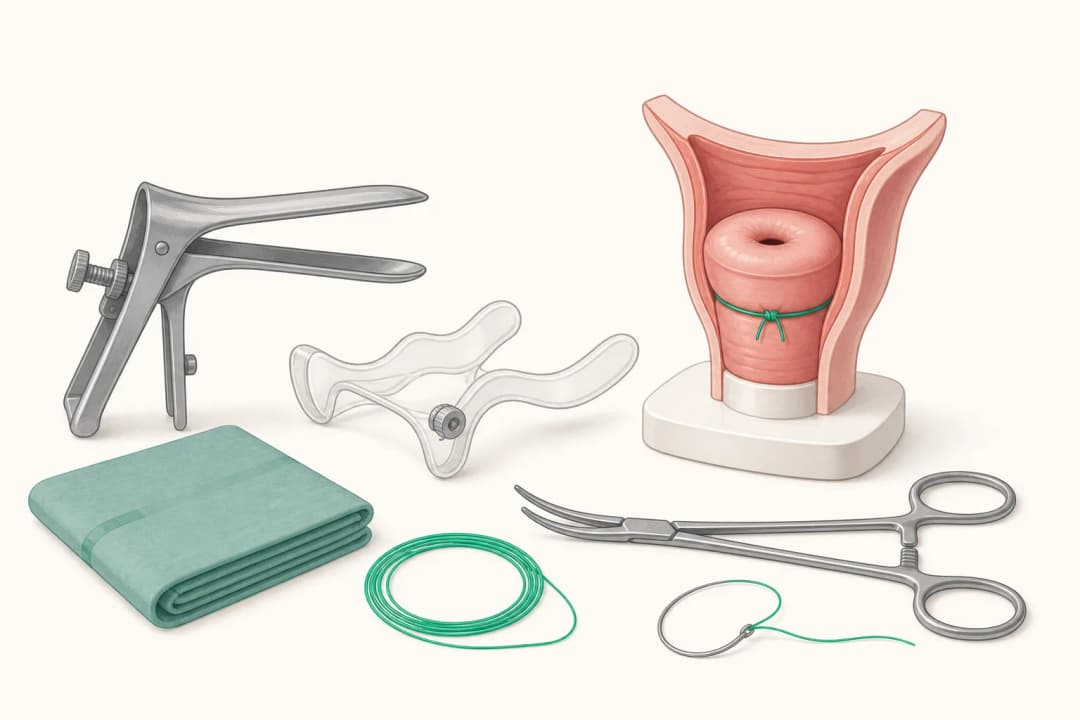
A cerclage supports the cervix during pregnancy. Recovery instructions vary with the reason for the stitch, the technique used, your pregnancy stage, and whether there were symptoms before placement.
Symptoms after the procedure
Temporary pelvic pressure, mild period-like cramps, light spotting, or extra vaginal discharge may follow the procedure. These should not progress to regular tightening, heavy bleeding, a gush or persistent trickle of fluid, fever, or increasing pain.
The stitch lowers a specific cervical risk but cannot prevent every cause of early birth. Keep scheduled maternity checks so the team can review symptoms, the pregnancy, and the plan for removing the stitch or managing labour.
Looking after yourself
Rest for the period advised after the procedure, then return to daily movement according to the obstetric team’s plan. Take prescribed medicines exactly as directed and use pads, rather than tampons, to observe any spotting or fluid.
Follow personalised advice about work, exercise, lifting, travel, and sex; restrictions are not identical for every pregnancy. Know which maternity unit to call at any hour, and keep your pregnancy notes accessible if you need assessment away from home.
Call maternity care promptly
Contact maternity triage immediately for regular cramps or tightenings, persistent lower back pressure, a gush or trickle of watery fluid, heavy or increasing bleeding, fever, chills, foul-smelling discharge, or worsening pelvic pain. These features can indicate labour, ruptured membranes, infection, or another complication.
Also seek assessment for reduced or altered fetal movement once you have begun recognising your baby’s usual pattern. Do not wait for a planned appointment when a warning sign is present.
Details to confirm with your team
Ask when the next check will occur, which activities apply to your circumstances, what discharge is expected, and where to call overnight. Confirm the intended timing and method of stitch removal and what happens if labour or membrane rupture begins first.
Find care
General Clinics & Polyclinics in Abu Dhabi
That answer is general. If you want it applied to your own case, these are licensed general clinics & polyclinics listed in Abu Dhabi.
27 Ar Ruwwad St - Shakhbout City - MSH4 - Abu Dhabi - United Arab Emirates
Accepts: Daman, Thiqa, Cigna, MetLife +20 more
Al Ruwais, Al Dhafrah
Accepts: Daman, Thiqa, AXA, Cigna +16 more
Al Bahyah - Al Bahyah Old - Abu Dhabi - United Arab Emirates
Accepts: Daman, Thiqa, Cigna, Allianz Care +18 more
Abu Dhabi
Accepts: Daman, Thiqa, AXA, Cigna +27 more
Ordered by verification status and how complete each clinic's public record is, then alphabetically. This is a directory listing, not a ranking — Zavis does not rate or recommend providers.
A factual listing drawn from the DHA, DOH and MOHAP licence registers. It is not a referral, an endorsement, or advice that any of these providers is right for you.
Questions people ask
Is spotting expected after cervical cerclage?
Light spotting can occur after placement, but bleeding that becomes heavy, increases, or accompanies pain or contractions needs prompt maternity review.
Can I exercise after a cervical stitch?
Activity advice depends on your pregnancy and the reason for cerclage. Resume exercise only within the limits set by your obstetric team.
What if my waters break while the stitch is in place?
Call maternity triage immediately for a gush or persistent watery trickle. The team needs to assess the membranes, pregnancy, and stitch without delay.
Related
Related reading
Keep reading
Medical disclaimer. This page is general health information, not medical advice, and it cannot diagnose you. Always consult a licensed healthcare provider about your own symptoms and treatment. In an emergency in the UAE, call 998 for an ambulance.