

13 October: Abu Dhabi Biobank and Cleveland Clinic Abu Dhabi launch oncology sample programme
The partnership creates a UAE cancer biobank pilot. Clinics, insurers and patients should watch consent, sequencing and payer rules.
How Zavis verifies this coverage
Editorial standards, source rules, methodology, and review provenance are public.
Abu Dhabi Biobank and Cleveland Clinic Abu Dhabi have launched a cancer sample collection programme that will store blood and tumour tissue from consenting oncology patients for research into personalised cancer care, the Abu Dhabi Media Office said on 13 October 2026.
The highest-stakes readers are chief operating officers, medical directors and finance heads. For Dubai oncology clinics regulated by the Dubai Health Authority (DHA), the announcement is a signal to review consent workflows, tumour tissue handling and referral pathways. For Abu Dhabi providers regulated by the Department of Health – Abu Dhabi (DOH), it sets a local benchmark for linking routine cancer care with research infrastructure. For providers in Sharjah, Ajman, Ras Al Khaimah, Fujairah and Umm Al Quwain, the Ministry of Health and Prevention (MOHAP) remains the relevant licensing authority.
What the programme does
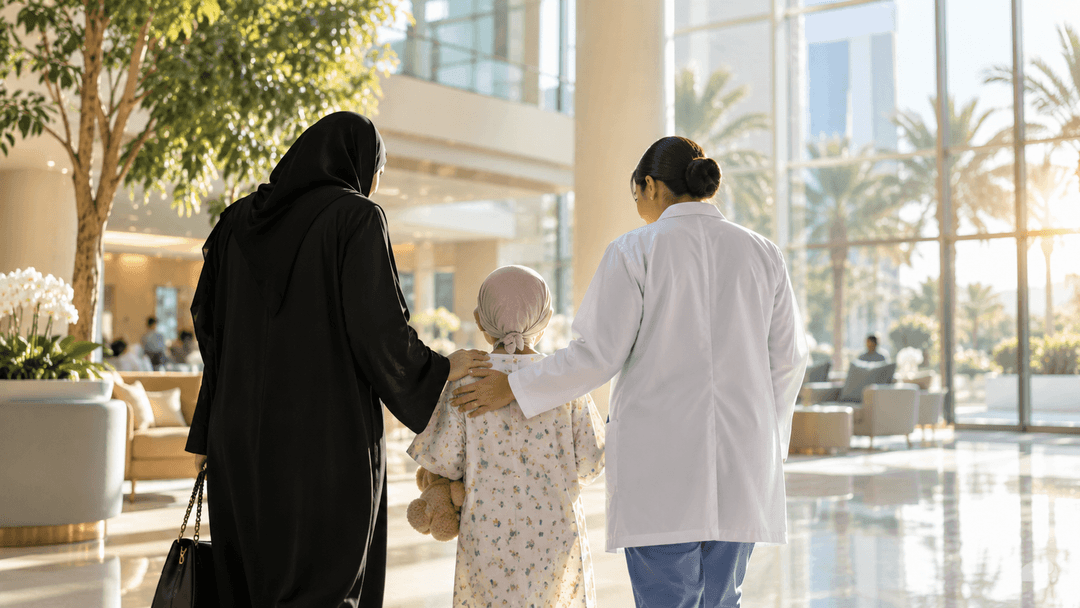
The programme starts with cancer patients at the Fatima bint Mubarak Center, Cleveland Clinic Abu Dhabi's cancer centre. Eligible patients are invited on a voluntary basis to provide blood and tumour tissue samples collected during routine medical visits. The samples are transferred to Abu Dhabi Biobank for processing, storage and governed research use.
The scope covers all cancer types. The Abu Dhabi Media Office named common cancers such as breast cancer and complex cancers including pancreatic cancer. The pilot also includes somatic sequencing of tumour tissue for all volunteers, creating a central resource that combines germline, somatic and discovery models.
"This partnership enables us to make use of samples collected throughout the cancer care journey." Dr Stephen R. Grobmyer, Surgical Oncologist and Institute Chief, Cancer Institute at Cleveland Clinic Abu Dhabi.
Abu Dhabi Biobank is a strategic initiative between DOH and M42. Its Masdar City facility has capacity to store 5 million biological samples linked to health data. Cleveland Clinic Abu Dhabi was recently designated by DOH as an Oncology Centre of Excellence for Breast Cancer, according to the same announcement.
Why clinics and insurers should care
For UAE clinics, the practical issue is workflow. Tissue is already collected during biopsy or surgery. The new step is consented research transfer, with data governance and sample tracking. Dubai operators should compare their current oncology consent forms with DHA requirements and any research ethics approvals. Abu Dhabi operators should check DOH research governance, facility privileges and laboratory transfer arrangements before advertising similar pathways.
For insurers, the announcement raises a reimbursement question that the public statement does not answer. No AED tariff, patient charge, payer code or reimbursement range was published on 13 October 2026. Clinics should therefore avoid quoting patients a price for sequencing or research-linked add-ons until they verify coverage in payer portals and policy schedules.
- Eligibility: cancer patients at Cleveland Clinic Abu Dhabi's Fatima bint Mubarak Center who volunteer during the pilot.
- Samples: blood and tumour tissue collected during routine medical visits.
- Sequencing: somatic sequencing of tumour tissue for all pilot volunteers, according to the announcement.
- Coverage check: verify pre-authorisation and benefit wording with Daman, Thiqa or commercial insurers such as Sukoon before billing any clinical test.
For patients, the immediate effect is access to a research pathway rather than a guaranteed change in treatment. Consent should explain whether the sample is used for research, whether results return to the treating team, and how withdrawal works. These details matter because research sequencing, clinical diagnostic sequencing and insurer-funded tests can follow different rules.
What changes next
The commercial signal is wider than one hospital. Abu Dhabi is building a research stack around oncology: DOH regulation, M42 infrastructure, Cleveland Clinic Abu Dhabi clinical volume and biobanked samples that can support organoids and treatment-response studies. That may make the emirate more attractive for sponsors of regional cancer trials.
Dubai and northern emirates providers should treat this as a competitive benchmark. A clinic does not need to own a biobank to respond. It needs clean consent language, pathology handling standards, reliable referral routes and a named process for insurer approvals. Medical directors should ask whether tumour boards can use genomic findings consistently. CFOs should ask which services are billable, which are research-funded and which require patient payment.
The near-term watch points are the pilot's enrolment criteria, ethics approvals, data-sharing rules and any future payer guidance from DOH. Until those are published, UAE operators should verify licensed oncology options through regulator-backed sources. Readers can use the UAE Open Healthcare Directory to find licensed oncology providers across Dubai, Abu Dhabi, Al Ain and the northern emirates.
Zavis Intelligence
Healthcare Industry Desk
Contributing to UAE healthcare industry coverage
Related coverage



FAQ
What is happening in UAE healthcare industry?
The partnership creates a UAE cancer biobank pilot. Clinics, insurers and patients should watch consent, sequencing and payer rules.