

UAE breast cancer survivors put 40-plus screening and follow-up care back on clinics' agenda
Gulf News profiles UAE women rebuilding life after breast cancer. Clinics and insurers should watch screening access, follow-up care and support services.
How Zavis verifies this coverage
Editorial standards, source rules, methodology, and review provenance are public.
Gulf News has profiled UAE women who survived breast cancer and are rebuilding daily life after surgery, chemotherapy and fear of recurrence, a story that puts clinic follow-up, insurance navigation and mental health support back in focus during Breast Cancer Awareness Month.
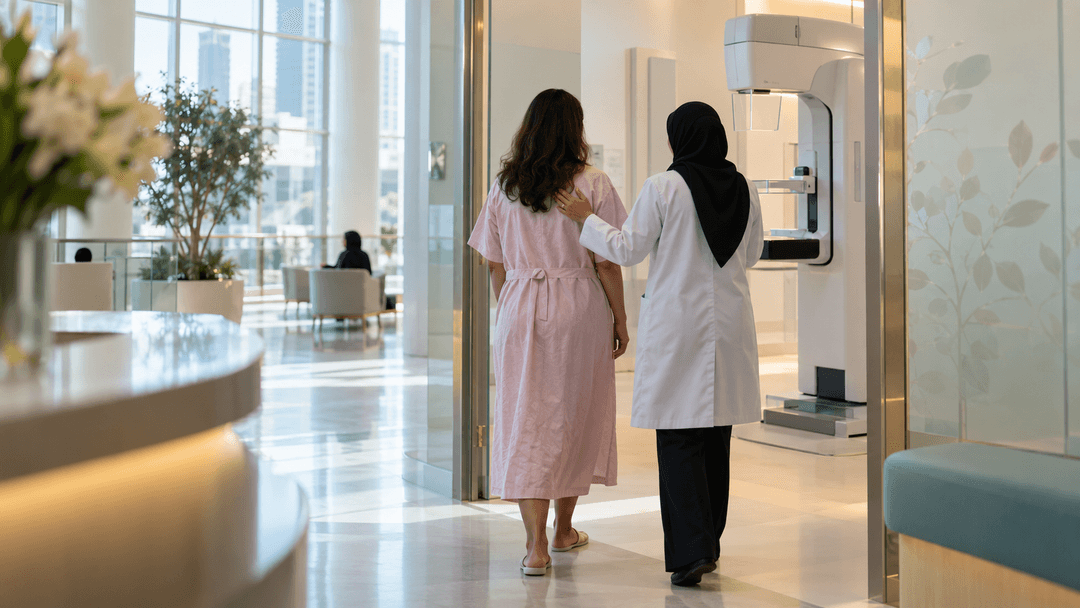
The highest-stakes readers are clinic COOs, insurer medical teams and patient-facing oncology services. The operational question is simple: can a woman move from a lump, screening mammogram or abnormal ultrasound to biopsy, oncology referral, surgery and survivorship care without losing weeks to authorisations, provider selection or uncertainty about costs?
What the Gulf News story adds
The Gulf News article, published on 11 October 2026, follows women including Catherine, Maria Sirotinina and Maelisa Hall. Catherine had a right mastectomy, 17 lymph nodes dissected and chemotherapy through a PICC line kept for more than six months. She later joined a UAE support group led by Lamya Gabr.
“I’m not going anywhere.” Gulf News breast cancer survivor profile, 11 October 2026.
The article also quotes Hiba Salem, Psycho-Oncology and Palliative Psychology Specialist at Sage Clinic, on emotional recovery after treatment. That matters commercially as well as clinically. A breast cancer pathway is no longer a surgical or chemotherapy episode only. It includes recurrence anxiety, body image, fertility concerns, fatigue, sleep disruption, return to work and family counselling.
Screening rules operators should check
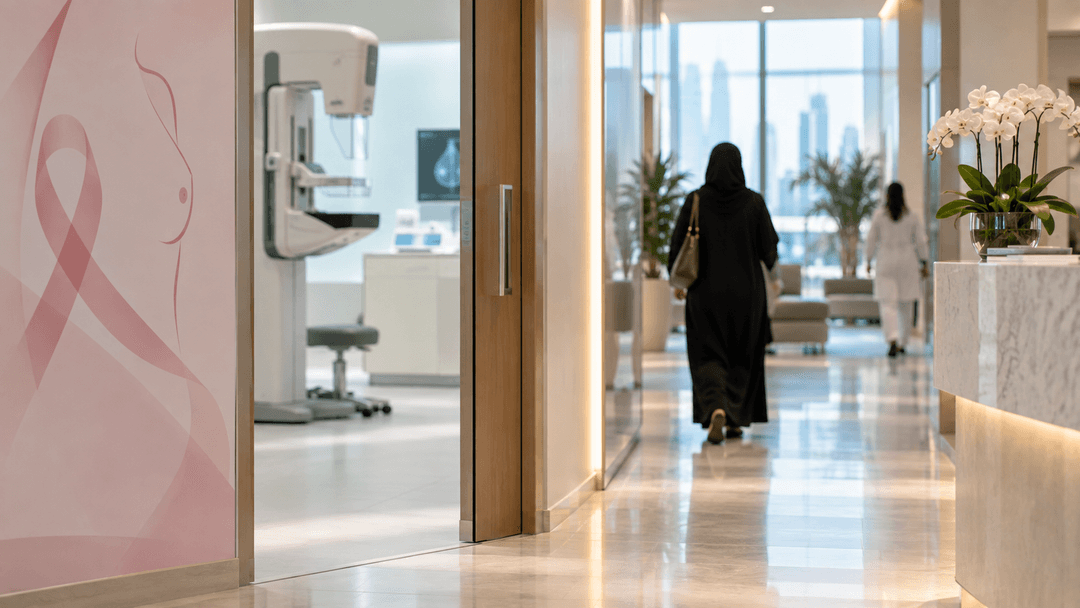
Dubai providers sit under the Dubai Health Authority (DHA). DHA's Periodic Health Screening Guideline, issued on 11 March 2024 and effective from 11 May 2024, summarises UAE national guidance: women aged 40 years and over are advised to have a mammogram every two years. Women with family history or inherited genetic risk may start earlier on clinician advice.
For Abu Dhabi and Al Ain, the relevant regulator is the Department of Health Abu Dhabi (DOH). The Abu Dhabi Public Health Centre says breast screening is available through IFHAS for Thiqa cardholders, with mammography every two years. ADPHC also said in 2024 that more than 150 healthcare facilities across Abu Dhabi provided IFHAS services.
For Sharjah, Ajman, Ras Al Khaimah, Fujairah and Umm Al Quwain, the relevant federal regulator is the Ministry of Health and Prevention (MOHAP). MOHAP's National Guideline for Breast Cancer Screening and Diagnosis sets risk-based pathways, including annual mammography for selected higher-risk groups and MRI consideration for women with strong genetic or family risk.
Cost and workflow implications
For self-pay patients in Dubai, current advertised screening packages give operators a visible benchmark. Mediclinic Middle East lists mammogram screening at AED 375 and mammogram plus breast ultrasound at AED 725. Emirates Hospitals Group lists a mammogram package at AED 300 and a consultation, mammogram and ultrasound package at AED 750. Canadian Specialist Hospital advertises a breast cancer screening package at AED 525. These are public package prices, not an insurer tariff.
- Clinics should publish a same-week screening route for women aged 40 and over, plus a separate route for symptomatic women who need diagnostic work-up.
- Insurers should state preapproval rules for mammogram, ultrasound, biopsy and oncology referral in plain language.
- Hospitals should track time from abnormal imaging to biopsy and from diagnosis to first treatment decision.
- Patients should confirm whether the visit is screening or diagnostic, because eligibility and authorisation can differ.
Dubai insurers and providers also need to check the DHA-linked BASMAH cancer support framework where it applies. DHA's insurance documentation states that coverage for breast, cervical and colorectal cancer applies to eligible insured members, subject to treatment criteria and policy conditions. Patients should ask their insurer for the written pathway before starting expensive imaging or treatment.
The next pressure point is survivorship capacity. Gulf News' article is a reminder that a completed chemotherapy schedule does not end provider responsibility. Clinics competing in oncology will need nurse navigation, psycho-oncology referral, prosthesis and reconstruction counselling, genetics triage and documented follow-up intervals.
Patients and employers comparing oncology access should verify licensing first. The practical starting point is the UAE Open Healthcare Directory, which links providers back to DHA, DOH and MOHAP registers and can be used to find licensed oncology providers across Dubai, Abu Dhabi, Al Ain and the northern emirates.
Zavis Intelligence
Healthcare Industry Desk
Contributing to UAE healthcare industry coverage
Related coverage


FAQ
What is happening in UAE healthcare industry?
Gulf News profiles UAE women rebuilding life after breast cancer. Clinics and insurers should watch screening access, follow-up care and support services.