
What should you know about text neck muscles?
Short answer
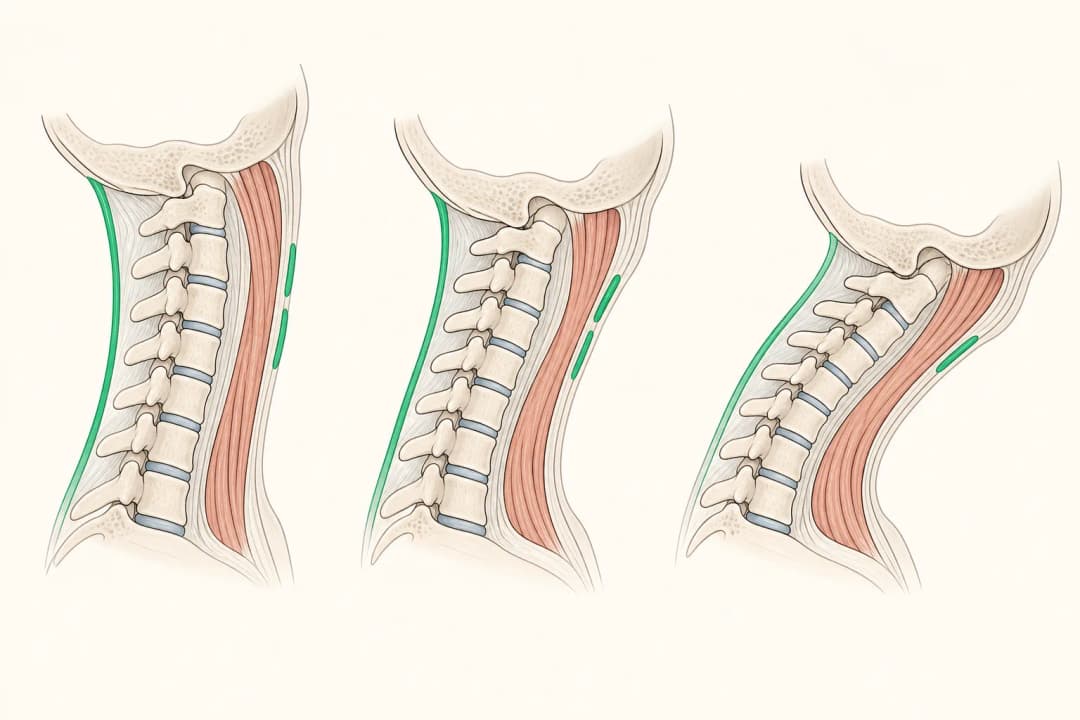
Text neck muscles are the neck, shoulder, and upper-back muscles that become overworked when the head stays forward during screen use.
This answers one question. It is not a diagnosis and does not replace an assessment by a licensed doctor.
At a glance
- Areas involved
- Neck, shoulder, chest, and upper-back muscle groups
- Typical trigger
- Sustained forward head or downward screen posture
- Useful assessment
- Movement, strength, symptoms, and workstation habits
How muscle strain develops
A forward head position changes the job of the muscles supporting the skull. The muscles at the back of the neck may stay active for a long period, while the chest can feel shortened and the muscles that draw the shoulder blades back may work less efficiently. People may notice tightness at the base of the skull, sore shoulders, upper-back aching, or discomfort when turning the head.
The pattern can be reinforced by a low laptop, leaning toward a monitor, or looking down at a phone. Muscle symptoms do not identify one single cause, so persistent neck pain or arm symptoms should be examined rather than labelled as text neck automatically.
Reducing muscle overload
Bring screens closer to eye level and keep frequently used items within easy reach. Every so often, stand, walk, roll the shoulders gently, and move the neck through a comfortable range. Strength work may include controlled chin tucks and shoulder-blade exercises, but the amount should match your mobility and pain response.
Physiotherapy can assess the neck, upper back, and shoulder movement and guide progression. Postural correction therapy may help you practise a more efficient position, while a workplace ergonomic assessment can identify equipment or desk adjustments. Manual treatment, including chiropractic adjustment, is not suitable for everyone; discuss risks and alternatives before choosing it.
When symptoms need assessment
Seek medical advice when symptoms are persistent, worsening, repeatedly interrupt work, or extend into the arm. Get urgent help for new arm or hand weakness, numbness that is spreading, loss of balance, severe headache with neck stiffness, or neck pain after significant trauma.
Useful questions
Ask which muscles and joints may be contributing, whether an examination is needed, and which exercises are safe. Ask how to modify your screen setup and what changes would mean that you should return sooner.
Find care
General Clinics & Polyclinics in Abu Dhabi
That answer is general. If you want it applied to your own case, these are licensed general clinics & polyclinics listed in Abu Dhabi.
27 Ar Ruwwad St - Shakhbout City - MSH4 - Abu Dhabi - United Arab Emirates
Accepts: Daman, Thiqa, Cigna, MetLife +20 more
Al Ruwais, Al Dhafrah
Accepts: Daman, Thiqa, AXA, Cigna +16 more
Al Bahyah - Al Bahyah Old - Abu Dhabi - United Arab Emirates
Accepts: Daman, Thiqa, Cigna, Allianz Care +18 more
Abu Dhabi
Accepts: Daman, Thiqa, AXA, Cigna +27 more
Ordered by verification status and how complete each clinic's public record is, then alphabetically. This is a directory listing, not a ranking — Zavis does not rate or recommend providers.
A factual listing drawn from the DHA, DOH and MOHAP licence registers. It is not a referral, an endorsement, or advice that any of these providers is right for you.
Questions people ask
Should tight muscles be stretched forcefully?
No. Gentle movement is usually more appropriate than forcing a painful stretch, particularly when symptoms travel into an arm.
What if muscle pain comes with tingling?
Tingling can have causes beyond simple muscle fatigue. Arrange an assessment, especially if it persists, spreads, or comes with weakness.
Keep reading
Medical disclaimer. This page is general health information, not medical advice, and it cannot diagnose you. Always consult a licensed healthcare provider about your own symptoms and treatment. In an emergency in the UAE, call 998 for an ambulance.