
What should you know about milia treatment?
Short answer
Milia treatment starts with confirming the diagnosis, then choosing observation, prescribed topical care, or sterile clinical removal for bothersome cysts.
This answers one question. It is not a diagnosis and does not replace an assessment by a licensed doctor.
At a glance
- Diagnosis
- Treatment should follow confirmation that the bump is milia.
- Choices
- Observation, prescribed topical care, or sterile clinical removal may be considered.
Understanding the options
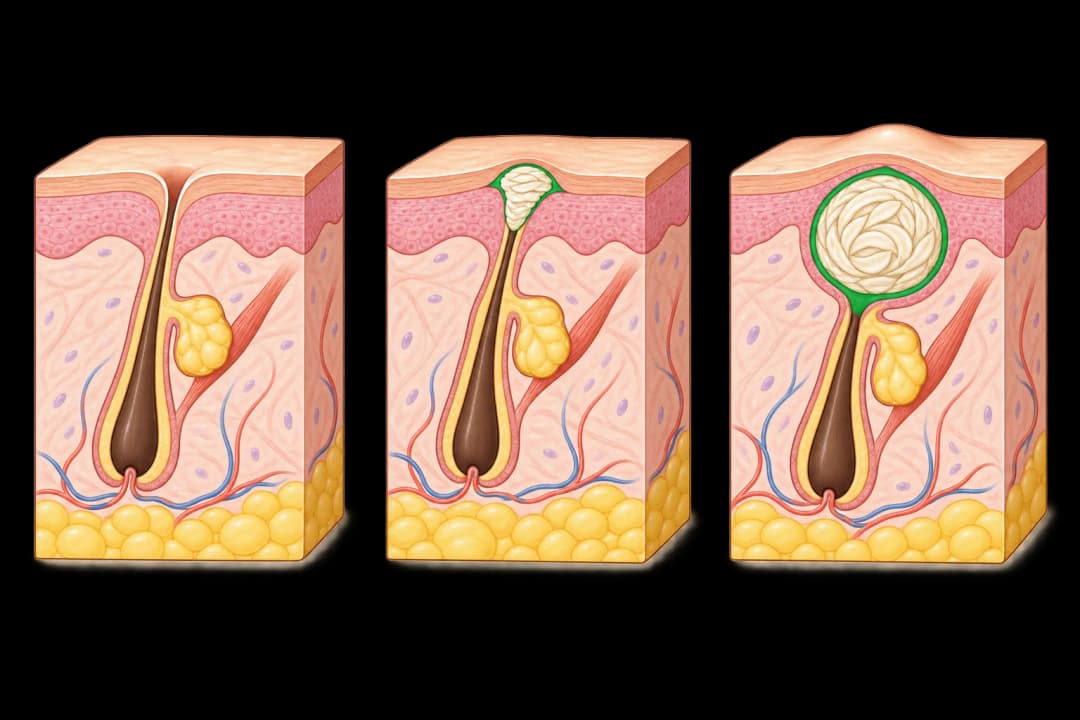
Milia are small cysts containing keratin, often seen as smooth white or skin-coloured bumps. They are different from acne whiteheads, although the two can look alike. A clinician considers the location, size, number of spots, skin sensitivity and whether the diagnosis is clear. Some milia can be watched if they do not bother you. Others may be treated with a prescribed topical retinoid or removed in a clinic. Treatment is not chosen only by how visible the bump is; delicate areas such as the eyelids need especially careful handling.
Preparing for treatment
Use a mild cleanser, avoid picking, and tell the clinician about sensitive skin, previous dark marks, scarring, allergies and products used near the area. Do not attempt extraction with pins, needles or blades. A sterile removal method such as curettage and cautery may be discussed, while a topical retinoid may suit selected cases. Follow aftercare instructions and pause irritating products if the treated skin becomes tender. Read more about [Milia](/conditions/milia/), [Topical Retinoids](/treatments/medical-dermatology/topical-retinoids/), and [Curettage And Cautery](/treatments/surgical-dermatology/curettage-and-cautery/).
When treatment needs review
Contact the treating clinic if redness spreads, pain increases, swelling worsens, or discharge develops after treatment. Seek prompt assessment for fever, eye involvement, or vision changes. Before treatment, arrange review for a bump that bleeds, crusts, changes quickly, or has an uncertain diagnosis.
Questions for your doctor
Ask which options fit your skin and location, whether treatment is necessary, what temporary reactions to expect, and how to reduce irritation during healing.
Find care
General Clinics & Polyclinics in Abu Dhabi
That answer is general. If you want it applied to your own case, these are licensed general clinics & polyclinics listed in Abu Dhabi.
27 Ar Ruwwad St - Shakhbout City - MSH4 - Abu Dhabi - United Arab Emirates
Accepts: Daman, Thiqa, Cigna, MetLife +20 more
Al Ruwais, Al Dhafrah
Accepts: Daman, Thiqa, AXA, Cigna +16 more
Al Bahyah - Al Bahyah Old - Abu Dhabi - United Arab Emirates
Accepts: Daman, Thiqa, Cigna, Allianz Care +18 more
Abu Dhabi
Accepts: Daman, Thiqa, AXA, Cigna +27 more
Ordered by verification status and how complete each clinic's public record is, then alphabetically. This is a directory listing, not a ranking — Zavis does not rate or recommend providers.
A factual listing drawn from the DHA, DOH and MOHAP licence registers. It is not a referral, an endorsement, or advice that any of these providers is right for you.
Questions people ask
What is the usual first step for milia?
The first step is a skin assessment, followed by observation or a suitable treatment plan based on the location and appearance.
Can a dermatologist remove milia?
Yes. A dermatologist can discuss sterile removal methods, including curettage and cautery, when removal is appropriate.
Related
Related reading
Keep reading
Medical disclaimer. This page is general health information, not medical advice, and it cannot diagnose you. Always consult a licensed healthcare provider about your own symptoms and treatment. In an emergency in the UAE, call 998 for an ambulance.