
What should you know about milia in pregnancy?
Short answer
Milia during pregnancy are small surface cysts, and any treatment should be checked for pregnancy suitability before use.
This answers one question. It is not a diagnosis and does not replace an assessment by a licensed doctor.
At a glance
- What it is
- Keratin trapped just beneath the skin surface
- Common site
- Facial skin, particularly around the eyes
- Pregnancy point
- Check every active treatment before use
Understanding milia in pregnancy
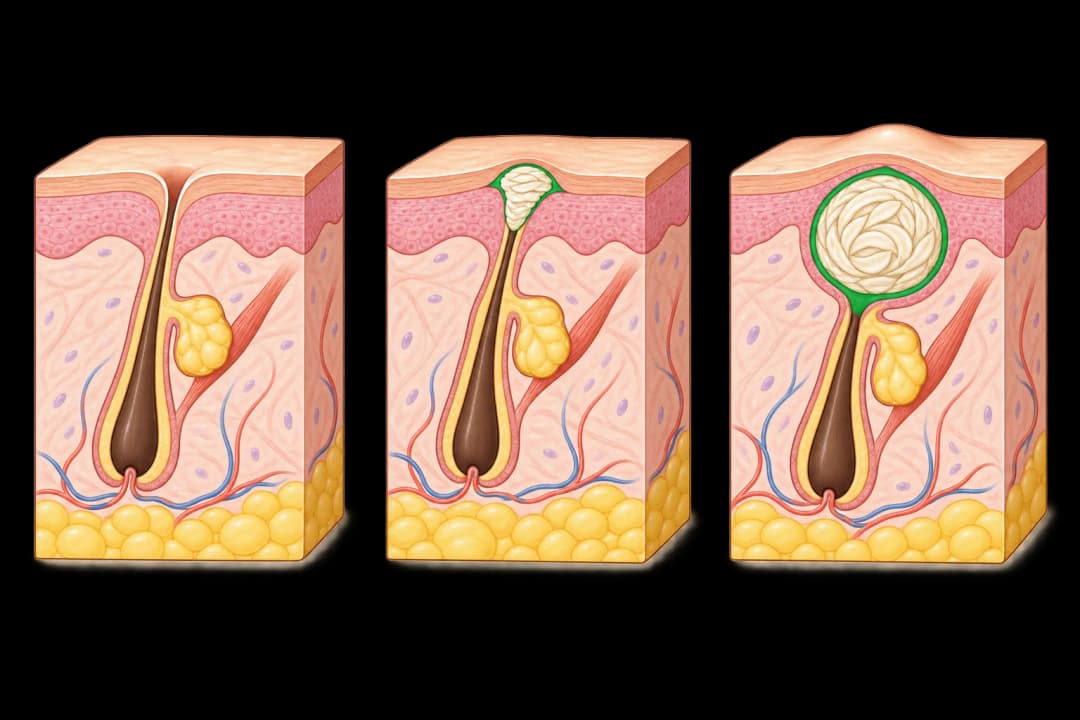
Milia are firm, white or yellowish dots formed by keratin trapped beneath the skin surface. They commonly appear on facial skin, including around the eyes, and may be more noticeable when hormonal changes alter oiliness or sensitivity. Milia themselves are not a sign that the pregnancy is in danger and do not spread from person to person.
A new facial bump is not automatically milia. Irritation, blocked pores, and other lesions can look similar. The texture, colour, location, and any redness help a clinician decide whether the label fits.
Safe next steps
Use a mild cleanser, lukewarm water, and a non-comedogenic moisturiser if your skin feels dry. Avoid picking, harsh scrubs, home extraction kits, and strong peels, since pregnancy can make skin more reactive and injury may leave a mark. Photographing a changing area can help you describe it at an appointment.
Do not start [Topical Retinoids](/treatments/medical-dermatology/topical-retinoids/) during pregnancy without direct medical advice. A dermatologist can discuss whether observation is enough or whether a procedure should wait. Background information is available at [Milia](/conditions/milia/) and [Skin Bumps](/symptoms/skin-bumps/).
When to arrange an assessment
Seek medical advice if a bump is rapidly changing, painful, itchy, bleeding, crusted, or surrounded by redness, or if many new lesions appear with another skin change. Get advice for a lesion near the eye or on a mucosal surface. A clinician can distinguish milia from [Whiteheads](/symptoms/whiteheads/) and consider pregnancy-safe options.
Useful questions
Ask whether the lesion is definitely milia, whether your current skincare is suitable, and whether treatment can wait until after pregnancy. If removal is desired, ask about timing, anaesthetic choices, wound care, and the risk of temporary irritation.
Find care
General Clinics & Polyclinics in Abu Dhabi
That answer is general. If you want it applied to your own case, these are licensed general clinics & polyclinics listed in Abu Dhabi.
27 Ar Ruwwad St - Shakhbout City - MSH4 - Abu Dhabi - United Arab Emirates
Accepts: Daman, Thiqa, Cigna, MetLife +20 more
Al Ruwais, Al Dhafrah
Accepts: Daman, Thiqa, AXA, Cigna +16 more
Al Bahyah - Al Bahyah Old - Abu Dhabi - United Arab Emirates
Accepts: Daman, Thiqa, Cigna, Allianz Care +18 more
Abu Dhabi
Accepts: Daman, Thiqa, AXA, Cigna +27 more
Ordered by verification status and how complete each clinic's public record is, then alphabetically. This is a directory listing, not a ranking — Zavis does not rate or recommend providers.
A factual listing drawn from the DHA, DOH and MOHAP licence registers. It is not a referral, an endorsement, or advice that any of these providers is right for you.
Questions people ask
Are milia caused by pregnancy?
Pregnancy-related skin changes may make bumps more noticeable, but a clinician should confirm the diagnosis.
Can milia be removed while pregnant?
Sometimes removal may be considered, but timing and method should be decided with your clinician.
Related
Related reading
Keep reading
Medical disclaimer. This page is general health information, not medical advice, and it cannot diagnose you. Always consult a licensed healthcare provider about your own symptoms and treatment. In an emergency in the UAE, call 998 for an ambulance.