
What should you know about milia chin removal?
Short answer
Milia chin removal usually involves a clinician confirming the bumps and releasing or treating them with a suitable dermatology procedure.
This answers one question. It is not a diagnosis and does not replace an assessment by a licensed doctor.
At a glance
- Typical appearance
- Small, firm white or skin-coloured bumps
- Avoid
- Squeezing, piercing, or scraping them at home
- Who can remove them
- A qualified dermatologist or trained medical professional
What milia on the chin mean
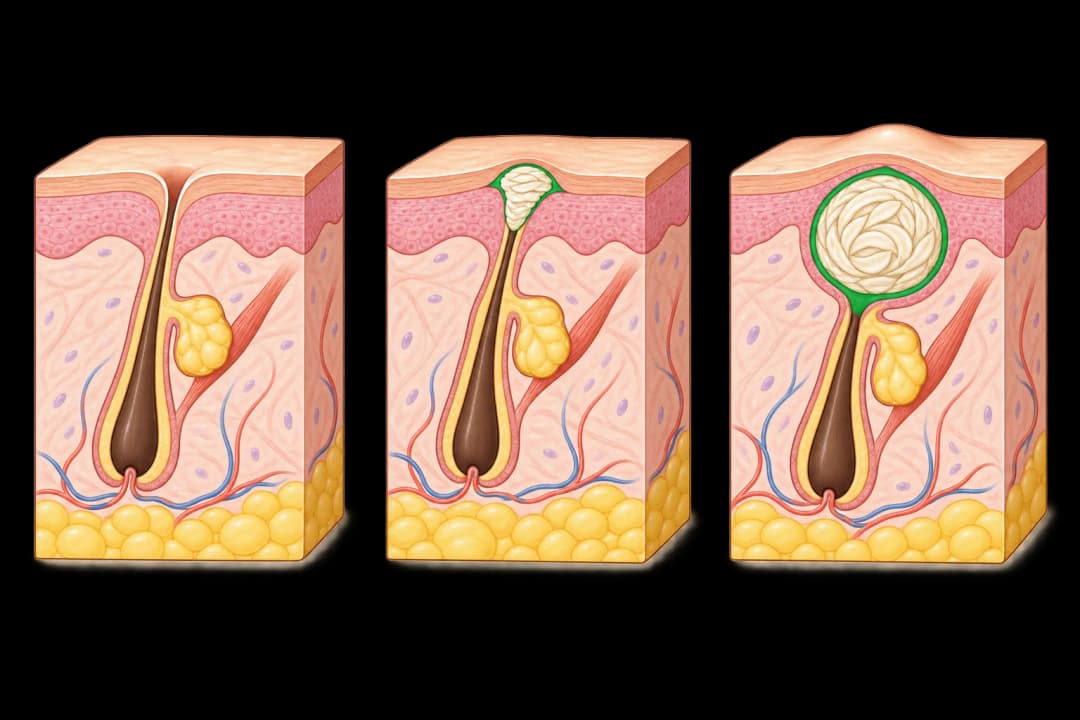
Milia are tiny, firm cysts formed when keratin becomes trapped beneath the surface of the skin. They can look like whiteheads, but they are usually harder and do not empty easily when pressed. A cluster on the chin may be easy to feel even when it is subtle in colour. Milia are not the same as acne, and rubbing, picking, or piercing them at home can cause inflammation, a small wound, infection, or a lingering mark.
A clinician may examine the texture and position of the bumps before recommending treatment. If the appearance is unusual or the diagnosis is uncertain, an in-person assessment matters because several types of skin bumps can look alike.
Options for removal
For an isolated chin milia, a dermatologist can cleanse the area and make a very small opening before gently lifting out the trapped material. This is often called extraction or deroofing. Multiple or recurring bumps may prompt discussion of a topical retinoid, which can help reduce the buildup of skin cells but may irritate the skin and is not suitable for everyone.
For persistent lesions, curettage and cautery may be considered. The clinician removes the cyst and uses controlled heat to address the treated spot. Follow the aftercare instructions, keep the area clean, and use sun protection while it heals. Avoid applying strong acids, needles, or household tools to the chin.
When to seek care
Arrange a dermatology assessment if the bumps change quickly, bleed, crust, become painful, or repeatedly return after attempted removal. Seek prompt medical advice if redness, warmth, swelling, pus, or increasing tenderness develops after picking or a procedure, as these can signal infection. An assessment is also sensible when the bumps are spreading, affecting your confidence, or not behaving like the milia you have had before.
Questions for your doctor
Ask whether the chin bumps are milia or another type of lesion, which removal method fits their depth and number, and what irritation or colour change to expect during healing. If a retinoid is suggested, ask how often to apply it, what products to avoid, and whether it is appropriate during pregnancy or breastfeeding.
Find care
General Clinics & Polyclinics in Abu Dhabi
That answer is general. If you want it applied to your own case, these are licensed general clinics & polyclinics listed in Abu Dhabi.
27 Ar Ruwwad St - Shakhbout City - MSH4 - Abu Dhabi - United Arab Emirates
Accepts: Daman, Thiqa, Cigna, MetLife +20 more
Al Ruwais, Al Dhafrah
Accepts: Daman, Thiqa, AXA, Cigna +16 more
Al Bahyah - Al Bahyah Old - Abu Dhabi - United Arab Emirates
Accepts: Daman, Thiqa, Cigna, Allianz Care +18 more
Abu Dhabi
Accepts: Daman, Thiqa, AXA, Cigna +27 more
Ordered by verification status and how complete each clinic's public record is, then alphabetically. This is a directory listing, not a ranking — Zavis does not rate or recommend providers.
A factual listing drawn from the DHA, DOH and MOHAP licence registers. It is not a referral, an endorsement, or advice that any of these providers is right for you.
Questions people ask
Can I squeeze milia on my chin?
It is better not to. Milia sit beneath the surface, so squeezing may injure surrounding skin without removing the cyst and can leave inflammation or a mark.
Will milia on the chin go away on their own?
Some milia may clear over time, while others persist. A dermatologist can confirm the diagnosis and discuss removal when a lesion is bothersome or does not clear.
Are topical retinoids used for chin milia?
They may be considered for multiple or recurring milia, but they can irritate the skin and require personalised instructions.
Related
Related reading
Keep reading
Medical disclaimer. This page is general health information, not medical advice, and it cannot diagnose you. Always consult a licensed healthcare provider about your own symptoms and treatment. In an emergency in the UAE, call 998 for an ambulance.