
Intermittent asthma
Short answer
Intermittent asthma causes episodes of narrowed, inflamed airways that can bring wheezing, cough, chest tightness, or breathlessness.
This answers one question. It is not a diagnosis and does not replace an assessment by a licensed doctor.
At a glance
- Symptoms
- Wheezing, cough, chest tightness, or breathlessness may come and go.
- Common triggers
- Exercise, infections, smoke, allergens, and cold air can provoke symptoms.
- Emergency sign
- Severe breathing difficulty or poor response to reliever medicine needs urgent help.
How intermittent asthma behaves
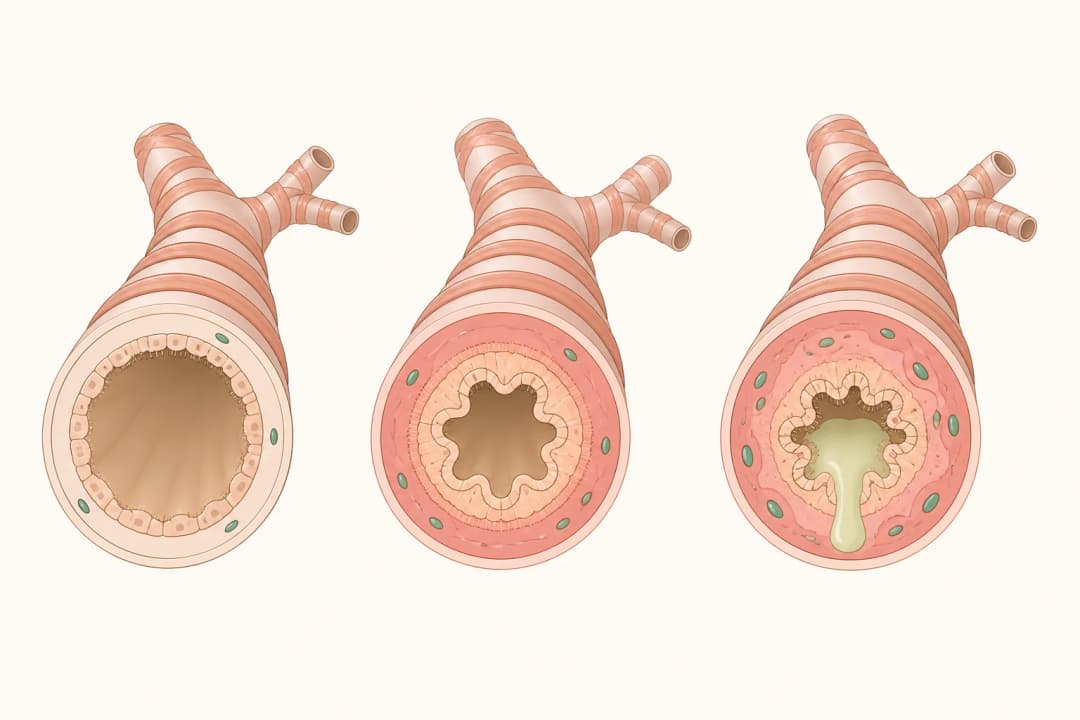
Asthma symptoms can vary between days and may be triggered by exercise, viral infections, smoke, dust, pollen, cold air, or workplace irritants. Allergic rhinitis and house dust mite allergy can aggravate symptoms in some people. During an episode, the airway lining becomes inflamed and the surrounding muscles tighten, making it harder for air to move. A quiet period does not prove that asthma has gone away; symptoms can return when a trigger appears.
Managing episodes and triggers
Use inhalers exactly as prescribed and learn the correct technique from a clinician or pharmacist. Keep a written action plan describing your usual symptoms, medicines, and escalation steps. Track when cough, wheezing, or chest tightness occurs, including exposure to allergens, smoke, or exercise. Reduce avoidable triggers, keep rescue medicine available if prescribed, and arrange review when symptoms disturb sleep, limit activity, or need repeated reliever doses.
When breathing trouble is urgent
Seek emergency help if breathing is very difficult, speech is limited to short phrases, the lips look blue or grey, the person is becoming drowsy or confused, or prescribed reliever medicine is not helping. Sit upright and follow the action plan while help is arranged. A nebuliser treatment may be used by medical professionals, but worsening symptoms still require urgent assessment.
Questions for your doctor
Ask what triggers are most likely, whether your inhaler technique is correct, what to do during an attack, when to start or change preventer treatment, and how to manage asthma during exercise or infections.
Find care
General Clinics & Polyclinics in Abu Dhabi
That answer is general. If you want it applied to your own case, these are licensed general clinics & polyclinics listed in Abu Dhabi.
27 Ar Ruwwad St - Shakhbout City - MSH4 - Abu Dhabi - United Arab Emirates
Accepts: Daman, Thiqa, Cigna, MetLife +20 more
Al Ruwais, Al Dhafrah
Accepts: Daman, Thiqa, AXA, Cigna +16 more
Al Bahyah - Al Bahyah Old - Abu Dhabi - United Arab Emirates
Accepts: Daman, Thiqa, Cigna, Allianz Care +18 more
Abu Dhabi
Accepts: Daman, Thiqa, AXA, Cigna +27 more
Ordered by verification status and how complete each clinic's public record is, then alphabetically. This is a directory listing, not a ranking — Zavis does not rate or recommend providers.
A factual listing drawn from the DHA, DOH and MOHAP licence registers. It is not a referral, an endorsement, or advice that any of these providers is right for you.
Questions people ask
Can intermittent asthma still become serious?
Yes. Symptoms may be infrequent yet a sudden flare can narrow the airways significantly, so an action plan and timely treatment matter.
Is every cough caused by asthma?
No. Cough has many causes. A clinician considers its timing, triggers, breathing symptoms, and examination findings before diagnosing asthma.
Keep reading
Medical disclaimer. This page is general health information, not medical advice, and it cannot diagnose you. Always consult a licensed healthcare provider about your own symptoms and treatment. In an emergency in the UAE, call 998 for an ambulance.