
What should you know about FEV1 and asthma?
Short answer
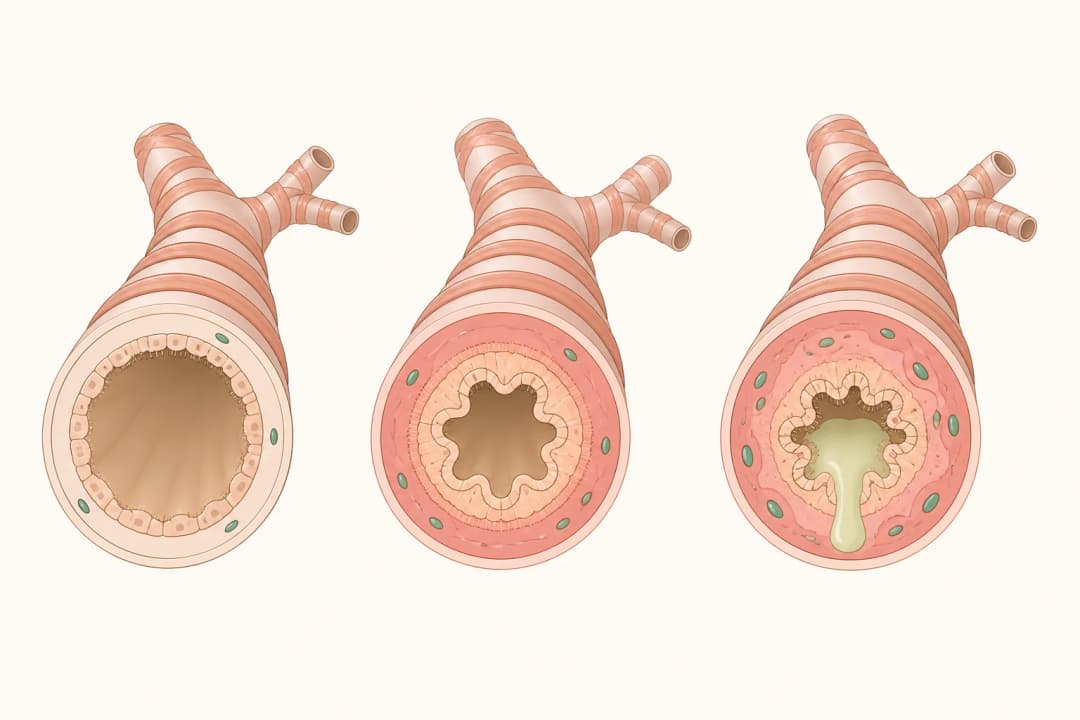
FEV1 is the amount of air you can forcefully breathe out during the first second of a spirometry test; in asthma, it helps show how narrowed and responsive the airways are.
This answers one question. It is not a diagnosis and does not replace an assessment by a licensed doctor.
At a glance
- Test
- Spirometry
- FEV1
- Air exhaled in the first second
- Interpretation
- Combined with symptoms and other results
What FEV1 tells your clinician
During spirometry, you take a full breath and blow into a mouthpiece as hard and fast as you can. FEV1 is considered with other measurements, your symptoms, examination, and how the result changes after a reliever medicine. A single result does not establish asthma by itself, and a normal reading does not explain every breathing problem.
Asthma symptoms can include wheeze, cough, chest tightness, and breathlessness. Allergic rhinitis, house dust mite allergy, infections, exercise, smoke, and other irritants may affect symptoms or test timing. Your clinician may repeat testing when symptoms and the first result do not match.
Preparing for spirometry
Follow the clinic's instructions about inhalers, smoking, meals, and strenuous activity before testing; do not stop prescribed medicine unless the clinician tells you to. Wear comfortable clothing, seal your lips around the mouthpiece, and give a strong, sustained blow. Tell the tester if coughing, dizziness, or chest discomfort prevents you from completing a manoeuvre.
When breathing symptoms are urgent
Use your prescribed asthma action plan for worsening symptoms. Seek emergency help if you are struggling to speak, breathing is rapidly worsening, your lips look blue or grey, you become drowsy or confused, or your reliever is not helping as directed. A low or changing FEV1 result should be discussed with your clinician, but urgent symptoms should not wait for lung-function testing.
Questions for your clinician
Ask what your FEV1 result means alongside the other spirometry values, whether bronchodilator testing or repeat assessment is needed, and how your inhaler plan should change. Ask how to recognise an asthma flare and when nebuliser treatment or emergency care is appropriate.
Find care
General Clinics & Polyclinics in Abu Dhabi
That answer is general. If you want it applied to your own case, these are licensed general clinics & polyclinics listed in Abu Dhabi.
27 Ar Ruwwad St - Shakhbout City - MSH4 - Abu Dhabi - United Arab Emirates
Accepts: Daman, Thiqa, Cigna, MetLife +20 more
Al Ruwais, Al Dhafrah
Accepts: Daman, Thiqa, AXA, Cigna +16 more
Al Bahyah - Al Bahyah Old - Abu Dhabi - United Arab Emirates
Accepts: Daman, Thiqa, Cigna, Allianz Care +18 more
Abu Dhabi
Accepts: Daman, Thiqa, AXA, Cigna +27 more
Ordered by verification status and how complete each clinic's public record is, then alphabetically. This is a directory listing, not a ranking — Zavis does not rate or recommend providers.
A factual listing drawn from the DHA, DOH and MOHAP licence registers. It is not a referral, an endorsement, or advice that any of these providers is right for you.
Questions people ask
Does a low FEV1 prove asthma?
No. FEV1 can be affected by several factors, so asthma assessment uses symptoms, examination, and other lung-function findings.
Can asthma have a normal FEV1?
A reading may be normal between episodes, which is why clinicians may compare results over time or after a reliever.
Keep reading
Medical disclaimer. This page is general health information, not medical advice, and it cannot diagnose you. Always consult a licensed healthcare provider about your own symptoms and treatment. In an emergency in the UAE, call 998 for an ambulance.