
Coughing up blood after a breathing tube
Short answer
A small blood streak after a breathing tube can result from airway irritation, but persistent or heavy bleeding needs urgent medical review.
This answers one question. It is not a diagnosis and does not replace an assessment by a licensed doctor.
At a glance
- Possible explanation
- Irritation after insertion, removal or suctioning
- Report promptly
- Bleeding that persists, returns or contains clots
- Emergency signs
- Breathlessness, chest pain, faintness or heavy bleeding
What may be happening
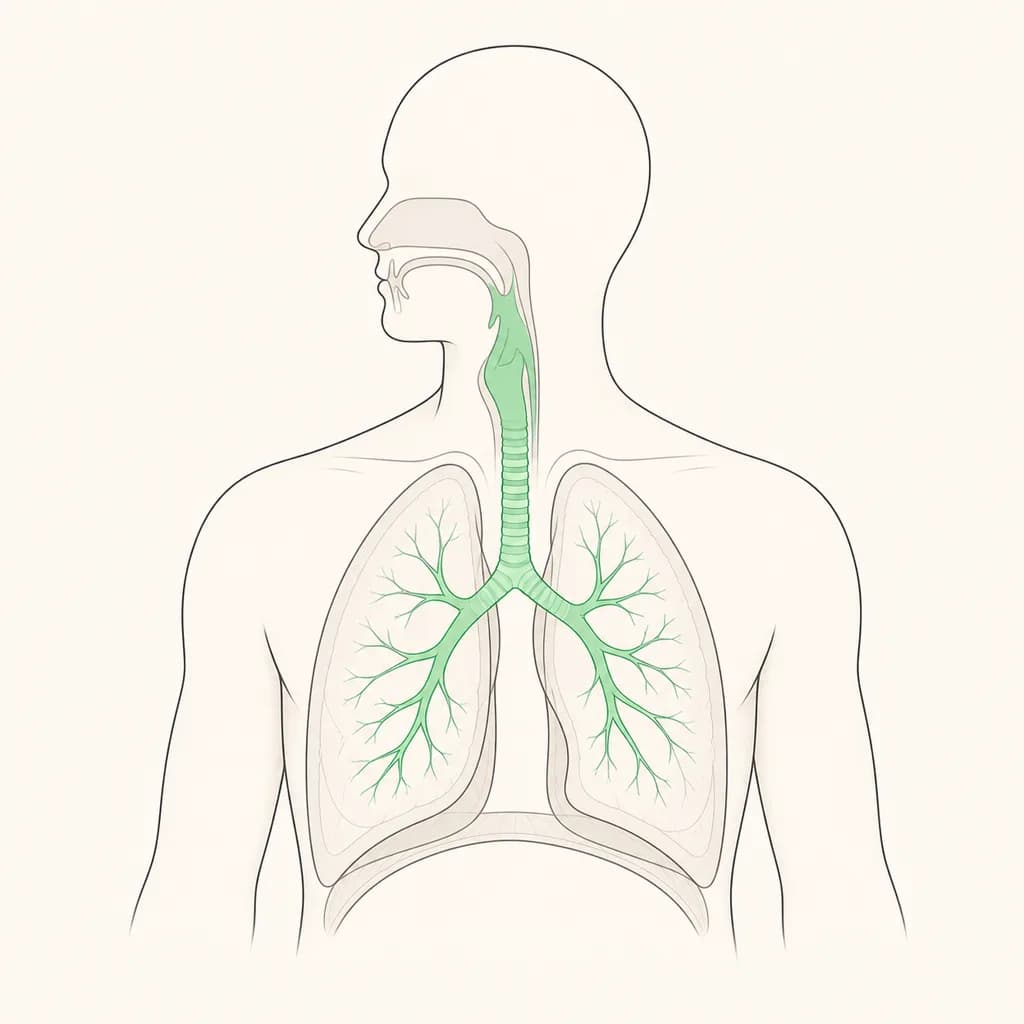
A breathing tube passes through the mouth or nose into the airway. Its presence, removal or suctioning can irritate delicate lining and lead to a small amount of blood mixed with mucus. Dryness and forceful coughing can add to this irritation. Blood may also point to another problem, including pneumonia, bronchiectasis, a pulmonary embolism or an underlying lung condition; the timing after the tube does not prove that the tube caused it.
The care team will consider how much blood there is, whether it is fresh or streaked, how long it continues, and whether breathing has changed. They may also review why the tube was needed and whether you take medicines that affect clotting.
Practical next steps
If you are still in hospital, tell the nurse or doctor immediately and show the sputum if possible. If you have gone home, contact the treating team promptly for any blood that continues or returns. Sit upright, avoid smoking and do not forcefully clear your throat. Keep a record of the amount and colour, and have your discharge paperwork and medicine list ready. Do not stop prescribed blood thinners unless a clinician gives specific instructions.
When to seek emergency care
Call emergency services for heavy or increasing bleeding, clots, breathlessness, chest pain, faintness, confusion, blue lips or a racing heartbeat. Urgent assessment is also needed if you cannot keep fluids down, feel suddenly much weaker or develop a new fever after the procedure. Do not drive yourself while actively coughing blood or feeling short of breath.
Questions to ask
Ask whether the airway looked irritated, whether a chest examination or imaging is needed, and which symptoms should trigger a return to hospital. Mention the tube's removal time, suctioning, the first episode of blood, fever, chest discomfort and every medicine you take.
Find care
General Clinics & Polyclinics in Abu Dhabi
That answer is general. If you want it applied to your own case, these are licensed general clinics & polyclinics listed in Abu Dhabi.
27 Ar Ruwwad St - Shakhbout City - MSH4 - Abu Dhabi - United Arab Emirates
Accepts: Daman, Thiqa, Cigna, MetLife +20 more
Al Ruwais, Al Dhafrah
Accepts: Daman, Thiqa, AXA, Cigna +16 more
Al Bahyah - Al Bahyah Old - Abu Dhabi - United Arab Emirates
Accepts: Daman, Thiqa, Cigna, Allianz Care +18 more
Abu Dhabi
Accepts: Daman, Thiqa, AXA, Cigna +27 more
Ordered by verification status and how complete each clinic's public record is, then alphabetically. This is a directory listing, not a ranking — Zavis does not rate or recommend providers.
A factual listing drawn from the DHA, DOH and MOHAP licence registers. It is not a referral, an endorsement, or advice that any of these providers is right for you.
Questions people ask
Is a small streak always dangerous after a breathing tube?
A small streak can follow airway irritation, but it still should be reported, especially if it recurs or comes with breathing changes.
Can I stop my blood thinner?
Do not change a prescribed blood thinner without instructions from the treating clinician, who can balance bleeding and clotting risks.
Related
Related reading
Keep reading
Medical disclaimer. This page is general health information, not medical advice, and it cannot diagnose you. Always consult a licensed healthcare provider about your own symptoms and treatment. In an emergency in the UAE, call 998 for an ambulance.