
Chronic obstructive asthma
Short answer
Chronic obstructive asthma involves ongoing airway inflammation and narrowing that can cause cough, wheezing, chest tightness, and breathing difficulty.
This answers one question. It is not a diagnosis and does not replace an assessment by a licensed doctor.
At a glance
- Airway changes
- Inflammation, muscle tightening, swelling, and mucus
- Common symptoms
- Cough, wheeze, chest tightness, and breathlessness
- Useful monitoring
- Triggers, night waking, activity limits, and reliever use
Understanding persistent obstruction
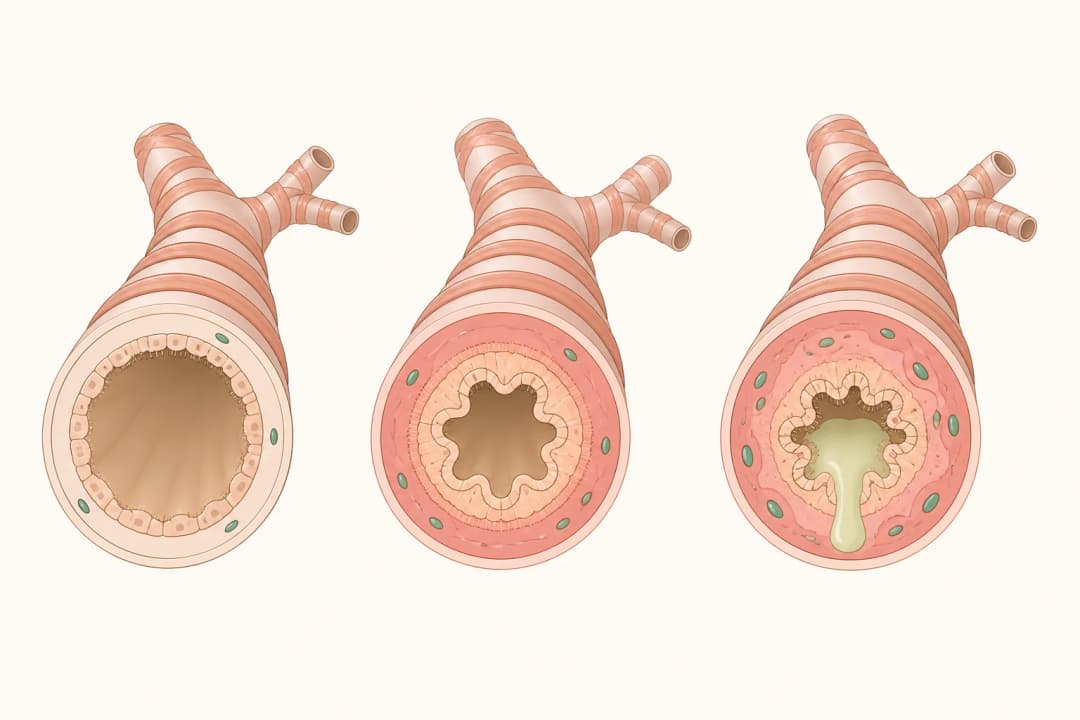
Asthma narrows the airways through muscle tightening, swelling of the airway lining, and mucus production. Symptoms may vary from day to day and can flare with allergens, viral infections, exercise, cold air, smoke, or strong smells. Allergic rhinitis and house dust mite allergy may coexist and make airway symptoms harder to control. Persistent obstruction means airflow remains limited between flares or does not return as expected; this needs careful assessment because other lung conditions can produce similar symptoms. A clinician may use breathing tests and the symptom pattern to guide the diagnosis.
Keeping symptoms controlled
Use controller and reliever medicines exactly as prescribed, and ask a clinician to check your inhaler technique. Keep a written action plan that explains your usual treatment, early warning signs, and escalation steps. Note exposure to dust, smoke, pets, infections, or exercise, along with night waking and reliever use. Reduce indoor smoke and irritants, and manage nasal allergy if it contributes to symptoms. Do not stop a controller suddenly or rely on a reliever more often without medical advice. A nebuliser may be used in selected situations, but it is not a substitute for an agreed asthma plan.
When to seek urgent help
Use your emergency plan and seek urgent help for severe breathlessness, difficulty speaking, blue or grey lips, confusion, collapse, or symptoms that are rapidly worsening. Arrange prompt review when reliever treatment is needed more often, night symptoms increase, wheezing persists, or normal activity becomes difficult. Chest tightness with sweating, faintness, or severe pain also needs urgent assessment because it may not be asthma.
Questions for your doctor
Ask: Is my airflow obstruction reversible, and which tests will clarify this? What is my daily controller plan? How can I recognise a flare early? Could allergic rhinitis or dust-mite exposure be contributing? When should I use a nebuliser or attend urgent care?
Find care
General Clinics & Polyclinics in Abu Dhabi
That answer is general. If you want it applied to your own case, these are licensed general clinics & polyclinics listed in Abu Dhabi.
27 Ar Ruwwad St - Shakhbout City - MSH4 - Abu Dhabi - United Arab Emirates
Accepts: Daman, Thiqa, Cigna, MetLife +20 more
Al Ruwais, Al Dhafrah
Accepts: Daman, Thiqa, AXA, Cigna +16 more
Al Bahyah - Al Bahyah Old - Abu Dhabi - United Arab Emirates
Accepts: Daman, Thiqa, Cigna, Allianz Care +18 more
Abu Dhabi
Accepts: Daman, Thiqa, AXA, Cigna +27 more
Ordered by verification status and how complete each clinic's public record is, then alphabetically. This is a directory listing, not a ranking — Zavis does not rate or recommend providers.
A factual listing drawn from the DHA, DOH and MOHAP licence registers. It is not a referral, an endorsement, or advice that any of these providers is right for you.
Questions people ask
Does chronic obstructive asthma mean symptoms are present every day?
Not necessarily. Symptoms can fluctuate, but ongoing airflow limitation between episodes warrants review and a personalised treatment plan.
Can allergy affect asthma control?
Yes. Allergic rhinitis or house dust mite exposure can accompany asthma and may contribute to airway symptoms in some people.
Keep reading
Medical disclaimer. This page is general health information, not medical advice, and it cannot diagnose you. Always consult a licensed healthcare provider about your own symptoms and treatment. In an emergency in the UAE, call 998 for an ambulance.