
Acute severe asthma: signs and urgent action
Short answer
Acute severe asthma is a dangerous flare in which narrowed, inflamed airways make breathing very difficult and urgent treatment is needed.
This answers one question. It is not a diagnosis and does not replace an assessment by a licensed doctor.
At a glance
- What narrows
- The breathing tubes tighten, swell and may fill with mucus
- Immediate position
- Sit upright rather than lying flat
- Critical sign
- Difficulty speaking, exhaustion, confusion or blue-grey lips
The short answer
Symptoms may include marked wheezing, coughing, chest tightness, rapid breathing and difficulty speaking or walking. A quiet chest during extreme breathlessness is especially concerning because very little air may be moving.
What is happening in the airways
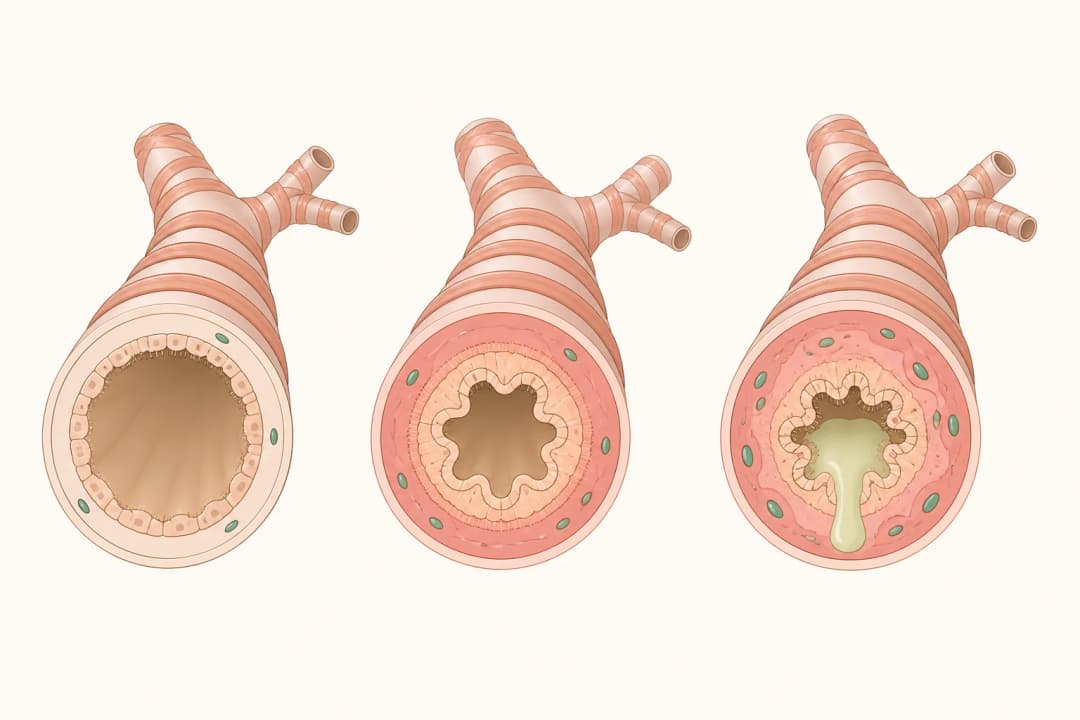
During an attack, muscles around the breathing tubes tighten while the airway lining swells and produces mucus. The narrowed passage makes it hard to move air, particularly when breathing out. Symptoms can worsen quickly after infection, smoke, dust, an allergen, exercise or interruption of preventer treatment.
Clinicians judge severity from breathing effort, ability to speak, alertness, oxygen level, heart rate and a peak-flow reading when it is safe to obtain one. They also look for pneumonia, an allergic reaction or another cause of sudden breathing trouble.
Action during an asthma attack
Sit upright, stay with the person and help them use their prescribed reliever inhaler according to their written asthma action plan. A spacer can help medicine reach the lungs. Loosen restrictive clothing and move away from smoke or a known trigger when this can be done safely.
Do not lie the person flat or leave them alone. If relief is incomplete, short-lived or the inhaler is difficult to use, call emergency services. Continue following the action plan while waiting for help and tell responders what medicine has been taken.
Emergency warning signs
Call emergency services immediately if the person cannot complete a sentence, is gasping, becoming exhausted or confused, has blue or grey lips, collapses, or has severe symptoms that are not responding to the reliever. These signs indicate critically restricted airflow or low oxygen.
After any significant attack, arrange prompt clinical review even if breathing settles. The review should check inhaler technique, access to medicines, possible triggers and whether the written action plan and preventer treatment need adjustment.
Planning for safer breathing
Ask the clinician to demonstrate correct inhaler and spacer technique, define your personal warning signs and explain when to escalate beyond the reliever. Confirm which daily preventer to take, how to manage likely triggers and where to keep copies of the asthma action plan.
Find care
General Clinics & Polyclinics in Abu Dhabi
That answer is general. If you want it applied to your own case, these are licensed general clinics & polyclinics listed in Abu Dhabi.
27 Ar Ruwwad St - Shakhbout City - MSH4 - Abu Dhabi - United Arab Emirates
Accepts: Daman, Thiqa, Cigna, MetLife +20 more
Al Ruwais, Al Dhafrah
Accepts: Daman, Thiqa, AXA, Cigna +16 more
Al Bahyah - Al Bahyah Old - Abu Dhabi - United Arab Emirates
Accepts: Daman, Thiqa, Cigna, Allianz Care +18 more
Abu Dhabi
Accepts: Daman, Thiqa, AXA, Cigna +27 more
Ordered by verification status and how complete each clinic's public record is, then alphabetically. This is a directory listing, not a ranking — Zavis does not rate or recommend providers.
A factual listing drawn from the DHA, DOH and MOHAP licence registers. It is not a referral, an endorsement, or advice that any of these providers is right for you.
Questions people ask
Can severe asthma occur without loud wheezing?
Yes. Wheezing may become faint or disappear when airflow is extremely limited. A quiet chest with severe breathlessness, exhaustion or poor responsiveness is an emergency.
Should I seek review after recovering from an attack?
Yes. A prompt review can identify triggers, correct inhaler technique and update preventer treatment and the written asthma action plan.
Why is a spacer useful?
A spacer holds the inhaled medicine briefly, making coordination easier and helping more of the dose travel into the airways.
Keep reading
Medical disclaimer. This page is general health information, not medical advice, and it cannot diagnose you. Always consult a licensed healthcare provider about your own symptoms and treatment. In an emergency in the UAE, call 998 for an ambulance.