
Acute asthma exacerbation: signs and immediate action
Short answer
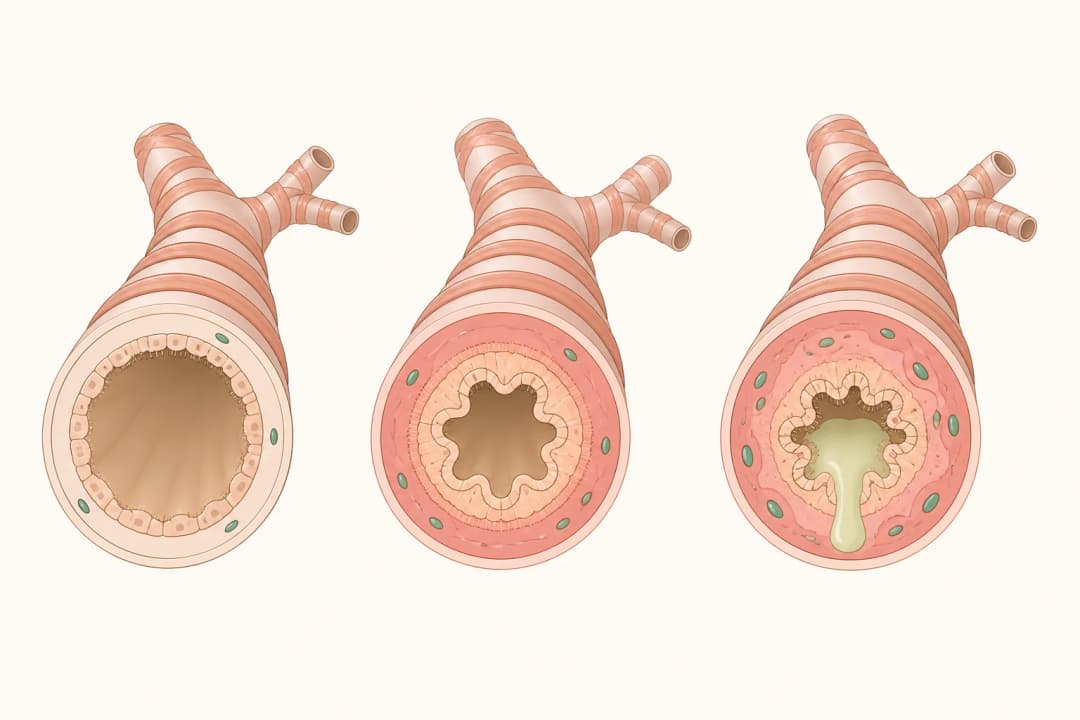
An acute asthma exacerbation is a sudden worsening of airway narrowing and inflammation that causes increasing wheeze, cough, chest tightness, or breathlessness.
This answers one question. It is not a diagnosis and does not replace an assessment by a licensed doctor.
At a glance
- Core change
- Airway muscle tightening, lining swelling, and mucus reduce airflow.
- Personal guide
- A written asthma action plan should state how to respond when symptoms worsen.
- Critical clue
- A quiet chest with severe breathing difficulty can indicate very limited airflow.
The short answer
Use the reliever inhaler exactly as set out in your personal asthma action plan, sit upright, and move away from a known trigger. If the reliever is not helping, symptoms are severe, or speaking and walking become difficult, call emergency services.
What happens during a flare
Muscles around the breathing tubes tighten while the lining swells and produces mucus. The narrowed passages make it particularly difficult to breathe out. Asthma commonly presents with variable wheeze, cough, breathlessness, and chest tightness, but a very severe attack may produce little wheeze because airflow is extremely limited.
Viral respiratory illness, smoke, dust, strong scents, exercise, weather changes, allergens, or missed preventer treatment may contribute. Sometimes no clear trigger is found. Allergic rhinitis and house dust mite allergy can coexist with asthma and may need their own management.
Responding to worsening asthma
Stay upright and try to keep breaths steady. Follow the dose and timing in your written action plan, using a spacer with a metered-dose inhaler if that is part of your prescribed technique. Ask someone to remain with you, and do not drive yourself if breathing is significantly impaired.
Clinical treatment may include repeated inhaled bronchodilator medicine, oxygen when the level is low, and a corticosteroid to reduce airway inflammation. Nebuliser treatment may be selected for some attacks, but needing a nebuliser is a clinical decision and does not replace assessment of attack severity.
Emergency signs
Call emergency services when breathlessness is rapidly worsening, the prescribed reliever gives little or short-lived benefit, or the person cannot speak comfortably, walk, eat, or drink. Blue-grey lips, drowsiness, confusion, exhaustion, fainting, or a quiet chest are critical warning signs.
Arrange prompt medical review after any flare requiring more reliever than usual, night waking, or interruption of normal activity. Review is also needed after emergency treatment, even when breathing feels better, because airway inflammation and the risk of another deterioration may persist.
Plan for safer recovery
Ask the clinician to watch your inhaler and spacer technique, explain which medicine is the preventer and which is the reliever, and update your written action plan. Discuss likely triggers, when to restart activity, whether associated nasal allergy needs treatment, and the exact signs that should lead you back to urgent care.
Find care
General Clinics & Polyclinics in Abu Dhabi
That answer is general. If you want it applied to your own case, these are licensed general clinics & polyclinics listed in Abu Dhabi.
27 Ar Ruwwad St - Shakhbout City - MSH4 - Abu Dhabi - United Arab Emirates
Accepts: Daman, Thiqa, Cigna, MetLife +20 more
Al Ruwais, Al Dhafrah
Accepts: Daman, Thiqa, AXA, Cigna +16 more
Al Bahyah - Al Bahyah Old - Abu Dhabi - United Arab Emirates
Accepts: Daman, Thiqa, Cigna, Allianz Care +18 more
Abu Dhabi
Accepts: Daman, Thiqa, AXA, Cigna +27 more
Ordered by verification status and how complete each clinic's public record is, then alphabetically. This is a directory listing, not a ranking — Zavis does not rate or recommend providers.
A factual listing drawn from the DHA, DOH and MOHAP licence registers. It is not a referral, an endorsement, or advice that any of these providers is right for you.
Questions people ask
Can an asthma attack occur without loud wheezing?
Yes. Wheeze may be absent, especially when airflow is extremely restricted. Severe breathlessness, difficulty speaking, exhaustion, or blue-grey lips matter even if wheezing is quiet.
Should I change my preventer after a flare?
Continue prescribed treatment unless a clinician tells you otherwise. A prompt review can determine whether the preventer, inhaler technique, trigger control, or action plan needs adjustment.
Related
Related reading
Keep reading
Medical disclaimer. This page is general health information, not medical advice, and it cannot diagnose you. Always consult a licensed healthcare provider about your own symptoms and treatment. In an emergency in the UAE, call 998 for an ambulance.