
What should you know about AAFP COPD?
Short answer
COPD is a long-term lung condition that restricts airflow, but treatment and daily self-management can reduce symptoms and flare-ups.
This answers one question. It is not a diagnosis and does not replace an assessment by a licensed doctor.
At a glance
- Full name
- Chronic obstructive pulmonary disease
- Key assessment
- Symptoms, exposure history, examination, and spirometry
- Treatment focus
- Better symptom control and fewer flare-ups
How COPD affects breathing
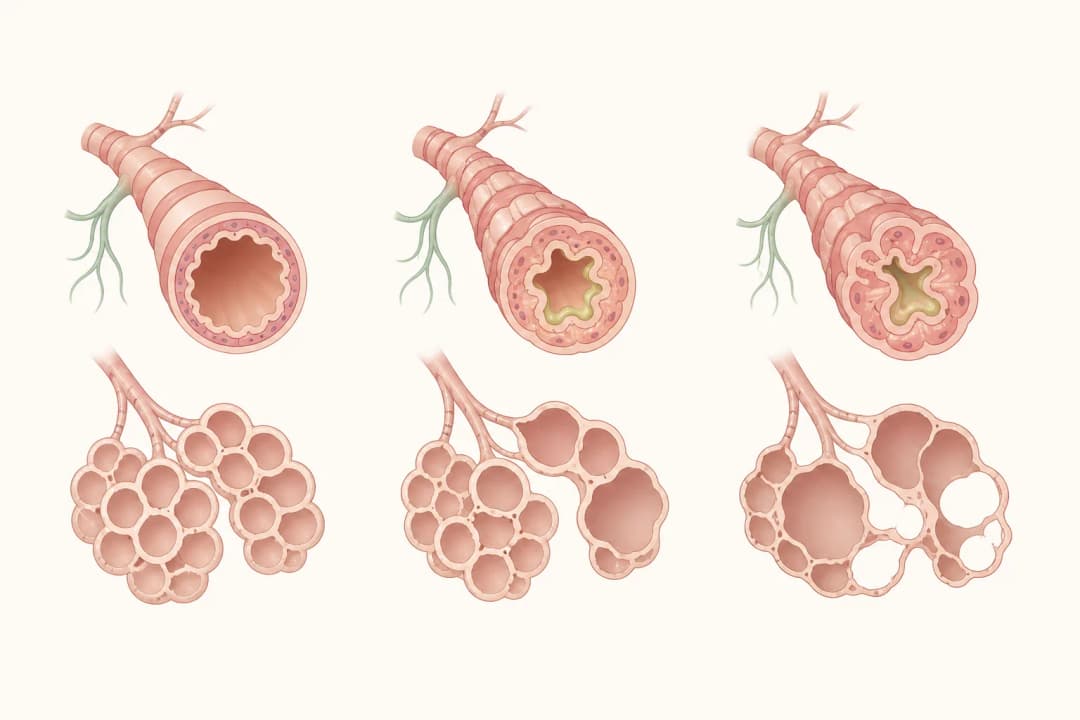
COPD, or chronic obstructive pulmonary disease, involves ongoing damage and inflammation in the lungs. Narrowed airways and damaged air sacs make it harder to move air out, so breathing can take more effort. COPD can present with persistent cough, phlegm, wheezing, chest tightness, and breathlessness during activity. Symptoms may build gradually and vary from day to day.
A clinician considers your symptoms, smoking and exposure history, examination, and breathing tests. Spirometry measures how much air you can blow out and how quickly, helping confirm airflow obstruction and guide treatment.
Managing symptoms and preventing flare-ups
Use inhalers exactly as demonstrated and check your technique at follow-up visits; poor timing or an incomplete seal can limit the medicine reaching your lungs. Keep prescribed reliever medicine accessible and follow your personal action plan if symptoms worsen. Do not start leftover antibiotics or steroid tablets unless a clinician has instructed you to do so.
Stopping smoking is the most useful step for slowing further lung damage if you smoke. Regular activity within your limits, pulmonary rehabilitation when offered, recommended vaccinations, and avoiding smoke or dust triggers can support breathing and resilience. A chronic disease review can track symptoms, flare-ups, inhaler use, nutrition, and whether your treatment still fits your needs.
When breathing changes need medical care
Contact a clinician promptly if breathlessness, wheezing, cough, or phlegm becomes noticeably worse, or if phlegm changes colour or amount. These changes may signal a COPD flare-up or another illness, and early assessment can help determine whether treatment needs adjusting.
Seek emergency help for severe difficulty breathing, inability to speak in full sentences, blue or grey lips, new confusion, fainting, or chest pressure. Sit upright, use prescribed rescue medicine according to your action plan, and do not drive yourself if you are severely unwell.
Questions to take to your appointment
Ask what your spirometry result means, which inhaler is for daily control, which is for sudden symptoms, and how to recognise a flare-up. It is also useful to ask for an inhaler-technique check, a written action plan, and guidance about exercise, vaccination, smoking support, and pulmonary rehabilitation. Bring your inhalers and a list of recent symptom changes.
Find care
General Clinics & Polyclinics in Abu Dhabi
That answer is general. If you want it applied to your own case, these are licensed general clinics & polyclinics listed in Abu Dhabi.
27 Ar Ruwwad St - Shakhbout City - MSH4 - Abu Dhabi - United Arab Emirates
Accepts: Daman, Thiqa, Cigna, MetLife +20 more
Al Ruwais, Al Dhafrah
Accepts: Daman, Thiqa, AXA, Cigna +16 more
Al Bahyah - Al Bahyah Old - Abu Dhabi - United Arab Emirates
Accepts: Daman, Thiqa, Cigna, Allianz Care +18 more
Abu Dhabi
Accepts: Daman, Thiqa, AXA, Cigna +27 more
Ordered by verification status and how complete each clinic's public record is, then alphabetically. This is a directory listing, not a ranking — Zavis does not rate or recommend providers.
A factual listing drawn from the DHA, DOH and MOHAP licence registers. It is not a referral, an endorsement, or advice that any of these providers is right for you.
Questions people ask
Can COPD symptoms change from one day to another?
Yes. Activity, air quality, respiratory infections, and correct inhaler use can affect symptoms. A clear or sustained worsening should be assessed as a possible flare-up.
Why is inhaler technique checked repeatedly?
Different devices require different preparation, breathing speed, and timing. A technique check helps ensure the prescribed medicine reaches the lungs as intended.
Does having COPD mean I should avoid exercise?
No. Suitable, paced activity can improve stamina and confidence with everyday tasks. A clinician or pulmonary rehabilitation team can help set a safe starting level for your symptoms.
Related
Related reading
Keep reading
Medical disclaimer. This page is general health information, not medical advice, and it cannot diagnose you. Always consult a licensed healthcare provider about your own symptoms and treatment. In an emergency in the UAE, call 998 for an ambulance.