
Head Lice: Signs, Treatment and Prevention
At a glance
- Medical name
- Pediculosis capitis
- Main route of spread
- Direct head-to-head contact
- Key diagnostic sign
- A live moving louse
- Not caused by
- Poor personal hygiene
What are head lice?
Head lice are small insects that live in scalp hair and spread mainly through direct head-to-head contact.
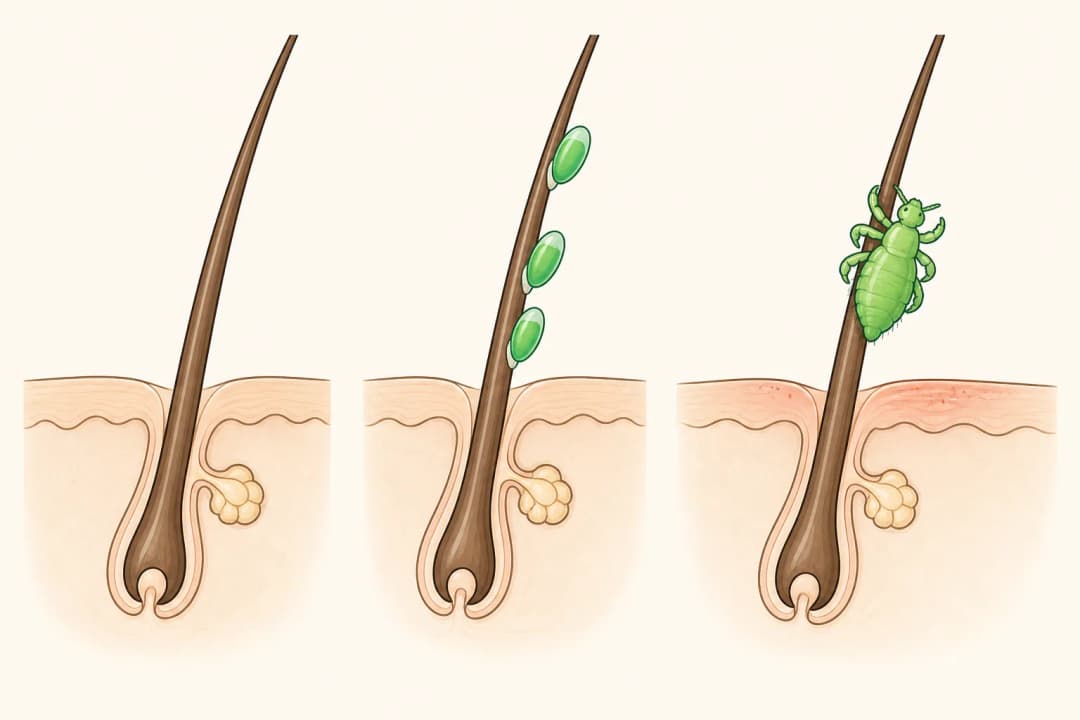
They feed from the scalp and attach their eggs, often called nits, firmly to hair shafts. Finding lice is not a sign of poor hygiene, and ordinary shampooing does not reliably remove them. Anyone with scalp hair can get head lice.
Symptoms and visible signs
Head lice commonly present with an itchy scalp, although a person may have no itching at first. Tickling or a feeling of movement can occur, and scratching may leave small sore areas around the scalp, ears or neck. Itching can feel more noticeable at night when the surroundings are quiet.
Live lice move quickly and may be difficult to see. Eggs are oval and stuck to individual hairs close to the scalp; unlike dandruff, they do not brush away easily.
How head lice spread
Lice crawl from one person's hair to another person's hair. They cannot fly or jump. Close head-to-head contact during play, sport, family time or shared activities gives them the clearest route to a new host.
Spread through hats, brushes, pillows or furniture is less direct because lice depend on the scalp. Pets do not carry human head lice.
What happens over time
Eggs hatch near the scalp and young lice mature before laying more eggs. Without effective treatment, this cycle continues and close contacts may become infested. Itching can persist for a while after successful treatment because irritated skin needs time to settle; itching alone does not prove that live lice remain.
Who is more exposed?
Frequent close contact increases exposure. Children who play with their heads close together, their household members and caregivers may therefore encounter lice more readily. Hair length, cleanliness and social background do not determine who becomes infested.
How head lice are confirmed
The clearest confirmation is finding a live louse with careful combing. In bright light, apply enough conditioner to wet hair for a fine-toothed detection comb to pass from the roots to the ends, wiping the comb after each pass. Check behind the ears and near the nape.
Empty egg cases can remain after an infestation has ended, so their presence alone may not show active lice. A pharmacist, GP or dermatologist can help when the finding is uncertain or the scalp is badly inflamed.
Treatment options
Treatment may involve repeated wet combing or a pharmacy lice product. Product choice depends on age, pregnancy, breastfeeding, allergies, scalp condition and what has already been tried. Follow the pack directions closely, including whether a repeat application is needed, because methods differ.
Check household members and other close contacts, and treat anyone with confirmed live lice at the same time to reduce passing lice back and forth. Do not combine products or apply insecticides more often than directed. A clinician can advise if live lice continue after correctly completed treatment.
Managing school, home and comfort
Tell close household contacts so they can check promptly and discreetly. Children can usually return to normal routines once treatment has started, subject to the setting's policy. Keep nails short and discourage vigorous scratching to limit skin damage. Washing pillowcases and recently used hair items is reasonable, but exhaustive cleaning or spraying the home is unnecessary.
Possible complications
Repeated scratching can break the skin and allow a bacterial infection to develop. Seek medical assessment for increasing pain, warmth, swelling, pus, spreading redness or fever. Sleep can also be disrupted when itching is prominent at night.
Reducing reinfestation and spread
Avoid head-to-head contact while active lice are being treated, and do not share combs, brushes or close-fitting headwear. Regular checks with a detection comb can identify lice in close contacts. Preventive insecticide use on people without live lice is not recommended because it adds exposure without confirming a need.
When to seek professional help
A pharmacist or GP can verify the choice and safe use of treatment, particularly for a baby, during pregnancy or breastfeeding, or when allergies and scalp disease complicate selection. See a dermatologist or GP if the diagnosis remains uncertain, lice persist despite correct treatment, or signs of skin infection appear.
Questions people ask
Can head lice jump or fly?
No. Head lice crawl and usually move between people when their hair or heads touch closely.
Does an itchy scalp prove that treatment failed?
No. Scalp irritation can continue after lice have gone. Use careful detection combing to look for live lice rather than judging by itch alone.
Do I need to treat everyone in the household?
Check everyone closely and treat those in whom live lice are confirmed. Coordinating treatment helps prevent lice moving repeatedly between close contacts.
Related
Related reading
Keep reading
Find care
General Clinics & Polyclinics in Abu Dhabi
Where head lice: signs, treatment and prevention is assessed depends on what is causing it. These are licensed general clinics & polyclinics listed in Abu Dhabi.
27 Ar Ruwwad St - Shakhbout City - MSH4 - Abu Dhabi - United Arab Emirates
Accepts: Daman, Thiqa, Cigna, MetLife +20 more
Al Ruwais, Al Dhafrah
Accepts: Daman, Thiqa, AXA, Cigna +16 more
Al Bahyah - Al Bahyah Old - Abu Dhabi - United Arab Emirates
Accepts: Daman, Thiqa, Cigna, Allianz Care +18 more
Abu Dhabi
Accepts: Daman, Thiqa, AXA, Cigna +27 more
Ordered by verification status and how complete each clinic's public record is, then alphabetically. This is a directory listing, not a ranking — Zavis does not rate or recommend providers.
A factual listing drawn from the DHA, DOH and MOHAP licence registers. It is not a referral, an endorsement, or advice that any of these providers is right for you.
Medical disclaimer. This page is general health information, not medical advice, and it cannot diagnose you. Always consult a licensed healthcare provider about your own symptoms and treatment. In an emergency in the UAE, call 998 for an ambulance.