
Cough vs wheezing: how the breathing symptoms differ
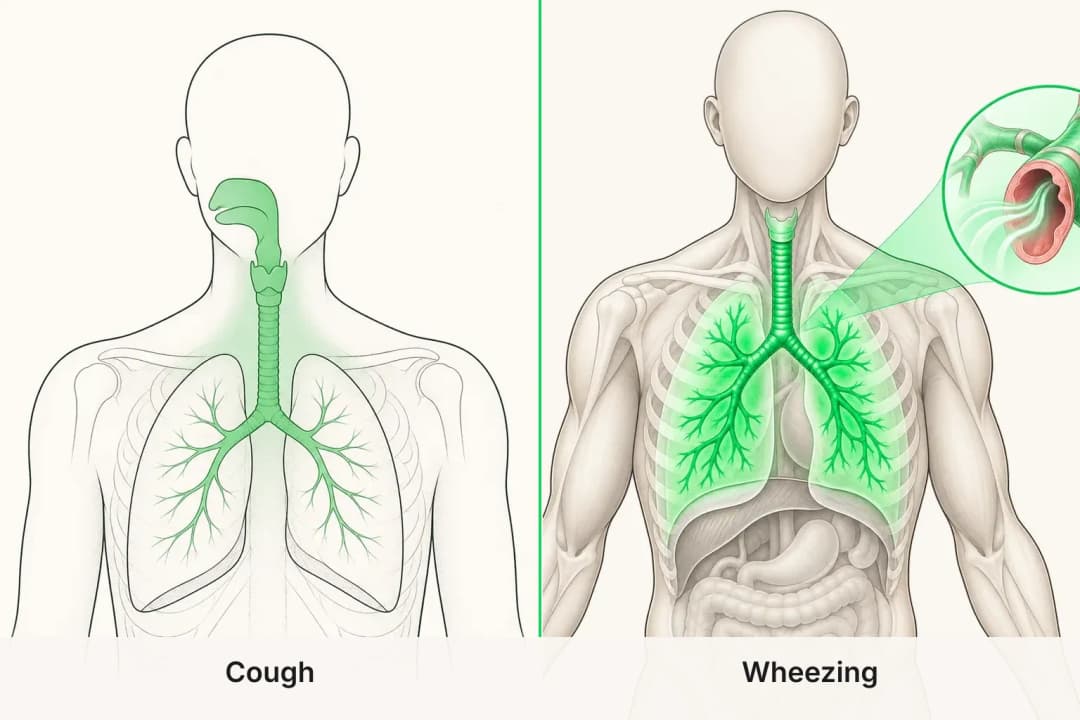
At a glance
- Cough
- A forceful reflex, with or without mucus.
- Wheezing
- A whistling sound caused by airflow through narrowed airways.
- Emergency signs
- Severe breathlessness, colour change, or swelling.
Find care
General Clinics & Polyclinics in Abu Dhabi
Licensed general clinics & polyclinics listed in Abu Dhabi. Appearing here means a provider holds a UAE licence in this category — not that it offers cough vs wheezing: how the breathing symptoms differ, which is worth confirming with the clinic before you book.
27 Ar Ruwwad St - Shakhbout City - MSH4 - Abu Dhabi - United Arab Emirates
Accepts: Daman, Thiqa, Cigna, MetLife +20 more
Al Ruwais, Al Dhafrah
Accepts: Daman, Thiqa, AXA, Cigna +16 more
Al Bahyah - Al Bahyah Old - Abu Dhabi - United Arab Emirates
Accepts: Daman, Thiqa, Cigna, Allianz Care +18 more
Abu Dhabi
Accepts: Daman, Thiqa, AXA, Cigna +27 more
The New EMI State Tower - 3rd Floor 303 Kan’ad Street - Hamdan Bin Mohammed St - Al Danah - Zone 1 - Abu Dhabi - United Arab Emirates
Accepts: Daman, Thiqa, Cigna, MetLife +22 more
Taj Resorts RV-1, Al Nasser Properties - Mafraq-2 - Mafraq Industrial Area - Abu Dhabi - United Arab Emirates
Accepts: Daman, Thiqa, AXA, Cigna +14 more
Ordered by verification status and how complete each clinic's public record is, then alphabetically. This is a directory listing, not a ranking — Zavis does not rate or recommend providers.
A factual listing drawn from the DHA, DOH and MOHAP licence registers. It is not a referral, an endorsement, or advice that any of these providers is right for you.
The key difference in sound and timing
Cough is a reflex that clears the airways, whereas wheezing is a musical or whistling sound during breathing.
A cough occurs as distinct bursts, sometimes after a tickle, mucus, exercise, or an irritant. Wheeze is heard while air moves through narrowed airways and is often more noticeable when breathing out. Some people have both: airway irritation can trigger coughing, while narrowing can create wheeze. Record a short description of the sound and when it appears, rather than assuming the cause from either symptom alone.
When cough describes the problem better
Use cough when the main event is an urge followed by a forceful expulsion of air. It may be dry or bring up mucus, and may worsen at night, after lying down, or with cold air. A new cough after a cold can linger as the lining of the airways recovers. Mention smoking, vaping, workplace dust, reflux symptoms, and medicines, as each can influence the clinical assessment.
When wheezing describes the problem better
Use wheezing when a squeak, whistle, or musical noise is present as you breathe. The sound can come with chest tightness, rapid breathing, or a sense that breathing out takes effort. A clinician may ask whether it began after an infection, exposure to an allergen or irritant, exercise, or a new medicine. Noisy breathing from the throat can sound different from wheeze arising lower in the chest, so describe where it seems loudest.
Breathing changes that need urgent help
Seek emergency care for severe shortness of breath, difficulty speaking in full sentences, blue or grey lips, fainting, confusion, severe chest pain, or swelling of the face, tongue, or throat. New wheeze after choking or a suspected allergic reaction also needs urgent assessment. Contact a clinician promptly when wheeze is recurring, sleep is disrupted, activity has become difficult, or a cough is worsening instead of improving.
Other sounds that can be confused with wheeze
A rattly chest sound can reflect mucus, while a harsh sound on breathing in can come from the upper airway. Snoring-like noises during sleep, repeated throat clearing, and a cough that follows meals can need a different line of questioning. If possible, note whether the noise occurs on breathing in, breathing out, or both, and whether it changes with position. This detail can be more helpful than trying to name the sound precisely.
How clinicians decide on next steps
Assessment commonly includes listening to the chest, checking oxygen level, and asking about previous breathing episodes, allergies, infections, and exposures. Depending on the history and examination, a clinician may recommend inhaled medicine, an infection assessment, breathing tests, or imaging. Do not borrow another person's inhaler. If you have a prescribed breathing plan, follow its instructions and seek review when the plan is not controlling symptoms.
Questions people ask
Can I wheeze without coughing?
Yes. Wheezing can occur on its own, although it may also accompany cough, chest tightness, or shortness of breath.
Is wheezing after exercise worth checking?
It is worth discussing, especially if it recurs, limits activity, or is accompanied by chest tightness or breathlessness. The timing helps a clinician assess it.
Related
Related reading
Medical disclaimer. This page is general health information, not medical advice, and it cannot diagnose you. Always consult a licensed healthcare provider about your own symptoms and treatment. In an emergency in the UAE, call 998 for an ambulance.