
What should you know about winter asthma?
Short answer
Winter asthma describes asthma symptoms that become harder to control when cold air, infections, or indoor triggers increase.
This answers one question. It is not a diagnosis and does not replace an assessment by a licensed doctor.
At a glance
- Common cold-weather triggers
- Cold air, infections and indoor irritants
- Useful preparation
- An up-to-date asthma action plan
What can change in colder months
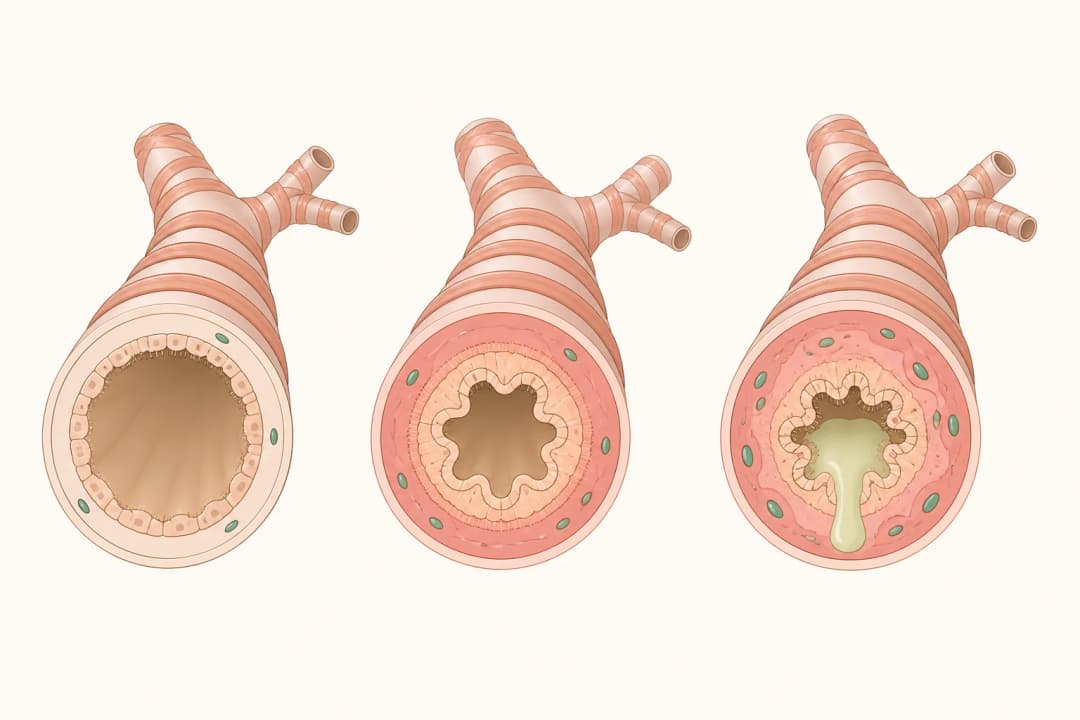
Cold, dry air can irritate sensitive airways, particularly during exercise or when breathing quickly outdoors. Respiratory infections are another frequent trigger for people with asthma. More time indoors can increase exposure to dust, smoke, fragrances, dampness, or pets. People with asthma may notice wheezing, cough, chest tightness or shortness of breath when their airways narrow and become inflamed.
Symptoms that occur at night, interrupt activity, or require your reliever medicine more often can signal that your asthma plan needs review. A cough alone can have causes other than asthma, so a clinician may consider the wider pattern.
Preparing for cold days
Keep your prescribed preventer and reliever medicines available, and use them exactly as your written asthma plan says. Check inhaler technique with a pharmacist or clinician; poor technique can leave medicine in the mouth rather than reaching the lungs. Covering your nose and mouth with a scarf outdoors may help warm the air you breathe. Allow time to warm up before exercise and avoid smoke exposure.
Arrange a routine review if your symptoms change with the season. Your clinician can update the plan, review triggers, and check whether allergic rhinitis or another condition is adding to the problem.
When to get help
Seek urgent care if you are struggling to speak in full sentences, have severe breathlessness, notice blue or grey lips, feel drowsy or confused, or your reliever medicine is not helping as directed in your action plan. Worsening wheeze or chest tightness should be assessed promptly, particularly with fever or a respiratory infection.
Questions to ask
Ask for a personalised written action plan, a demonstration of your inhaler technique, and advice on exercise in cold air. Mention night symptoms, rescue inhaler use, workplace exposures, and any nasal allergy symptoms.
Find care
General Clinics & Polyclinics in Abu Dhabi
That answer is general. If you want it applied to your own case, these are licensed general clinics & polyclinics listed in Abu Dhabi.
27 Ar Ruwwad St - Shakhbout City - MSH4 - Abu Dhabi - United Arab Emirates
Accepts: Daman, Thiqa, Cigna, MetLife +20 more
Al Ruwais, Al Dhafrah
Accepts: Daman, Thiqa, AXA, Cigna +16 more
Al Bahyah - Al Bahyah Old - Abu Dhabi - United Arab Emirates
Accepts: Daman, Thiqa, Cigna, Allianz Care +18 more
Abu Dhabi
Accepts: Daman, Thiqa, AXA, Cigna +27 more
Ordered by verification status and how complete each clinic's public record is, then alphabetically. This is a directory listing, not a ranking — Zavis does not rate or recommend providers.
A factual listing drawn from the DHA, DOH and MOHAP licence registers. It is not a referral, an endorsement, or advice that any of these providers is right for you.
Questions people ask
Can cold air trigger asthma symptoms?
Cold, dry air can irritate the airways and may trigger symptoms in people with asthma.
When is a nebuliser used for asthma?
A nebuliser may be used in urgent clinical care when a clinician considers it appropriate; it is not a substitute for your individual action plan.
Related
Related reading
Keep reading
Medical disclaimer. This page is general health information, not medical advice, and it cannot diagnose you. Always consult a licensed healthcare provider about your own symptoms and treatment. In an emergency in the UAE, call 998 for an ambulance.