
What should you know about speedy milia removal?
Short answer
Speedy milia removal should begin with confirming the bump is milia, because squeezing or cutting it at home can injure skin and cause infection.
This answers one question. It is not a diagnosis and does not replace an assessment by a licensed doctor.
At a glance
- Typical appearance
- Firm white or skin-coloured tiny bumps
- Avoid
- Home squeezing, cutting or scraping
- Professional options
- Sterile extraction or selected medical treatments
Why milia can look stubborn
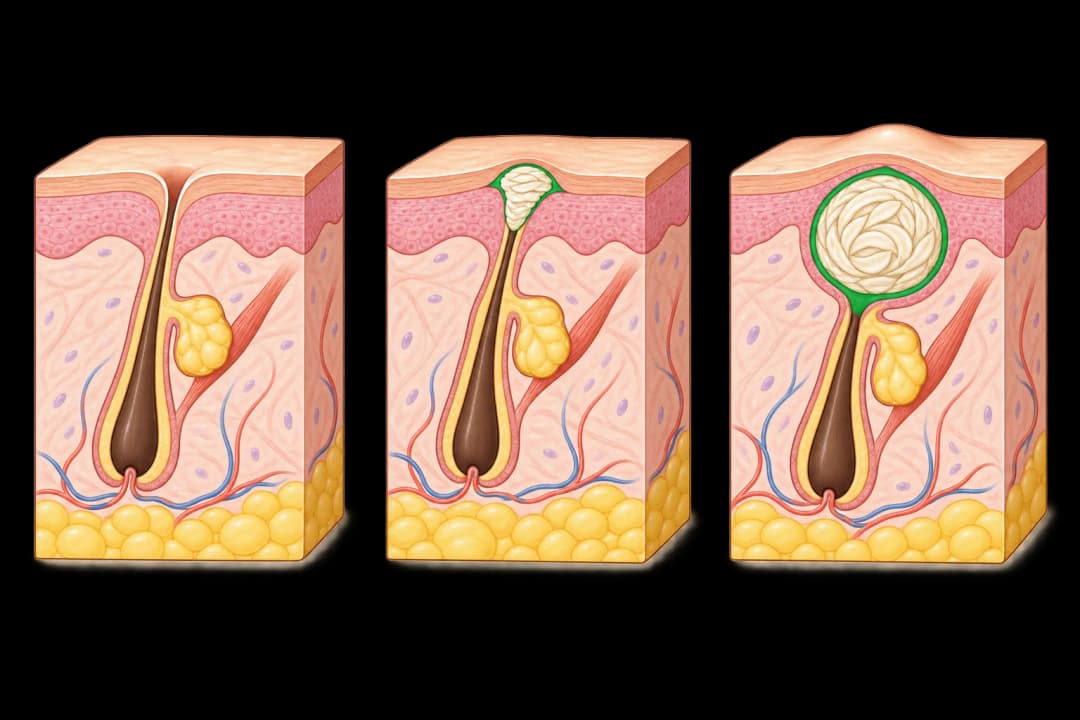
Milia are tiny cysts containing keratin beneath the surface. They commonly appear around the eyes, cheeks or nose as firm white or flesh-coloured bumps and are different from inflamed acne. Some settle without treatment, while others remain until the trapped material is released or the skin's renewal is addressed.
A similar-looking bump may be a whitehead, another type of cyst or a lesion that needs examination. Diagnosis is especially important for a bump that bleeds, changes, becomes painful, or does not resemble your usual milia.
Safer removal options
A dermatologist or trained clinician can open and remove a milia cyst with a sterile technique. Depending on the number and location, options may include professional extraction, curettage and cautery, or a topical retinoid plan. The thin skin around the eyes needs particular care, and treatment should not be attempted close to the eyelid without appropriate expertise.
Do not pierce, squeeze or scrape milia at home. Keep skincare gentle, avoid heavy products that seem to trigger bumps, and use sunscreen while any treated area heals. Retinoids can irritate skin and are not suitable for everyone, so use them only after medical advice.
When a bump needs assessment
Arrange a medical review if the bump is rapidly changing, bleeding, ulcerated, painful, associated with vision symptoms, or surrounded by spreading redness. Seek prompt care for pus, fever or worsening swelling after an attempted removal. A cluster of persistent bumps also deserves diagnosis before repeated home treatments.
Questions for your appointment
Ask whether the lesion is definitely milia, which removal method suits its location, how to protect the eyelid or surrounding skin, whether a topical retinoid is appropriate, and how to reduce recurrence. Ask what changes would mean the diagnosis should be reconsidered.
Find care
General Clinics & Polyclinics in Abu Dhabi
That answer is general. If you want it applied to your own case, these are licensed general clinics & polyclinics listed in Abu Dhabi.
27 Ar Ruwwad St - Shakhbout City - MSH4 - Abu Dhabi - United Arab Emirates
Accepts: Daman, Thiqa, Cigna, MetLife +20 more
Al Ruwais, Al Dhafrah
Accepts: Daman, Thiqa, AXA, Cigna +16 more
Al Bahyah - Al Bahyah Old - Abu Dhabi - United Arab Emirates
Accepts: Daman, Thiqa, Cigna, Allianz Care +18 more
Abu Dhabi
Accepts: Daman, Thiqa, AXA, Cigna +27 more
Ordered by verification status and how complete each clinic's public record is, then alphabetically. This is a directory listing, not a ranking — Zavis does not rate or recommend providers.
A factual listing drawn from the DHA, DOH and MOHAP licence registers. It is not a referral, an endorsement, or advice that any of these providers is right for you.
Questions people ask
Can I remove milia quickly at home?
Home piercing or squeezing is unsafe because it can cause scarring, infection and inflammation; professional removal is safer after diagnosis.
Are milia the same as whiteheads?
No. Milia are keratin-filled cysts, while whiteheads are clogged pores; they can look similar but may need different care.
Related
Related reading
Keep reading
Medical disclaimer. This page is general health information, not medical advice, and it cannot diagnose you. Always consult a licensed healthcare provider about your own symptoms and treatment. In an emergency in the UAE, call 998 for an ambulance.