
What should you know about secondary milia treatment?
Short answer
Secondary milia treatment focuses on confirming the diagnosis, addressing the trigger and removing troublesome cysts safely.
This answers one question. It is not a diagnosis and does not replace an assessment by a licensed doctor.
At a glance
- What it is
- A keratin-filled cyst formed after skin injury or inflammation.
- First step
- Confirm that the lesion is milia rather than a similar-looking bump.
- Possible care
- Observation, clinical extraction, or selected prescription treatment.
Understanding the condition
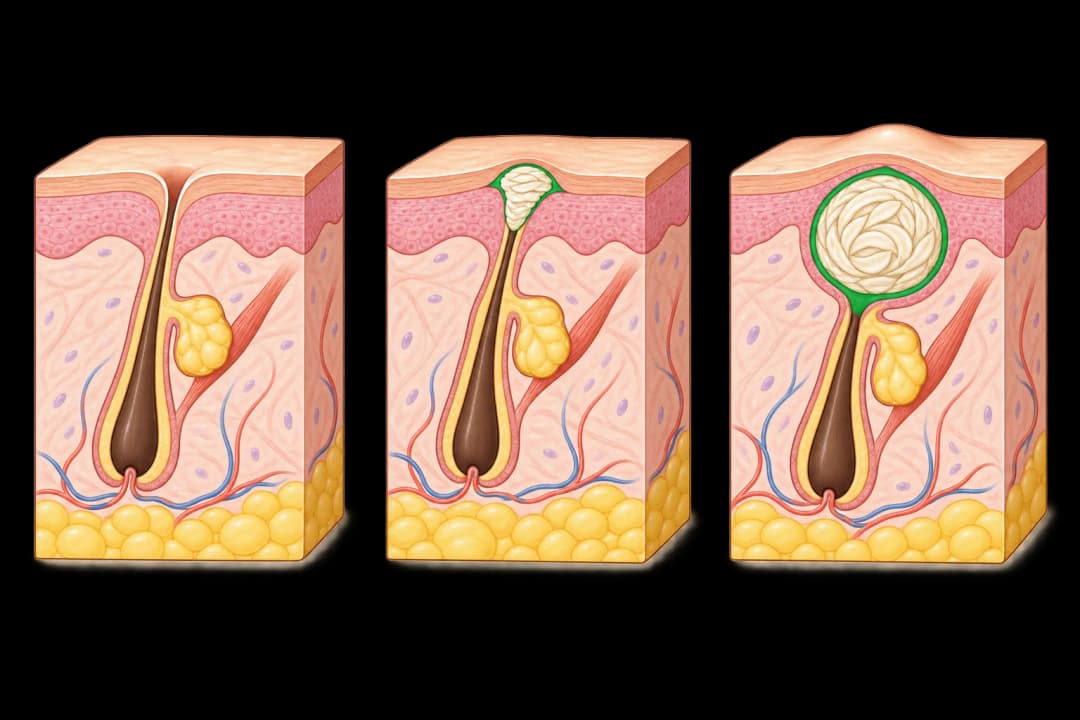
Secondary milia are superficial cysts filled with keratin that develop after skin has been injured or inflamed. They may follow a burn, blister, rash, abrasion or cosmetic procedure. The bumps are often smooth, firm and pale, and they can remain in place while the surrounding skin settles.
A clinician checks the bumps rather than assuming every white spot is milia. Whiteheads and other skin bumps can look similar but need different care. The treatment plan therefore starts with the appearance, skin history and any active inflammation.
Treatment choices
If the cysts are few and not bothersome, observation may be reasonable while the skin recovers. A clinician can open and remove an individual cyst with a sterile technique. Curettage and cautery may suit selected lesions, while a prescribed topical retinoid may be discussed when there are multiple or recurring bumps. Avoid picking and use gentle cleansing during healing.
For context, see [Milia](/conditions/milia/), [Whiteheads](/symptoms/whiteheads/) and [Topical Retinoids](/treatments/medical-dermatology/topical-retinoids/).
When assessment should be prompt
Book a dermatology review for lesions that persist, spread, itch intensely, hurt, crust, bleed or change colour. Seek quicker medical advice if redness, warmth, swelling or discharge develops after removal, as these may signal infection. Vision changes or a lesion on the eyelid also warrant prompt assessment.
Questions for your doctor
Ask what triggered the secondary milia, whether the diagnosis is certain, and whether treatment is needed now. Discuss the expected healing process, pigment changes or marks that might occur, suitable products, and how to reduce further irritation.
Find care
General Clinics & Polyclinics in Abu Dhabi
That answer is general. If you want it applied to your own case, these are licensed general clinics & polyclinics listed in Abu Dhabi.
27 Ar Ruwwad St - Shakhbout City - MSH4 - Abu Dhabi - United Arab Emirates
Accepts: Daman, Thiqa, Cigna, MetLife +20 more
Al Ruwais, Al Dhafrah
Accepts: Daman, Thiqa, AXA, Cigna +16 more
Al Bahyah - Al Bahyah Old - Abu Dhabi - United Arab Emirates
Accepts: Daman, Thiqa, Cigna, Allianz Care +18 more
Abu Dhabi
Accepts: Daman, Thiqa, AXA, Cigna +27 more
Ordered by verification status and how complete each clinic's public record is, then alphabetically. This is a directory listing, not a ranking — Zavis does not rate or recommend providers.
A factual listing drawn from the DHA, DOH and MOHAP licence registers. It is not a referral, an endorsement, or advice that any of these providers is right for you.
Questions people ask
Do secondary milia need treatment?
Not always. A clinician may suggest observation when they are stable and harmless, or removal when they persist or cause concern.
Are topical retinoids suitable for everyone?
No. Suitability depends on the location, skin condition, medicines and personal circumstances, so use them only with professional guidance.
Related
Related reading
Keep reading
Medical disclaimer. This page is general health information, not medical advice, and it cannot diagnose you. Always consult a licensed healthcare provider about your own symptoms and treatment. In an emergency in the UAE, call 998 for an ambulance.