
What should you know about scar after milia removal?
Short answer
A scar after milia removal may be temporary redness or pigment change, or less commonly a texture change from healing.
This answers one question. It is not a diagnosis and does not replace an assessment by a licensed doctor.
At a glance
- Possible mark
- Redness, pigment change, crusting, or altered texture may follow removal.
- Protect
- Do not pick; use sun protection while the area heals.
What the mark may represent
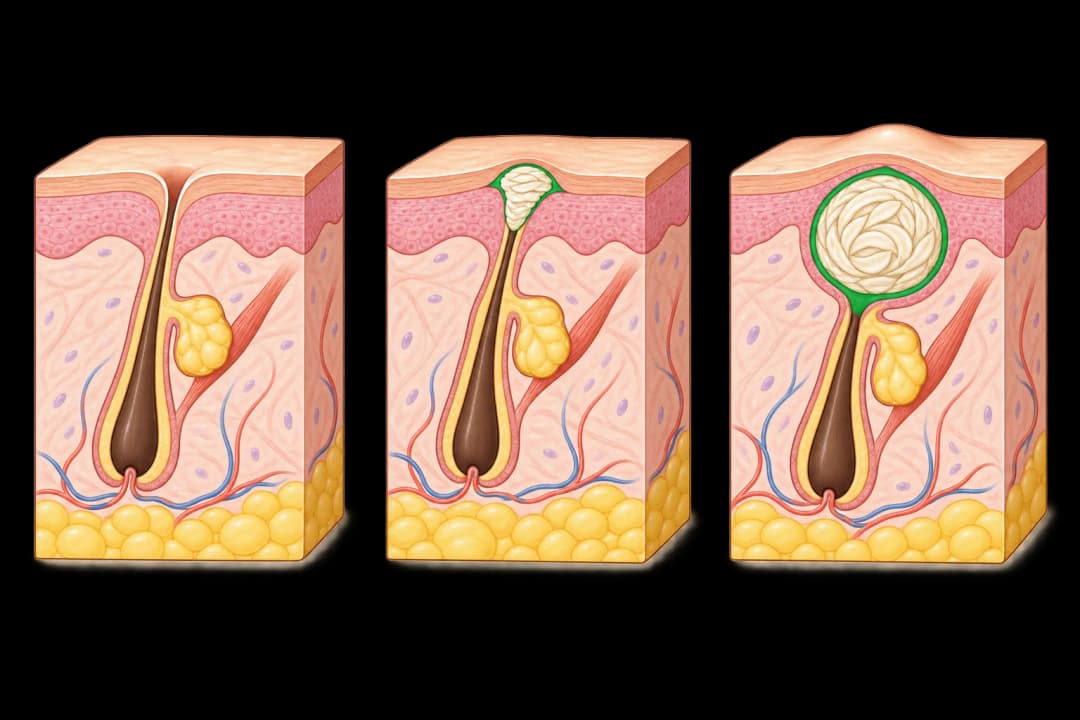
Milia are small keratin-filled cysts close to the skin surface. After removal, the area can look pink, darker, lighter, swollen, or crusted while the surface settles. A shallow mark may gradually soften, while a depressed or raised texture suggests scar formation. The risk depends on the method, depth, location, skin type, aftercare, and individual healing response.
A new white bump is not automatically a scar. It may be another milia, a blocked pore, or a different type of skin bump. Avoid diagnosing the change from a photograph alone, especially near the eyelid.
Protecting the healing skin
Keep the area clean, follow the practitioner's wound-care instructions, and do not pick crusts or squeeze a returning bump. Use a bland moisturiser if advised and protect the area from sun, since inflammation can leave longer-lasting pigment change. Pause scrubs, strong acids, and retinoid products on the treated site until the skin surface has closed and the clinician permits them.
If milia recur, a clinician can discuss an appropriate removal method such as Curettage And Cautery. Topical Retinoids may be considered for selected recurrent patterns, but they are not suitable for every person or every location.
When to seek care
Contact the clinic if redness, swelling, warmth, pain, discharge, or crusting is worsening rather than settling. Seek prompt assessment for vision symptoms, significant eyelid swelling, fever, spreading redness, or an open wound. Arrange review for a firm raised scar, a dent that persists, or a mark that changes unexpectedly.
Questions for your doctor
Is this a normal healing mark, pigment change, recurrent milia, or scar? Which products should I use or avoid near this area? When may I restart retinoids or exfoliants? Would another removal method be safer if the bump returns? What symptoms require an urgent review?
Find care
General Clinics & Polyclinics in Abu Dhabi
That answer is general. If you want it applied to your own case, these are licensed general clinics & polyclinics listed in Abu Dhabi.
27 Ar Ruwwad St - Shakhbout City - MSH4 - Abu Dhabi - United Arab Emirates
Accepts: Daman, Thiqa, Cigna, MetLife +20 more
Al Ruwais, Al Dhafrah
Accepts: Daman, Thiqa, AXA, Cigna +16 more
Al Bahyah - Al Bahyah Old - Abu Dhabi - United Arab Emirates
Accepts: Daman, Thiqa, Cigna, Allianz Care +18 more
Abu Dhabi
Accepts: Daman, Thiqa, AXA, Cigna +27 more
Ordered by verification status and how complete each clinic's public record is, then alphabetically. This is a directory listing, not a ranking — Zavis does not rate or recommend providers.
A factual listing drawn from the DHA, DOH and MOHAP licence registers. It is not a referral, an endorsement, or advice that any of these providers is right for you.
Questions people ask
Is every dark mark after milia removal a scar?
No. Temporary inflammation-related pigment change can look dark without changing the skin texture.
When should a post-removal mark be checked?
Arrange review for a persistent dent, raised area, worsening inflammation, discharge, vision symptoms, or an unexpected change.
Related
Related reading
Keep reading
Medical disclaimer. This page is general health information, not medical advice, and it cannot diagnose you. Always consult a licensed healthcare provider about your own symptoms and treatment. In an emergency in the UAE, call 998 for an ambulance.