
What should you know about RF electrosurgery?
Short answer
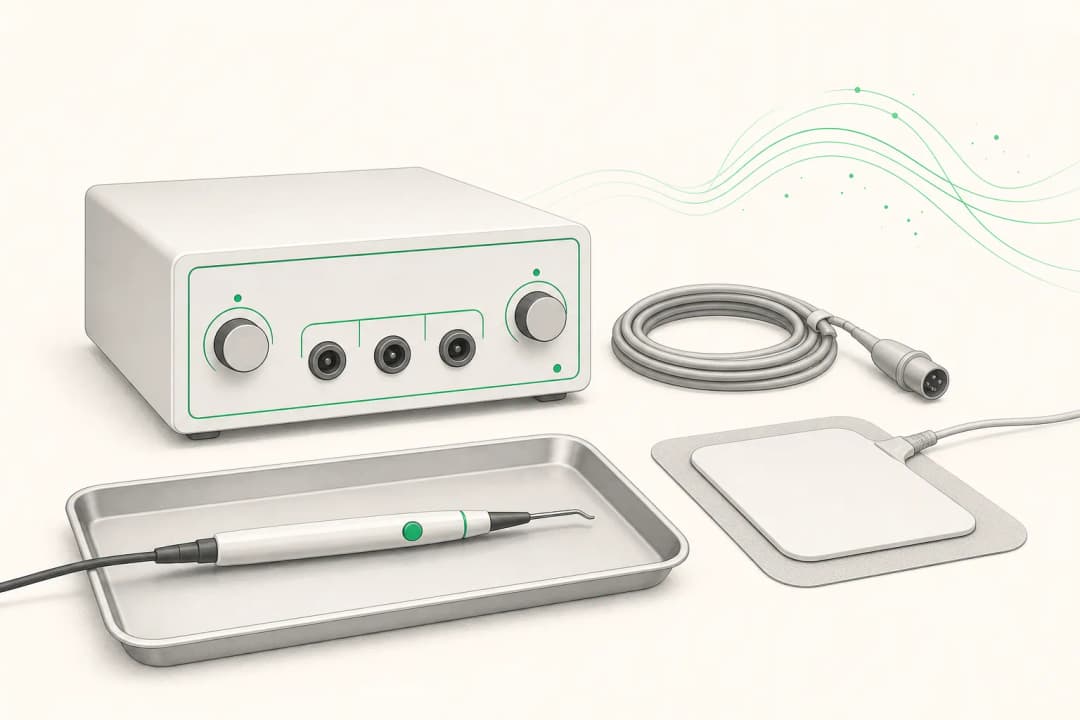
RF electrosurgery uses high-frequency electrical energy to cut, coagulate, or destroy selected tissue under controlled clinical conditions.
This answers one question. It is not a diagnosis and does not replace an assessment by a licensed doctor.
At a glance
- Energy type
- High-frequency electrical current
- Possible functions
- Cutting, coagulation, or tissue destruction
- Anaesthesia
- Local numbing may be used
What the procedure involves
A clinician places an active electrode near or on the target while the device delivers a measured electrical current. Depending on the mode, the energy can divide tissue, seal small blood vessels, or dry a superficial lesion. Local anaesthetic may be used so the area is numb during treatment. Smoke or a singed smell can occur, and protective measures help reduce exposure.
The target must be diagnosed before it is treated. A raised spot, wart, or other growth may need examination, and tissue may sometimes be sent for laboratory assessment. RF electrosurgery is not a general-purpose treatment for every lump or changing mark. [Electrosurgery](/treatments/surgical-dermatology/electrosurgery/) is the treatment overview, while an [Electrosurgical Unit](/technology/electrosurgical-unit/) is the equipment that delivers the current.
Preparing and caring for the site
Tell the clinician about pacemakers or other implanted electronic devices, metal near the site, bleeding problems, poor wound healing, allergies to dressings, and medicines that affect clotting. Do not shave, pick, or apply irritating products to the area unless instructed. After treatment, keep the site clean and follow the dressing advice. A crust may form as the treated surface heals; do not pull it away.
Protect healed skin from sun exposure to reduce lingering colour change. If the procedure is being considered for [Genital Warts](/conditions/genital-warts/), ask how recurrence, partner communication, and testing for other causes will be handled.
Warning signs after treatment
Contact the clinic for bleeding that does not stop with firm pressure, increasing pain, spreading redness, pus, fever, or wound separation. Get urgent help for facial swelling affecting breathing, severe weakness, or a rapidly expanding reaction. A darkening or lightening mark can take time to settle, but a clinician should assess a marked or worsening change.
Questions to ask
What is the diagnosis of the tissue being treated? Which electrosurgical mode will you use, and will a sample be examined? What anaesthetic and wound dressing are planned? Which symptoms should prompt a same-day call, and how will you review the site?
Find care
General Clinics & Polyclinics in Abu Dhabi
That answer is general. If you want it applied to your own case, these are licensed general clinics & polyclinics listed in Abu Dhabi.
27 Ar Ruwwad St - Shakhbout City - MSH4 - Abu Dhabi - United Arab Emirates
Accepts: Daman, Thiqa, Cigna, MetLife +20 more
Al Ruwais, Al Dhafrah
Accepts: Daman, Thiqa, AXA, Cigna +16 more
Al Bahyah - Al Bahyah Old - Abu Dhabi - United Arab Emirates
Accepts: Daman, Thiqa, Cigna, Allianz Care +18 more
Abu Dhabi
Accepts: Daman, Thiqa, AXA, Cigna +27 more
Ordered by verification status and how complete each clinic's public record is, then alphabetically. This is a directory listing, not a ranking — Zavis does not rate or recommend providers.
A factual listing drawn from the DHA, DOH and MOHAP licence registers. It is not a referral, an endorsement, or advice that any of these providers is right for you.
Questions people ask
Is RF electrosurgery the same as radiofrequency skin tightening?
No. Electrosurgery targets tissue with electrical current for a procedure, while skin tightening generally uses delivered heat for a cosmetic change.
Will electrosurgery leave a mark?
A temporary crust, colour change, or scar can occur, depending on the site, depth, healing, and individual skin response.
Related
Related reading
Keep reading
Medical disclaimer. This page is general health information, not medical advice, and it cannot diagnose you. Always consult a licensed healthcare provider about your own symptoms and treatment. In an emergency in the UAE, call 998 for an ambulance.