
What should you know about milia seed treatment?
Short answer
Milia seed treatment depends on its location and appearance, with gentle observation or professional removal often preferred over home extraction.
This answers one question. It is not a diagnosis and does not replace an assessment by a licensed doctor.
At a glance
- First decision
- Confirm what the bump is
- Conservative care
- Gentle routine; no picking
- Professional options
- Extraction or selected procedures
How treatment decisions are made
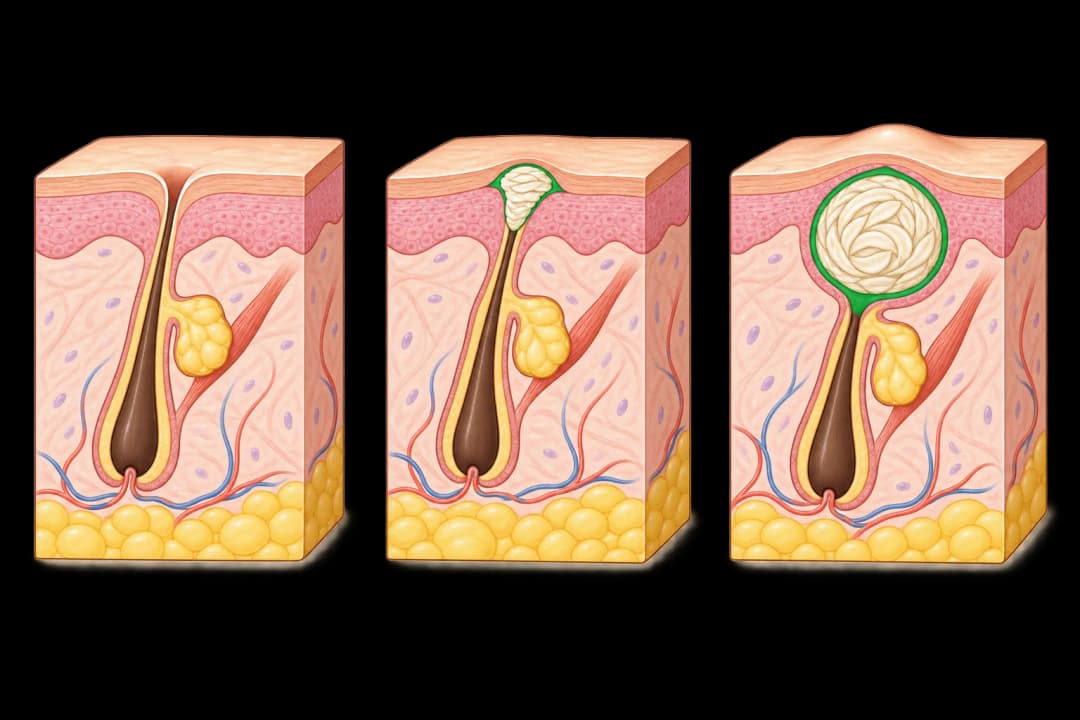
Milia are small, firm keratin cysts beneath the skin. They can be isolated or clustered and may sit on the face, eyelids, or other areas. The first treatment step is confirming the diagnosis because whiteheads and other skin bumps may resemble them. A clinician considers the lesion's position, how long it has been present, whether the skin is irritated, and whether it is causing a cosmetic or physical concern.
Some milia can be watched without intervention. Rubbing and repeated attempts to empty them can inflame the surrounding skin and make assessment harder.
Approaches a clinician may discuss
Use a gentle cleanser and avoid squeezing, scraping, or applying harsh home remedies. For a persistent lesion, a dermatologist may perform careful sterile extraction. Curettage and cautery are possible options for selected cases, while treatment near the eye requires particular caution. A topical retinoid may be considered for some people with recurring keratin blockage, but it can cause irritation and should be selected with medical advice. Do not place a retinoid close to the eyelid or use it during pregnancy unless your clinician has given specific guidance.
Signs that need review
Have a clinician assess a bump that is persistent, spreading, itchy, painful, inflamed, or difficult to identify. Seek prompt care for bleeding, ulceration, marked swelling, pus, or any eye symptom such as vision change or strong light sensitivity. If treatment has already been performed, worsening redness, heat, pain, or discharge deserves follow-up rather than further home care.
Questions about treatment
Is this definitely milia, and could a different skin bump need another approach? Would observation suit me? If treatment is chosen, what happens during the procedure, how should I protect the area afterward, and can the bump recur?
Find care
General Clinics & Polyclinics in Abu Dhabi
That answer is general. If you want it applied to your own case, these are licensed general clinics & polyclinics listed in Abu Dhabi.
27 Ar Ruwwad St - Shakhbout City - MSH4 - Abu Dhabi - United Arab Emirates
Accepts: Daman, Thiqa, Cigna, MetLife +20 more
Al Ruwais, Al Dhafrah
Accepts: Daman, Thiqa, AXA, Cigna +16 more
Al Bahyah - Al Bahyah Old - Abu Dhabi - United Arab Emirates
Accepts: Daman, Thiqa, Cigna, Allianz Care +18 more
Abu Dhabi
Accepts: Daman, Thiqa, AXA, Cigna +27 more
Ordered by verification status and how complete each clinic's public record is, then alphabetically. This is a directory listing, not a ranking — Zavis does not rate or recommend providers.
A factual listing drawn from the DHA, DOH and MOHAP licence registers. It is not a referral, an endorsement, or advice that any of these providers is right for you.
Questions people ask
What is the usual treatment for a milia seed?
Depending on the site and diagnosis, a clinician may recommend observation, sterile extraction, or another selected dermatology procedure.
Are topical products enough to treat milia?
Products may have a limited role for some recurring patterns, but established milia often need assessment before any treatment is chosen.
Related
Related reading
Keep reading
Medical disclaimer. This page is general health information, not medical advice, and it cannot diagnose you. Always consult a licensed healthcare provider about your own symptoms and treatment. In an emergency in the UAE, call 998 for an ambulance.