
What should you know about milia seed removal?
Short answer
Milia seed removal is usually a simple clinical procedure, while squeezing or piercing the bump at home can damage the skin.
This answers one question. It is not a diagnosis and does not replace an assessment by a licensed doctor.
At a glance
- Before removal
- Confirm the diagnosis
- Avoid
- Picking, needles, and squeezing
- Possible approach
- Sterile opening and extraction
Why removal needs care
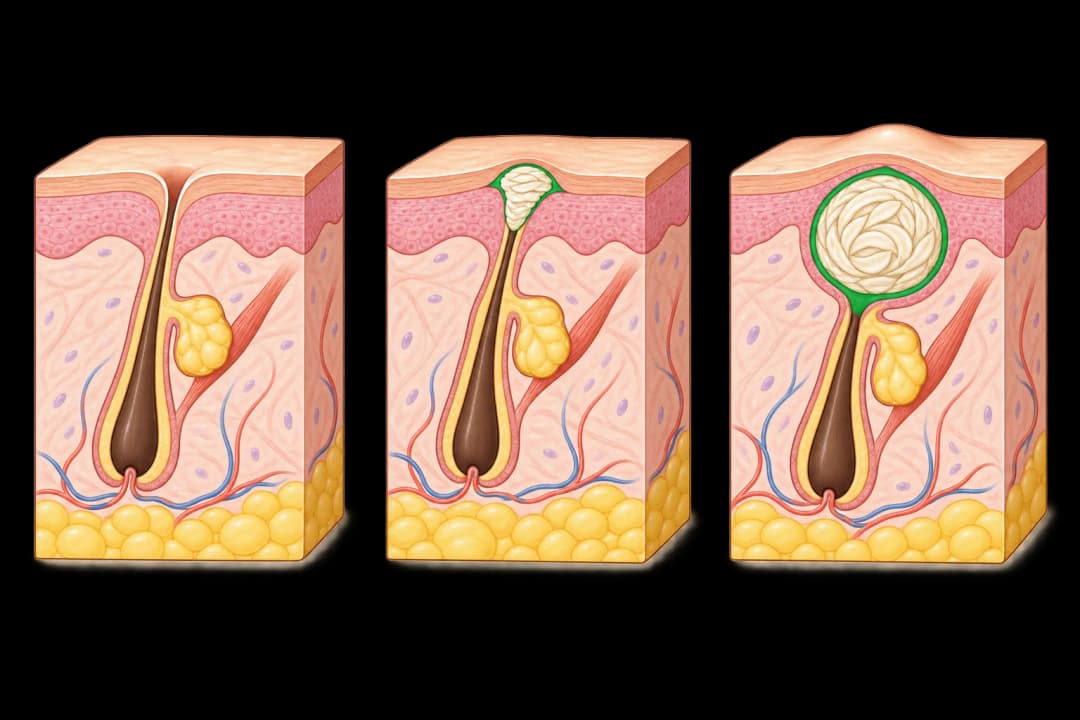
A milia seed is a compact pocket of keratin beneath the surface. Because it has a firm covering and no typical acne opening, pressure alone may not release it. Forceful picking can cause bleeding, infection, inflammation, or a lasting mark. A dermatologist first checks that the bump really is milia, since whiteheads and other skin bumps can look alike.
Removal is optional when the diagnosis is clear and the lesion is not troubling you. The decision changes with its position, depth, number of bumps, skin sensitivity, and proximity to the eye.
Removal options and preparation
Keep the area clean and stop experimenting with sharp tools or abrasive products. At an appointment, a clinician may make a tiny sterile opening and lift out the keratin. Curettage and cautery may be considered for selected lesions, with the technique adapted to the site. Topical retinoids can be useful in some situations but are not a do-it-yourself removal method and may irritate delicate skin. Tell the clinician about sensitive skin, recent procedures, active irritation, and products you use near the spot.
When to arrange an examination
Seek an assessment if a supposed milia grows, changes colour, bleeds, crusts, becomes painful, or keeps returning. Prompt review is sensible for swelling, spreading redness, pus, or a lesion close to the eye that affects vision or causes significant discomfort. After removal, contact the treating clinic about worsening pain, increasing warmth, discharge, or redness that continues to spread.
Questions to take along
How confident are you that this is milia? Is removal necessary, and which technique suits this location? What should I avoid before and after the procedure, and which changes would mean I should contact you?
Find care
General Clinics & Polyclinics in Abu Dhabi
That answer is general. If you want it applied to your own case, these are licensed general clinics & polyclinics listed in Abu Dhabi.
27 Ar Ruwwad St - Shakhbout City - MSH4 - Abu Dhabi - United Arab Emirates
Accepts: Daman, Thiqa, Cigna, MetLife +20 more
Al Ruwais, Al Dhafrah
Accepts: Daman, Thiqa, AXA, Cigna +16 more
Al Bahyah - Al Bahyah Old - Abu Dhabi - United Arab Emirates
Accepts: Daman, Thiqa, Cigna, Allianz Care +18 more
Abu Dhabi
Accepts: Daman, Thiqa, AXA, Cigna +27 more
Ordered by verification status and how complete each clinic's public record is, then alphabetically. This is a directory listing, not a ranking — Zavis does not rate or recommend providers.
A factual listing drawn from the DHA, DOH and MOHAP licence registers. It is not a referral, an endorsement, or advice that any of these providers is right for you.
Questions people ask
Can I remove milia with a needle?
Do not use a needle at home. A clinician can use sterile instruments and controlled technique to reduce avoidable skin injury.
Will every milia seed need a procedure?
No. Observation is reasonable for some lesions; treatment depends on the diagnosis, location, persistence, and your preference.
Related
Related reading
Keep reading
Medical disclaimer. This page is general health information, not medical advice, and it cannot diagnose you. Always consult a licensed healthcare provider about your own symptoms and treatment. In an emergency in the UAE, call 998 for an ambulance.