
Milia scar treatment: what should you know?
Short answer
Milia scar treatment depends on whether the mark is a healing colour change, an indentation, a raised scar, or an active cyst that needs reassessment.
This answers one question. It is not a diagnosis and does not replace an assessment by a licensed doctor.
At a glance
- First step
- Identify colour change, texture change, raised scar, or active cyst
- During healing
- Avoid picking and protect healed skin from sunlight
- Review trigger
- Growth, pain, itch, discharge, or a raised changing mark
What the mark may be
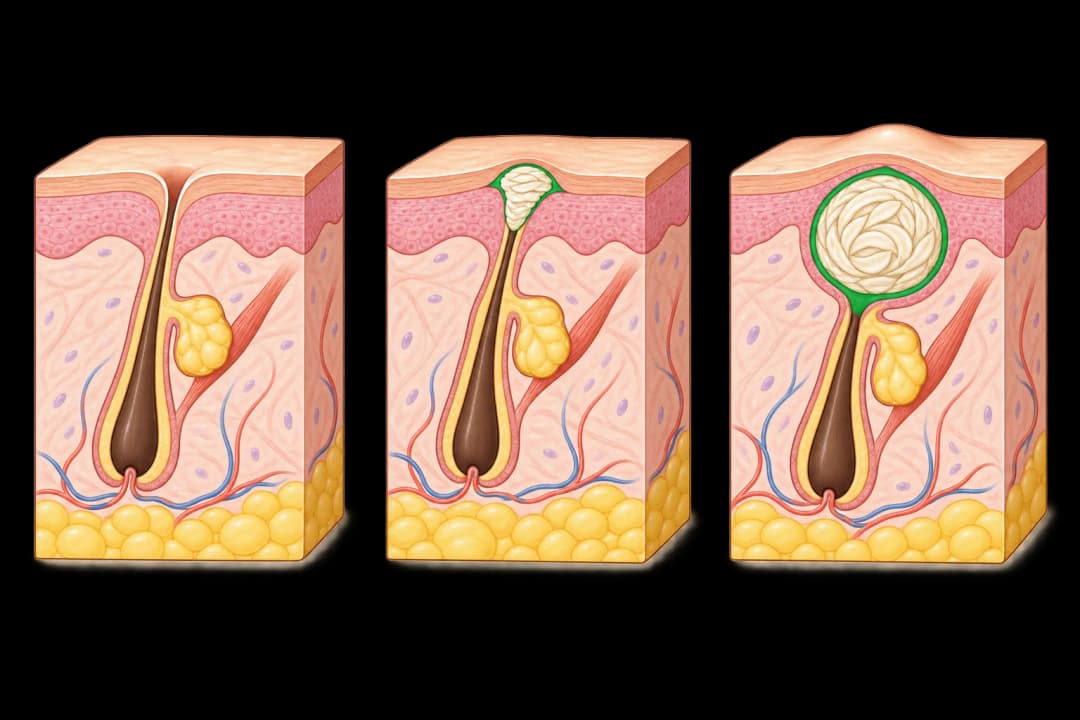
After a milia or its removal, redness or brown colour can linger as the skin settles. A shallow dip suggests changed texture, while a firm raised area may behave like a hypertrophic or keloid-type scar. Sometimes the visible spot is still an active cyst, not a scar. A clinician can examine the surface and history to separate these possibilities.
The risk of a lasting mark rises when skin is picked, repeatedly injured, inflamed, or exposed to sunlight during healing. Skin tone and a personal history of raised scars also influence the plan.
Practical treatment steps
Do not squeeze or restart treatment on a mark that has not been diagnosed. Use gentle cleansing, follow wound-care advice, and protect healed skin from sunlight. A clinician may observe a colour change, recommend a prescription such as [Topical Retinoids](/treatments/medical-dermatology/topical-retinoids/), or discuss a procedure suited to the texture and scar type. [Curettage And Cautery](/treatments/surgical-dermatology/curettage-and-cautery/) is a removal method for selected lesions, not a general answer for every scar.
Take a clear photograph over time and note itching, tenderness, growth, or repeated crusting. That history helps distinguish healing from an ongoing problem.
When to seek care
Arrange review if the mark is enlarging, painful, itchy, bleeding, draining, or becoming increasingly raised. Seek prompt care for spreading redness, warmth, pus, fever, or swelling near the eye. A persistent lesion that changes or does not behave like a healing spot should be assessed rather than treated at home.
Questions for your doctor
Ask what type of mark you have, whether treatment should wait for complete healing, which options fit your skin tone, and how recurrence or pigment change will be monitored. Mention any previous raised scars or reactions to procedures.
Find care
General Clinics & Polyclinics in Abu Dhabi
That answer is general. If you want it applied to your own case, these are licensed general clinics & polyclinics listed in Abu Dhabi.
27 Ar Ruwwad St - Shakhbout City - MSH4 - Abu Dhabi - United Arab Emirates
Accepts: Daman, Thiqa, Cigna, MetLife +20 more
Al Ruwais, Al Dhafrah
Accepts: Daman, Thiqa, AXA, Cigna +16 more
Al Bahyah - Al Bahyah Old - Abu Dhabi - United Arab Emirates
Accepts: Daman, Thiqa, Cigna, Allianz Care +18 more
Abu Dhabi
Accepts: Daman, Thiqa, AXA, Cigna +27 more
Ordered by verification status and how complete each clinic's public record is, then alphabetically. This is a directory listing, not a ranking — Zavis does not rate or recommend providers.
A factual listing drawn from the DHA, DOH and MOHAP licence registers. It is not a referral, an endorsement, or advice that any of these providers is right for you.
Questions people ask
Is every dark mark after milia a scar?
No. A dark or red mark can be post-inflammatory colour change, while texture changes suggest scarring; examination clarifies the difference.
Should I remove a bump that looks like a scar?
No. An active cyst and a scar need different care, so have the area assessed before another removal attempt.
Related
Related reading
Keep reading
Medical disclaimer. This page is general health information, not medical advice, and it cannot diagnose you. Always consult a licensed healthcare provider about your own symptoms and treatment. In an emergency in the UAE, call 998 for an ambulance.