
Milia on a tattoo: treatment and care
Short answer
Milia on tattooed skin should be diagnosed before treatment because extraction or creams can affect healing and pigment.
This answers one question. It is not a diagnosis and does not replace an assessment by a licensed doctor.
At a glance
- Before treatment
- Confirm the tattoo is healed and the bump is milia
- Avoid
- Picking or applying unprescribed acids to tattooed skin
- Urgent concern
- Spreading warmth, drainage or fever
Why tattooed skin needs care
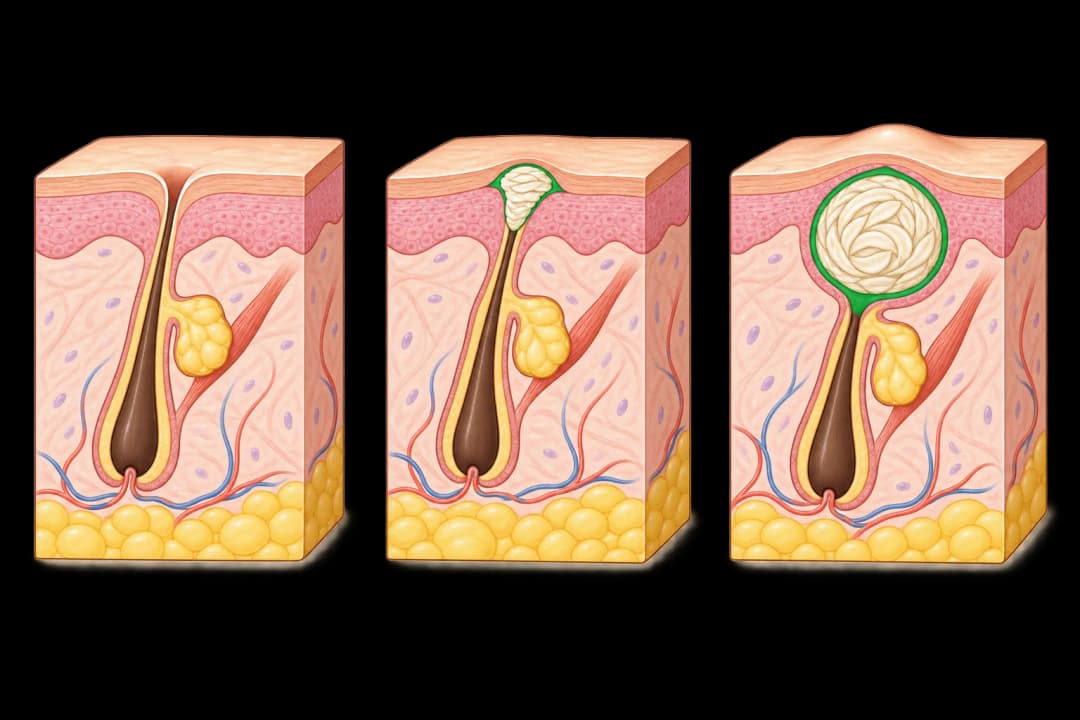
Milia are small keratin-filled cysts and may appear on mature tattooed skin or during healing after tattoo work. A smooth pale bump can also be irritation, a blocked follicle, an allergic response or a reaction to pigment. The timing of its appearance, whether the tattoo is still peeling, and the presence of itch or redness help guide assessment.
Do not assume every bump inside ink is a tattoo complication. A clinician can inspect the lesion without damaging the design and decide whether it is appropriate to watch it or treat it.
Protect the tattoo while deciding
Follow the tattoo artist's healing instructions, wash gently and avoid picking at flakes or bumps. Do not apply a retinoid, acid exfoliant or antiseptic not recommended for the area. Freshly tattooed skin has a weakened barrier, and extra irritation can prolong healing or change how the pigment looks.
Once the skin is fully healed, a dermatologist may recommend observation, a carefully selected topical treatment or sterile removal. Tell the clinician when the tattoo was done, which products you used and whether the bump is within one colour or several parts of the design.
When to get medical help
Arrange a review for a bump that persists after healing, spreads through the tattoo, changes colour or repeatedly returns. Seek prompt care for increasing warmth, swelling, pain, pus-like drainage, red streaking or fever. These signs can indicate infection or inflammation that needs attention rather than cosmetic extraction.
Questions for your doctor
Is this a milium or a tattoo-healing reaction? Is the tattoo fully healed enough for treatment? Could the proposed product irritate the inked skin? How can the bump be removed while limiting pigment change, and what symptoms should I watch for afterwards?
Find care
General Clinics & Polyclinics in Abu Dhabi
That answer is general. If you want it applied to your own case, these are licensed general clinics & polyclinics listed in Abu Dhabi.
27 Ar Ruwwad St - Shakhbout City - MSH4 - Abu Dhabi - United Arab Emirates
Accepts: Daman, Thiqa, Cigna, MetLife +20 more
Al Ruwais, Al Dhafrah
Accepts: Daman, Thiqa, AXA, Cigna +16 more
Al Bahyah - Al Bahyah Old - Abu Dhabi - United Arab Emirates
Accepts: Daman, Thiqa, Cigna, Allianz Care +18 more
Abu Dhabi
Accepts: Daman, Thiqa, AXA, Cigna +27 more
Ordered by verification status and how complete each clinic's public record is, then alphabetically. This is a directory listing, not a ranking — Zavis does not rate or recommend providers.
A factual listing drawn from the DHA, DOH and MOHAP licence registers. It is not a referral, an endorsement, or advice that any of these providers is right for you.
Questions people ask
Can milia occur on a tattoo?
Yes. A milium can form on tattooed skin, although other tattoo-related reactions can look similar.
Should I extract a bump from my tattoo?
No. Self-extraction can injure the skin and may disturb healing or pigment; arrange an assessment instead.
Related
Related reading
Keep reading
Medical disclaimer. This page is general health information, not medical advice, and it cannot diagnose you. Always consult a licensed healthcare provider about your own symptoms and treatment. In an emergency in the UAE, call 998 for an ambulance.