
Milia treatment: what to know
Short answer
Milia treatment may involve observation, a prescribed topical retinoid or careful professional removal after diagnosis.
This answers one question. It is not a diagnosis and does not replace an assessment by a licensed doctor.
At a glance
- First step
- Confirm that the bumps are milia
- Common options
- Observation, prescription treatment or professional removal
- Avoid
- DIY piercing and forceful squeezing
Understanding the treatment choice
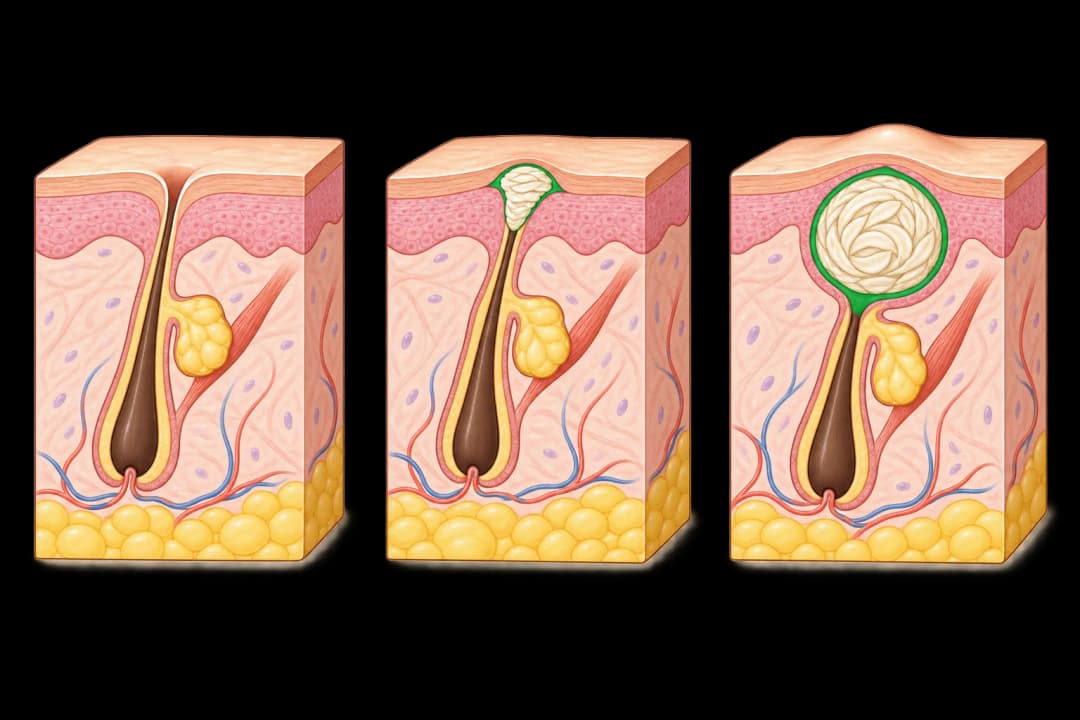
Milia are tiny cysts containing keratin beneath the outer layer of skin. They are not the same as acne whiteheads, even though both can look pale and raised. The treatment plan changes with the area involved, the thickness of the cyst, skin sensitivity and whether there are many lesions.
Some milia settle without intervention, while others remain visible. A clinician may examine the surface closely before choosing treatment, particularly around the eyes or on irritated skin. Strong exfoliation and acne products can inflame the area without opening the cyst.
Practical treatment steps
Use a gentle cleanser, avoid picking and protect treated skin from rubbing. Do not attempt to pierce a bump with a needle or use a household tool. These actions can cause infection, prolonged redness or a mark.
A dermatologist may use sterile extraction, curettage and cautery, or another suitable technique. A topical retinoid may help reduce the build-up of cells for selected patients, but it can irritate skin and is not appropriate for everyone. Follow the prescribed amount and placement exactly, and report persistent burning or scaling.
When an appointment matters
Book an assessment when a bump is persistent, recurrent, clustered, close to the eye or difficult to distinguish from a whitehead. Seek prompt medical attention if the area becomes hot, swollen, increasingly painful, drains fluid or is accompanied by fever. Those changes are not typical reasons to self-treat as milia.
Useful questions to ask
How confident are you that these are milia? Could my cleanser, cream or medication be contributing? Is observation reasonable for this location? Which removal method suits my skin, and what aftercare should I follow? If a retinoid is prescribed, where should I apply it and what irritation should prompt a call?
Find care
General Clinics & Polyclinics in Abu Dhabi
That answer is general. If you want it applied to your own case, these are licensed general clinics & polyclinics listed in Abu Dhabi.
27 Ar Ruwwad St - Shakhbout City - MSH4 - Abu Dhabi - United Arab Emirates
Accepts: Daman, Thiqa, Cigna, MetLife +20 more
Al Ruwais, Al Dhafrah
Accepts: Daman, Thiqa, AXA, Cigna +16 more
Al Bahyah - Al Bahyah Old - Abu Dhabi - United Arab Emirates
Accepts: Daman, Thiqa, Cigna, Allianz Care +18 more
Abu Dhabi
Accepts: Daman, Thiqa, AXA, Cigna +27 more
Ordered by verification status and how complete each clinic's public record is, then alphabetically. This is a directory listing, not a ranking — Zavis does not rate or recommend providers.
A factual listing drawn from the DHA, DOH and MOHAP licence registers. It is not a referral, an endorsement, or advice that any of these providers is right for you.
Questions people ask
Do all milia need treatment?
No. Some can be watched if they are stable and not troublesome; treatment is a personal and clinical decision.
Are topical retinoids suitable for everyone?
No. They may irritate skin and need individual advice, including guidance for pregnancy or sensitive areas.
Related
Related reading
Keep reading
Medical disclaimer. This page is general health information, not medical advice, and it cannot diagnose you. Always consult a licensed healthcare provider about your own symptoms and treatment. In an emergency in the UAE, call 998 for an ambulance.